


Gottfried Semper
In Search of Architecture
Autoři
Více o knize
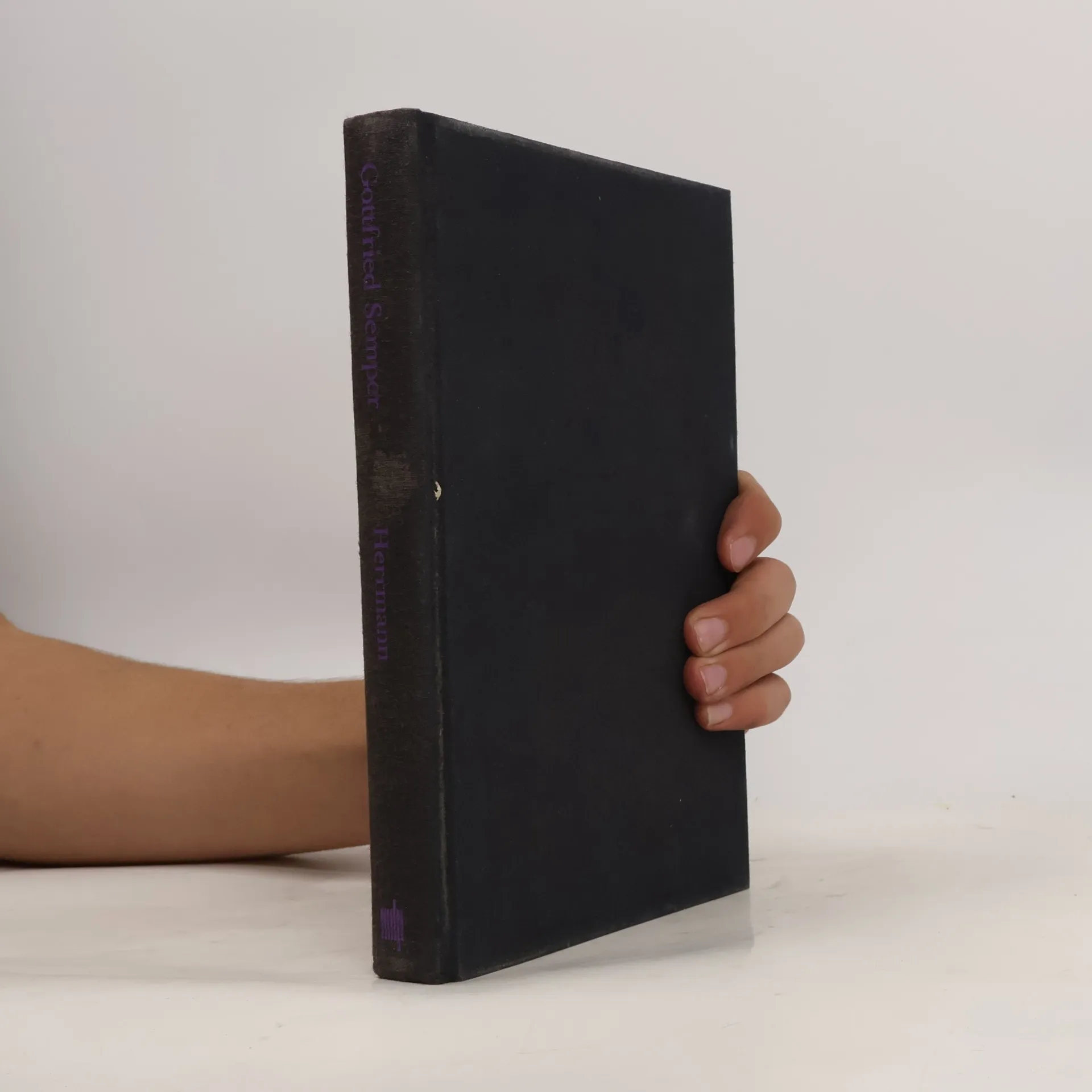
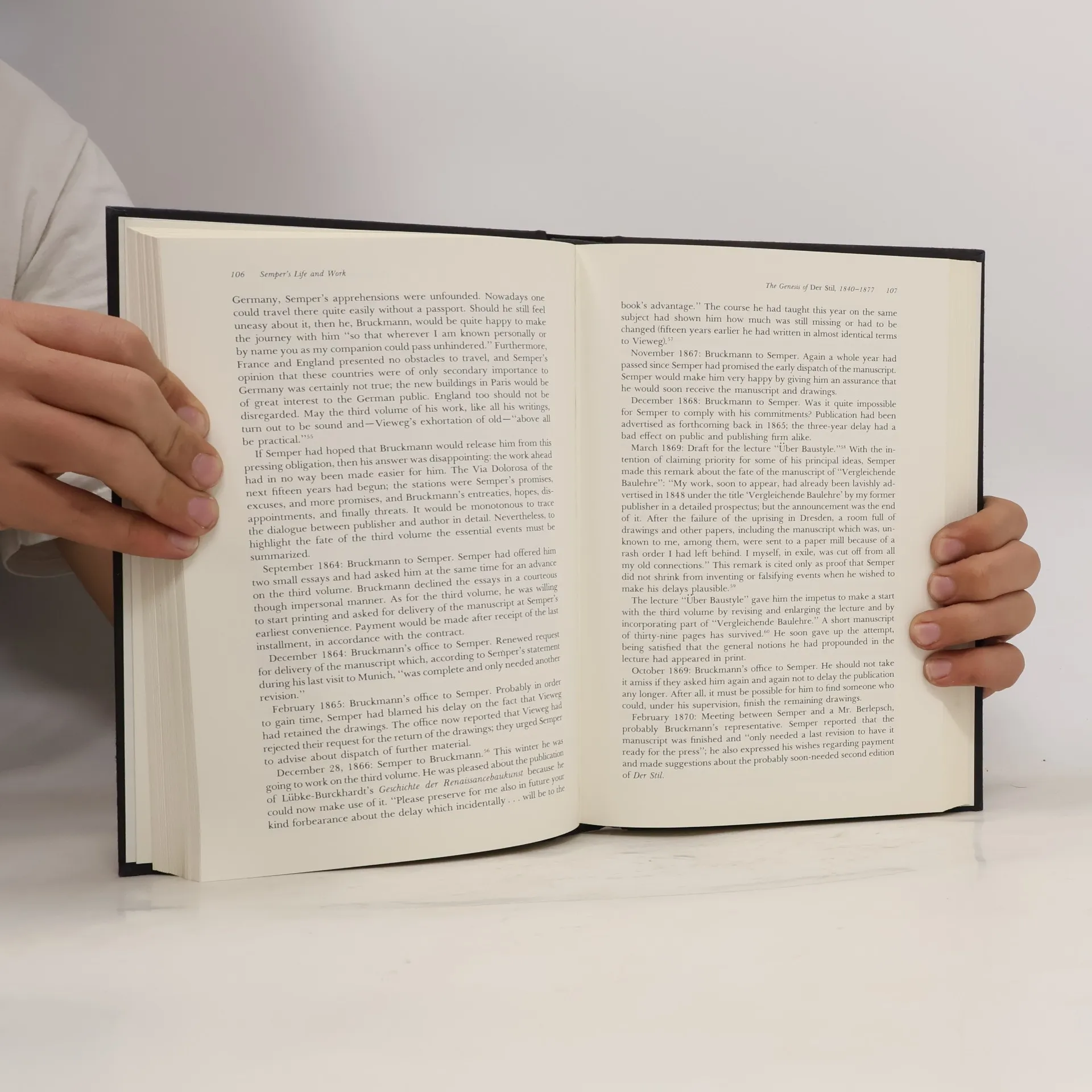
Preface by Adolf Max VogtFor the generation after Karl Frederich Schinkel, Gottfried Semper (1803-1879) was the most admired architect in Germany. His buildings, such as the opera houses in Dresden and two museums in Vienna, were outstanding examples of their kind. To later generations, however, Semper is known primarily for his writings. Although Semper is arguably the 19th century's most important theoretician, the subtlety of his thought and the difficulty of his German have kept his works from being translated and his contribution from being assessed until now. Herrmann traces his life, analyzes his writings—in particular his major work, Der Stil and presents translations of recently uncovered texts.Der Stil , long a basic source of ideas for architects, had a profound impact on European modernists and proto-modernists alike. H.P. Berlage, Otto Wagner, Bruno Taut, and Walter Gropius were influenced by it, as were any number of American architects, including Bernard Maybeck and Louis Sullivan.Following the biographical chapters, which clarify the extent to which Semper's strongly held political convictions (he was forced to flee Dresden after the revolution of 1849 failed) informed his ideas about architecture, Herrmann presents the colorful genesis of Der Stil . Through his close reading of the texts, Herrmann brings to light Semper's position on iron, on Gothic and contemporary architecture, on the primitive hut, and on the ideas of the archaeologist Karl B?cher. Among the previously unpublished manuscripts that conclude the book is material essential to a clear understanding of the ideas developed in Der Stil .Wolfgang Herrmann has spent most of his professional life in England. Political events forced his exile from Germany in 1933. Since then, he has devoted most of his scholarly career to the study of the theory of architecture and has written books on Laugier and Perrault.
Nákup knihy
Gottfried Semper, Wolfgang Herrmann
- Jazyk

- Rok vydání
- 1984
- Vazba
- (pevná),
- Stav knihy
- Poškozená
- Cena
- 909 Kč
Doručení
Platební metody
Nikdo zatím neohodnotil.
- Titul
- Gottfried Semper
- Podtitul
- In Search of Architecture
- Jazyk
- anglicky
- Autoři
- Wolfgang Herrmann
- Vydavatel
- MIT Press
- Rok vydání
- 1984
- Vazba
- pevná
- Počet stran
- 320
- ISBN10
- 026208144X
- ISBN13
- 9780262081443
- Série
- Štítky
- Historické téma, Architektura, USA, Západní Evropa
- Anotace
- Preface by Adolf Max VogtFor the generation after Karl Frederich Schinkel, Gottfried Semper (1803-1879) was the most admired architect in Germany. His buildings, such as the opera houses in Dresden and two museums in Vienna, were outstanding examples of their kind. To later generations, however, Semper is known primarily for his writings. Although Semper is arguably the 19th century's most important theoretician, the subtlety of his thought and the difficulty of his German have kept his works from being translated and his contribution from being assessed until now. Herrmann traces his life, analyzes his writings—in particular his major work, Der Stil and presents translations of recently uncovered texts.Der Stil , long a basic source of ideas for architects, had a profound impact on European modernists and proto-modernists alike. H.P. Berlage, Otto Wagner, Bruno Taut, and Walter Gropius were influenced by it, as were any number of American architects, including Bernard Maybeck and Louis Sullivan.Following the biographical chapters, which clarify the extent to which Semper's strongly held political convictions (he was forced to flee Dresden after the revolution of 1849 failed) informed his ideas about architecture, Herrmann presents the colorful genesis of Der Stil . Through his close reading of the texts, Herrmann brings to light Semper's position on iron, on Gothic and contemporary architecture, on the primitive hut, and on the ideas of the archaeologist Karl B?cher. Among the previously unpublished manuscripts that conclude the book is material essential to a clear understanding of the ideas developed in Der Stil .Wolfgang Herrmann has spent most of his professional life in England. Political events forced his exile from Germany in 1933. Since then, he has devoted most of his scholarly career to the study of the theory of architecture and has written books on Laugier and Perrault.