




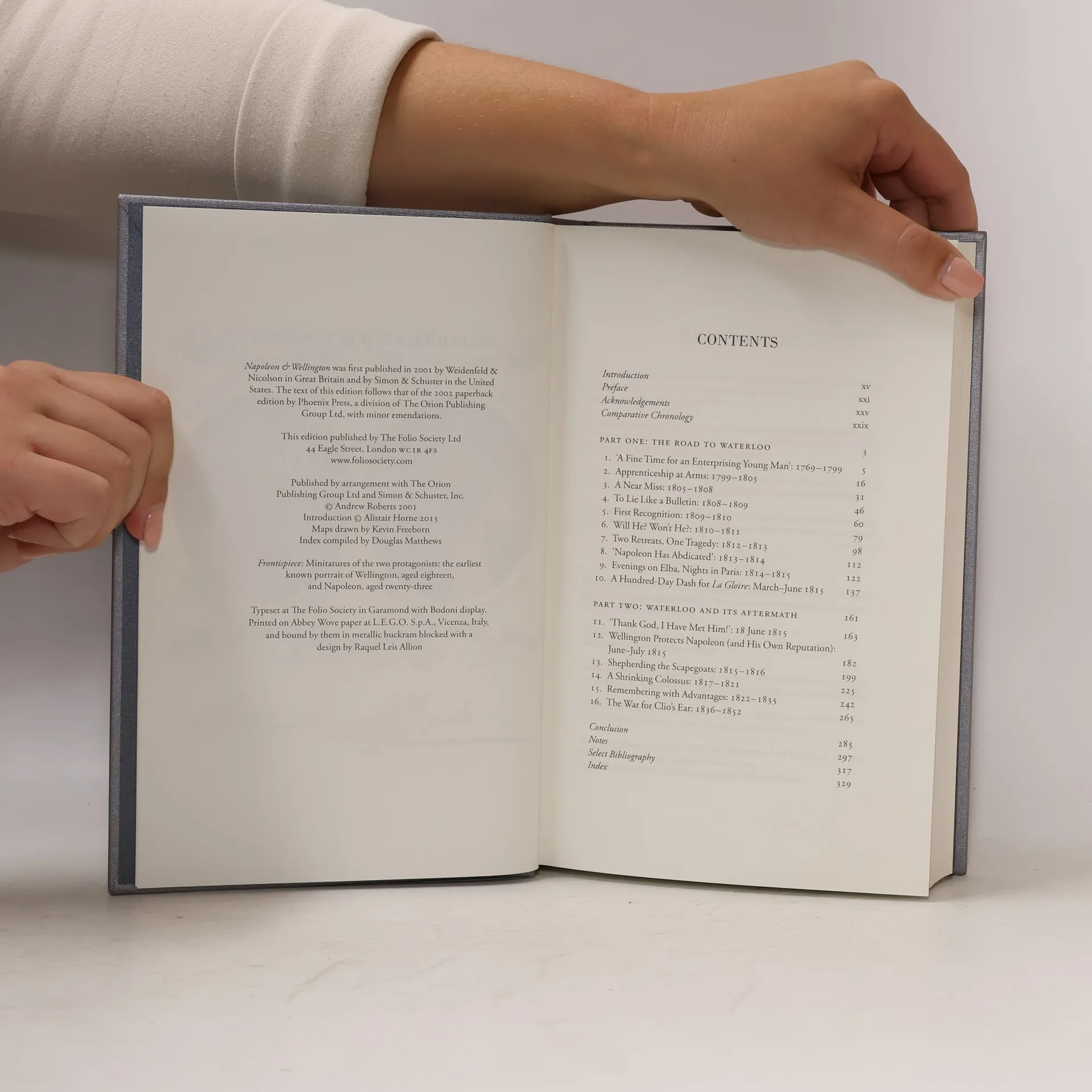
Napoleon & Wellington
Autoři
Více o knize
An alternate cover edition of ISBN 0297646079 / 9780297646075, 2007 edition, can be found here On the morning of the battle of Waterloo, the Emperor Napoleon declared that the Duke of Wellington was a bad general, the British were bad soldiers and that France could not fail to have an easy victory. Forever afterwards historians have accused him of gross overconfidence, and massively underestimating the calibre of the British commander opposed to him. Andrew Roberts presents this revisionist view of the relationship between the two greatest captains of their age. Napoleon, who was born in the same year as Wellington - 1769 - fought Wellington by proxy years earlier in the Peninsular War, praising his ruthlessness in private whilst publicly deriding him as a mere sepoy general. In contrast, Wellington publicly lauded Napoleon, saying that his presence on a battlefield was worth forty thousand men, but privately wrote long memoranda lambasting Napoleon's campaigning techniques. Although Wellington saved Napoleon from execution after Waterloo, Napoleon left money in his will to the man who had tried to assassinate Wellington.


Nákup knihy
Napoleon & Wellington, Andrew Roberts
- Jazyk

- Rok vydání
- 2015
- Vazba
- (pevná)
Doručení
Platební metody
Nikdo zatím neohodnotil.
- Titul
- Napoleon & Wellington
- Jazyk
- anglicky
- Autoři
- Andrew Roberts
- Vydavatel
- Folio
- Rok vydání
- 2015
- Vazba
- pevná
- Série
- Kategorie
- Anotace
- An alternate cover edition of ISBN 0297646079 / 9780297646075, 2007 edition, can be found here On the morning of the battle of Waterloo, the Emperor Napoleon declared that the Duke of Wellington was a bad general, the British were bad soldiers and that France could not fail to have an easy victory. Forever afterwards historians have accused him of gross overconfidence, and massively underestimating the calibre of the British commander opposed to him. Andrew Roberts presents this revisionist view of the relationship between the two greatest captains of their age. Napoleon, who was born in the same year as Wellington - 1769 - fought Wellington by proxy years earlier in the Peninsular War, praising his ruthlessness in private whilst publicly deriding him as a mere sepoy general. In contrast, Wellington publicly lauded Napoleon, saying that his presence on a battlefield was worth forty thousand men, but privately wrote long memoranda lambasting Napoleon's campaigning techniques. Although Wellington saved Napoleon from execution after Waterloo, Napoleon left money in his will to the man who had tried to assassinate Wellington.