

Více o knize
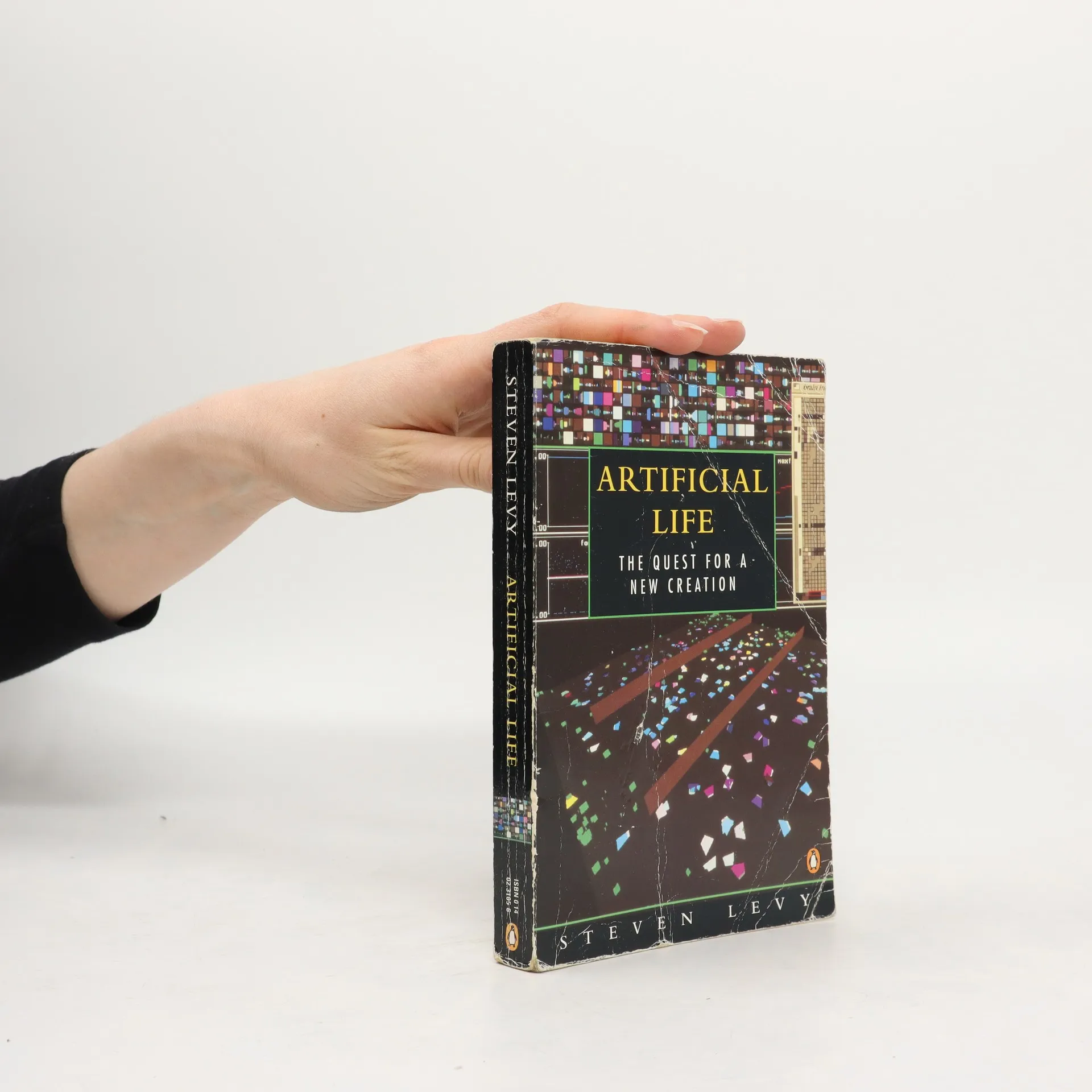
This book looks at artificial life science - A-Life, an important new area of scientific research involving the disciplines of microbiology, evolutionary theory, physics, chemistry and computer science. In the 1940s a mathematician named John von Neumann, a man with a claim to being the father of the modern computer, invented a hypothetical mathematical entity called a cellular automaton. His aim was to construct a machine that could reproduce itself. In the years since, with the development of hugely more sophisticated and complex computers, von Neumann's insights have gradually led to a point where scientists have created, within the wiring of these machines, something that so closely simulates life that it may, arguably, be called life. This machine reproduces itself, mutates, evolves through generations and dies.

Nákup knihy
Artificial Life. The Quest for a New Creation, Steven Levy
- Jazyk

- Rok vydání
- 1993
- Vazba
- (měkká)
Doručení
Platební metody
Tady nám chybí tvá recenze.
- Titul
- Artificial Life. The Quest for a New Creation
- Jazyk
- anglicky
- Autoři
- Steven Levy
- Vydavatel
- Penguin Books
- Rok vydání
- 1993
- Vazba
- měkká
- ISBN10
- 0140231056
- ISBN13
- 9780140231052
- Série
- Kategorie
- Štítky
- Přírodní vědy, Věda, Technologie, Umělá inteligence
- Hodnocení
- 4,1 z 5
- Anotace
- This book looks at artificial life science - A-Life, an important new area of scientific research involving the disciplines of microbiology, evolutionary theory, physics, chemistry and computer science. In the 1940s a mathematician named John von Neumann, a man with a claim to being the father of the modern computer, invented a hypothetical mathematical entity called a cellular automaton. His aim was to construct a machine that could reproduce itself. In the years since, with the development of hugely more sophisticated and complex computers, von Neumann's insights have gradually led to a point where scientists have created, within the wiring of these machines, something that so closely simulates life that it may, arguably, be called life. This machine reproduces itself, mutates, evolves through generations and dies.