

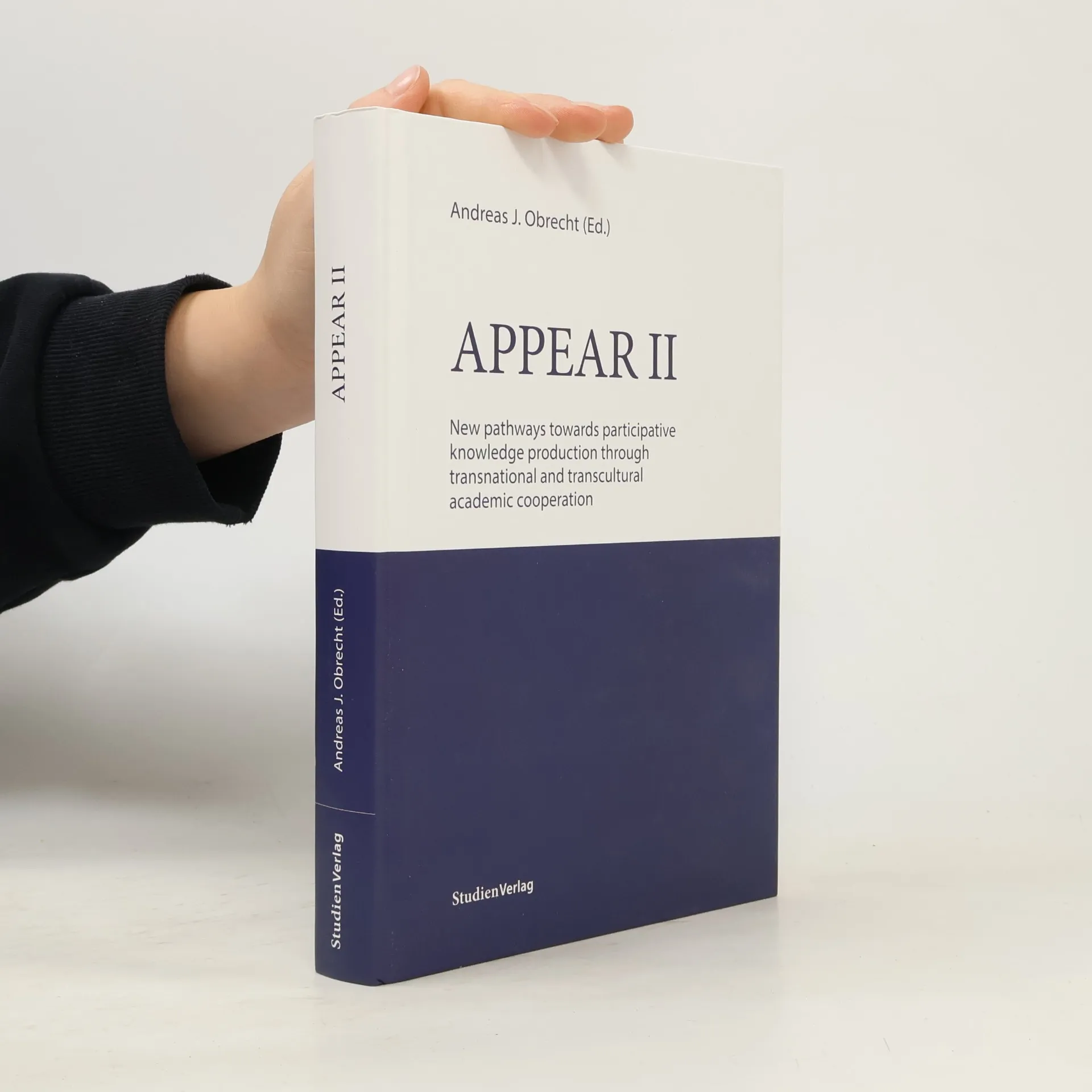


APPEAR II
New pathways towards participative knowledge production through transnational and transcultural academic cooperation
Autoři
Více o knize
This book is an ambitious undertaking – a research documentation that describes a wide variety of approaches to knowledge production relevant to development policy, and illustrates the diverse possibilities of transdisciplinary development research within 25 projects in 15 countries. The editor encouraged the 105 authors – 46 female, 59 male – to investigate questions, problems and dimensions of knowledge production that are usually not addressed in research and project reports. Project planning, no matter how successful, can only partially anticipate the social reality of implementing a project. Flexibility, creativity and improvisation are indispensable prerequisites for successful project implementation in often difficult research conditions. Thus, this book is not only a documentation of the second phase of the Austrian Partnership Programme in Higher Education and Research for Development – APPEAR – but also a discursive contribution on practical approaches to transdisciplinary and transcultural knowledge production.
Nákup knihy
APPEAR II, Andreas J. Obrecht
- Jazyk

- Rok vydání
- 2022
- Vazba
- (pevná)
Doručení
Platební metody
Nikdo zatím neohodnotil.
- Titul
- APPEAR II
- Podtitul
- New pathways towards participative knowledge production through transnational and transcultural academic cooperation
- Jazyk
- anglicky
- Autoři
- Andreas J. Obrecht
- Vydavatel
- Studien-Verl.
- Rok vydání
- 2022
- Vazba
- pevná
- Počet stran
- 376
- ISBN10
- 3706561085
- ISBN13
- 9783706561082
- Série
- Kategorie
- Štítky
- Anotace
- This book is an ambitious undertaking – a research documentation that describes a wide variety of approaches to knowledge production relevant to development policy, and illustrates the diverse possibilities of transdisciplinary development research within 25 projects in 15 countries. The editor encouraged the 105 authors – 46 female, 59 male – to investigate questions, problems and dimensions of knowledge production that are usually not addressed in research and project reports. Project planning, no matter how successful, can only partially anticipate the social reality of implementing a project. Flexibility, creativity and improvisation are indispensable prerequisites for successful project implementation in often difficult research conditions. Thus, this book is not only a documentation of the second phase of the Austrian Partnership Programme in Higher Education and Research for Development – APPEAR – but also a discursive contribution on practical approaches to transdisciplinary and transcultural knowledge production.