

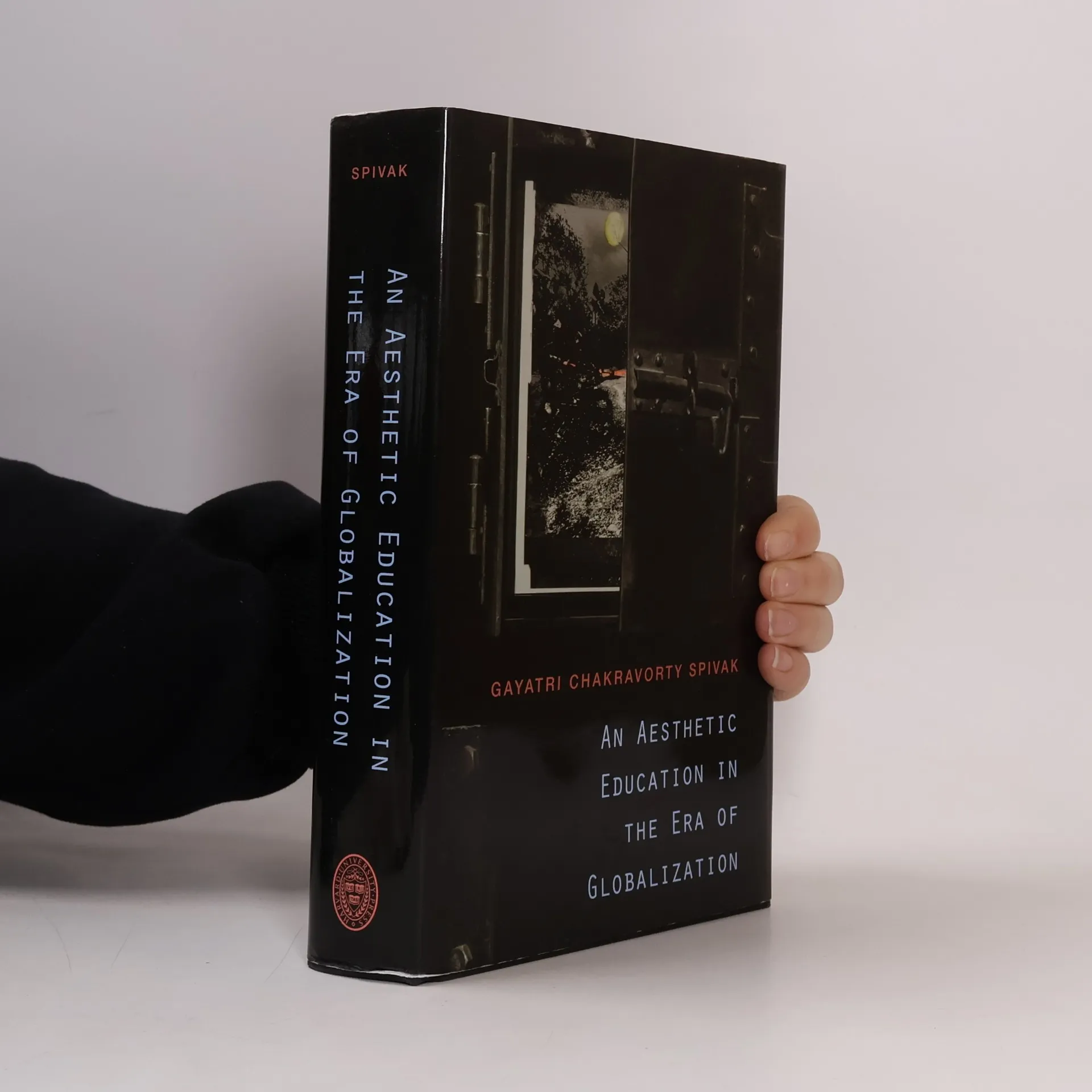



An Aesthetic Education in the Era of Globalization
Hodnocení knihy
Více o knize
Over the past two decades, a leading critical theorist, who shaped postcolonial studies, has undergone a significant shift in her perspective. Recognizing that traditional binaries like colonial versus postcolonial are inadequate for understanding today's globalized world, she posits that aesthetic education is crucial for achieving global justice and democracy. Gayatri Chakravorty Spivak's commitment to maintaining ethical considerations alongside aesthetic and political concerns presents a challenging endeavor. She engages with complex ideas, reinterpreting Friedrich Schiller’s notion of play as a double bind and weaving together the thoughts of Gregory Bateson, Gramsci, and Immanuel Kant, while also reflecting on her mentor Paul de Man. A key question she raises is whether we are willing to sacrifice the richness of diverse languages for the sake of global communication, asserting that “Even a good globalization requires the uniformity which the diversity of mother-tongues must challenge.” Through essays on theory, translation, Marxism, gender, and world literature, discussing figures like Assia Djebar, J. M. Coetzee, and Rabindranath Tagore, Spivak emphasizes the pressing relevance of the humanities and advocates for the importance of literary studies, suggesting that “the literary can still do something.”
Vydání

Nákup knihy
An Aesthetic Education in the Era of Globalization, Gayatri Chakravorty Spivak
- Jazyk

- Rok vydání
- 2011
- Vazba
- (pevná),
- Stav knihy
- Dobrá
- Cena
- 429 Kč
Doručení
Platební metody
Tady nám chybí tvá recenze.
- Titul
- An Aesthetic Education in the Era of Globalization
- Jazyk
- anglicky
- Vydavatel
- Harvard University Press
- Rok vydání
- 2011
- Vazba
- pevná
- Počet stran
- 624
- ISBN10
- 0674051831
- ISBN13
- 9780674051836
- Série
- Štítky
- Vysokoškolské učebnice
- Hodnocení
- 4,5 z 5
- Anotace
- Over the past two decades, a leading critical theorist, who shaped postcolonial studies, has undergone a significant shift in her perspective. Recognizing that traditional binaries like colonial versus postcolonial are inadequate for understanding today's globalized world, she posits that aesthetic education is crucial for achieving global justice and democracy. Gayatri Chakravorty Spivak's commitment to maintaining ethical considerations alongside aesthetic and political concerns presents a challenging endeavor. She engages with complex ideas, reinterpreting Friedrich Schiller’s notion of play as a double bind and weaving together the thoughts of Gregory Bateson, Gramsci, and Immanuel Kant, while also reflecting on her mentor Paul de Man. A key question she raises is whether we are willing to sacrifice the richness of diverse languages for the sake of global communication, asserting that “Even a good globalization requires the uniformity which the diversity of mother-tongues must challenge.” Through essays on theory, translation, Marxism, gender, and world literature, discussing figures like Assia Djebar, J. M. Coetzee, and Rabindranath Tagore, Spivak emphasizes the pressing relevance of the humanities and advocates for the importance of literary studies, suggesting that “the literary can still do something.”