

Parametry
Více o knize
Sir Francis Bacon, 1st Viscount St. Alban (1561-1626) was an English philosopher, statesman, and essayist. He is also known as a proponent of the scientific revolution. He was knighted in 1603, created Baron Verulam in 1618, and created Viscount St. Alban in 1621. Bacon's threefold goals were to discover truth, to serve his country, and to serve his church. He did not propose an actual philosophy, but rather a method of developing philosophy. He wrote that, whilst philosophy at the time used the deductive syllogism to interpret nature, the philosopher should instead proceed through inductive reasoning from fact to axiom to law. He claimed that any moral action is the action of the human will, which is governed by belief and spurred on by the passions; good habit is what aids men in directing their will toward the good; no universal rules can be made, as both situations and men's characters differ. Bacon's ideas about the improvement of the human lot were influential in the 1630s and 1650s; during the Restoration; and in the nineteenth and twentieth centuries.



Nákup knihy
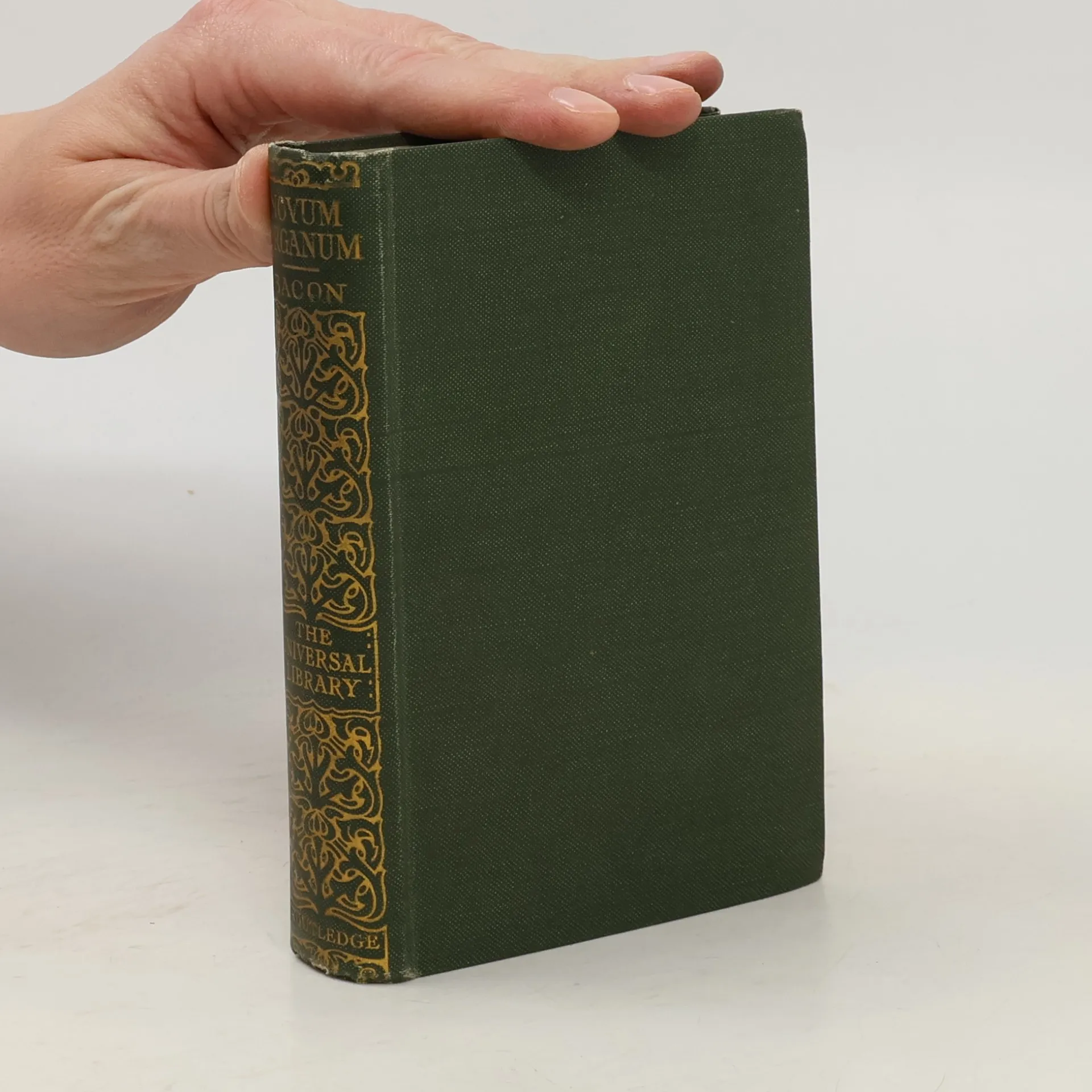
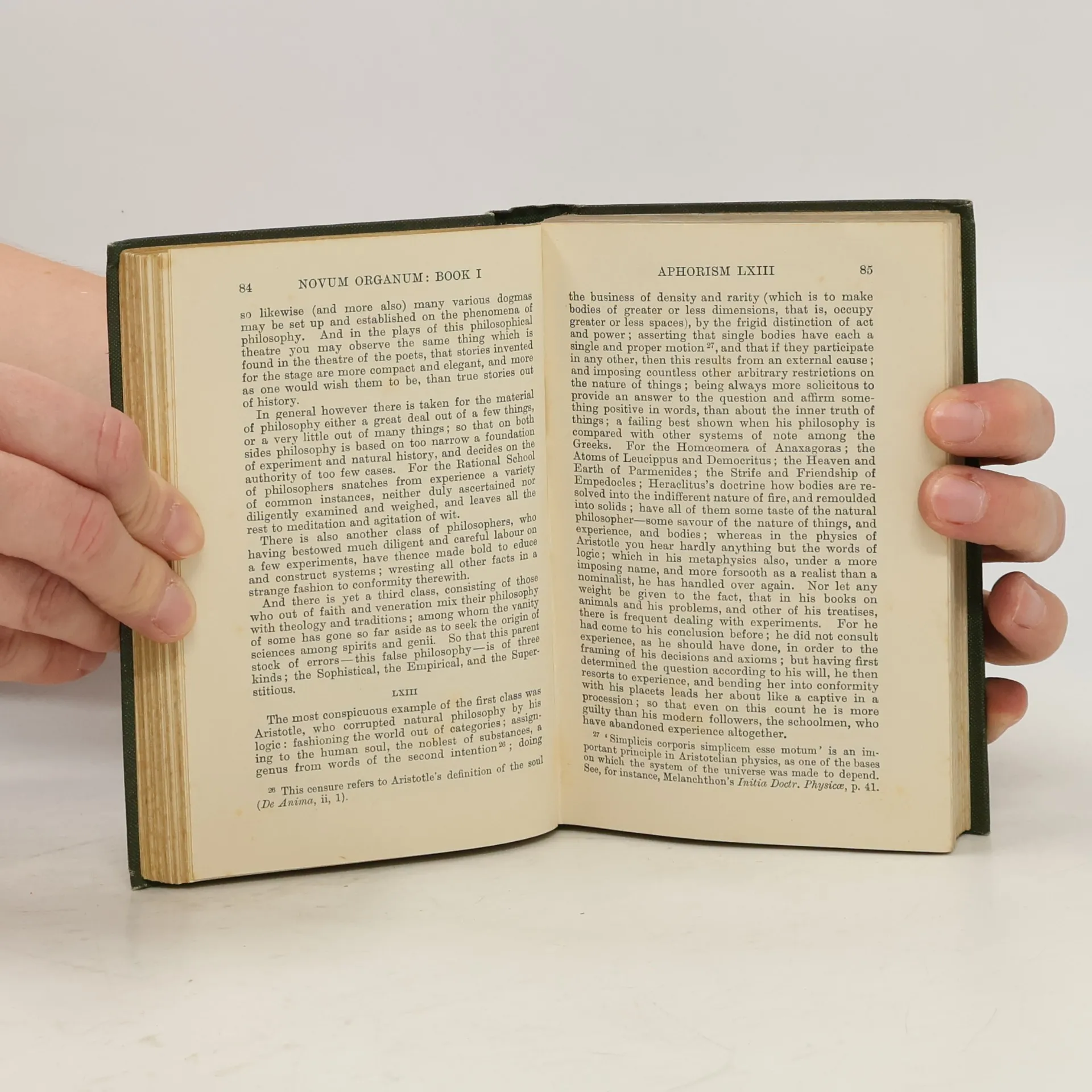
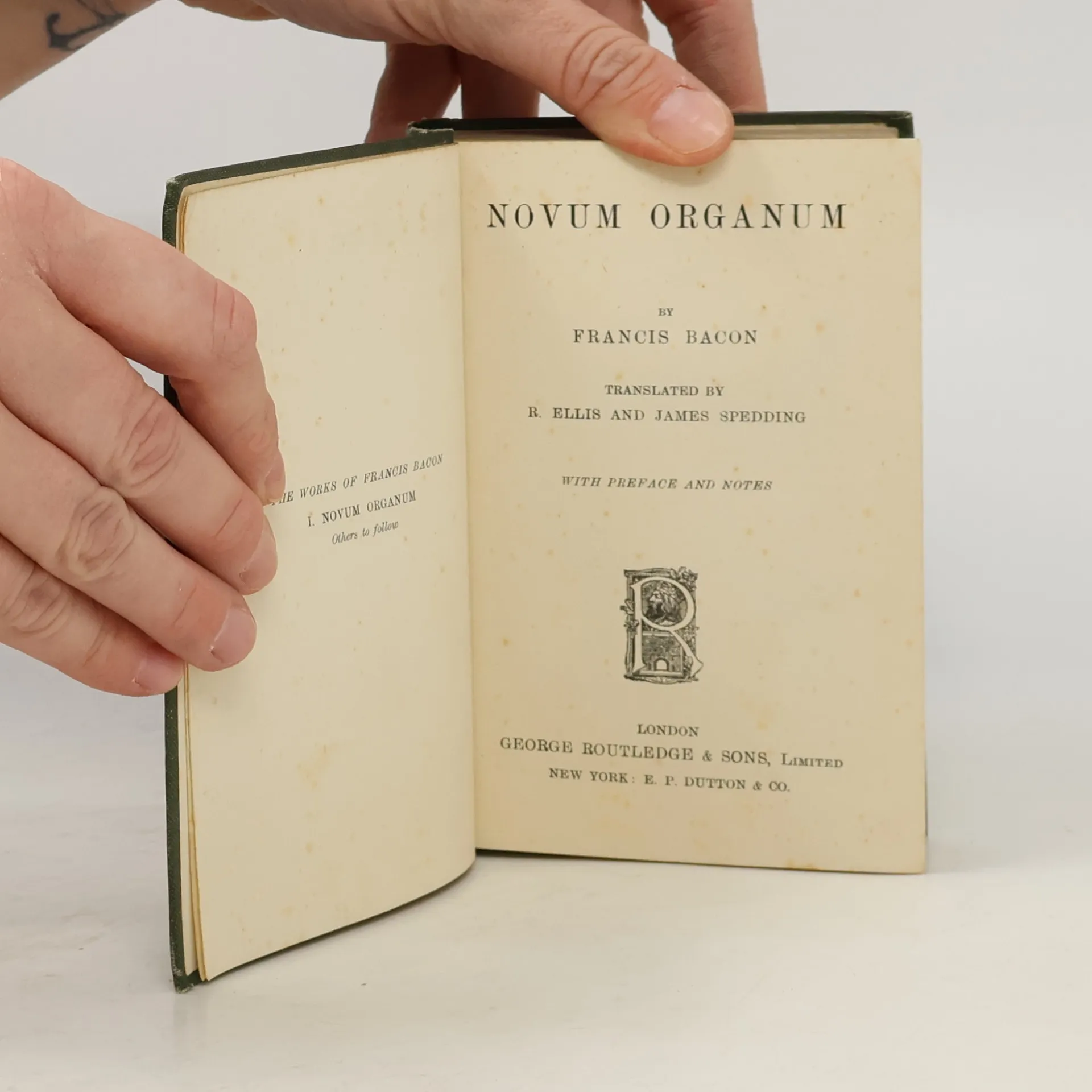
Novum Organum, Francis Bacon, R. Ellis, James Spedding
- Jazyk

- Rok vydání
- Vazba
- (pevná),
- Stav knihy
- Poškozená
- Cena
- 209 Kč
Tady nám chybí tvá recenze.
- Titul
- Novum Organum
- Jazyk
- anglicky
- Autoři
- Francis Bacon, R. Ellis, James Spedding
- Vydavatel
- GEORGE ROUTLEDGE & SONS, LIMITED
- Vazba
- pevná
- Série
- Kategorie
- Štítky
- Filosofická tématika, Věda, 17. století, Logika
- Hodnocení
- 3,8 z 5
- Anotace
- Sir Francis Bacon, 1st Viscount St. Alban (1561-1626) was an English philosopher, statesman, and essayist. He is also known as a proponent of the scientific revolution. He was knighted in 1603, created Baron Verulam in 1618, and created Viscount St. Alban in 1621. Bacon's threefold goals were to discover truth, to serve his country, and to serve his church. He did not propose an actual philosophy, but rather a method of developing philosophy. He wrote that, whilst philosophy at the time used the deductive syllogism to interpret nature, the philosopher should instead proceed through inductive reasoning from fact to axiom to law. He claimed that any moral action is the action of the human will, which is governed by belief and spurred on by the passions; good habit is what aids men in directing their will toward the good; no universal rules can be made, as both situations and men's characters differ. Bacon's ideas about the improvement of the human lot were influential in the 1630s and 1650s; during the Restoration; and in the nineteenth and twentieth centuries.