


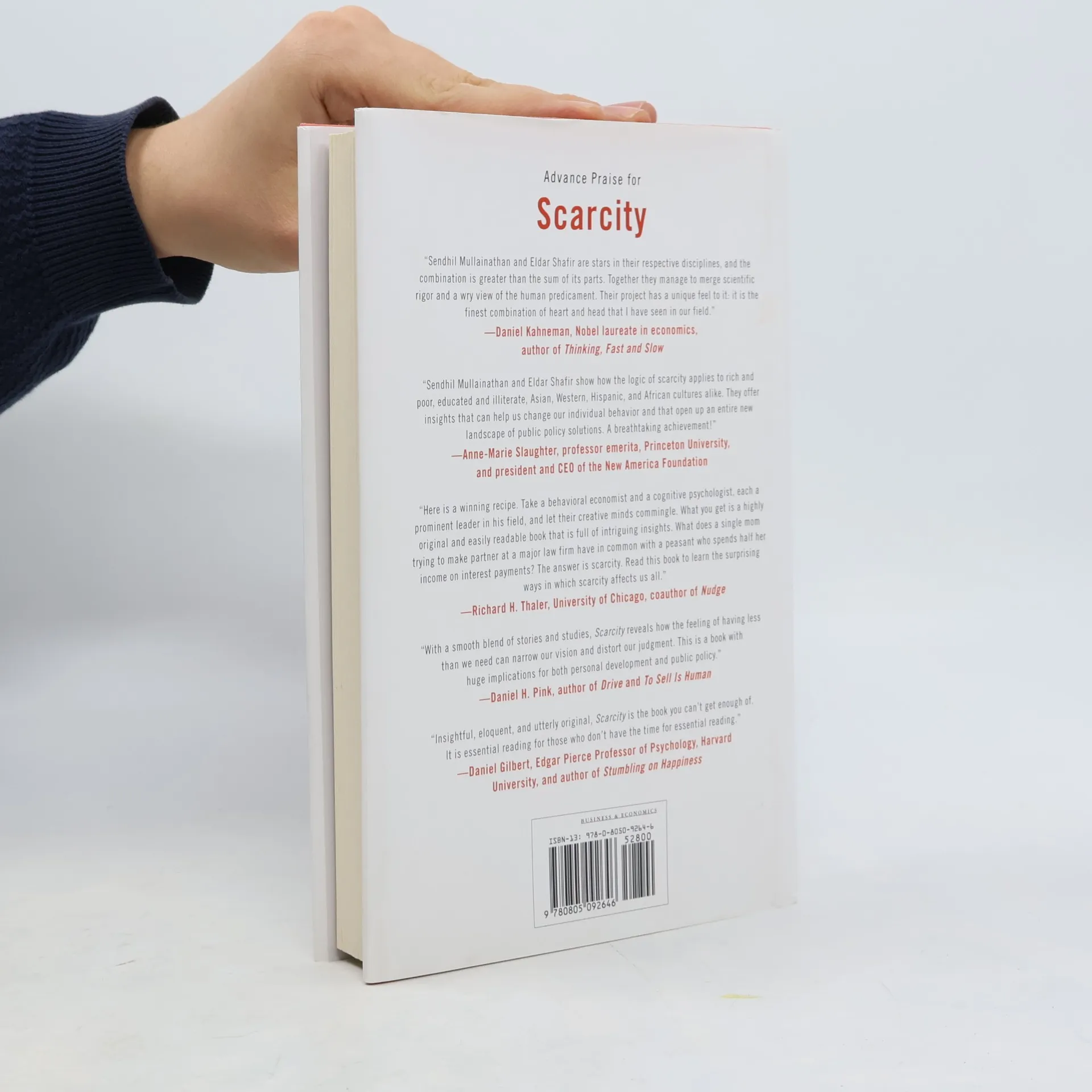

Scarcity
Why Having Too Little Means So Much
Hodnocení knihy
Více o knize
Audiobook: 8 hrs and 47 mins. This examination delves into how scarcity—and our flawed responses to it—shapes our lives and society. It explores questions like why successful people often procrastinate, why poverty endures, and why lonely individuals struggle to connect. These seemingly unrelated issues are linked by a mindset shaped by scarcity. Drawing on behavioral science and economics, the authors illustrate that scarcity creates a shared psychology among those managing with less. For instance, busy individuals mismanage their time similarly to how the financially strained handle their money. This scarcity dynamic explains why dieters struggle with temptation, why students and busy professionals face time management challenges, and why sugarcane farmers exhibit improved decision-making post-harvest. By framing problems through the lens of scarcity, the authors clarify the complexities of modern life. They share personal anecdotes and draw unexpected connections that bring their research to life. The insights provided offer a fresh perspective on why the poor remain impoverished and the busy remain overwhelmed, while also suggesting strategies for individuals and organizations to better navigate scarcity for improved satisfaction and success.



Nákup knihy
Scarcity, Sendhil Mullainathan, Eldar Shafir
- Jazyk

- Rok vydání
- 2013
- Vazba
- (pevná),
- Stav knihy
- Dobrá
- Cena
- 399 Kč
Doručení
Platební metody
Tady nám chybí tvá recenze.
- Titul
- Scarcity
- Podtitul
- Why Having Too Little Means So Much
- Jazyk
- anglicky
- Autoři
- Sendhil Mullainathan, Eldar Shafir
- Vydavatel
- Times Books
- Rok vydání
- 2013
- Vazba
- pevná
- Počet stran
- 304
- ISBN10
- 0805092641
- ISBN13
- 9780805092646
- Série
- Kategorie
- Štítky
- Byznys, Psychologická tématika, Věda
- Hodnocení
- 3,9 z 5
- Anotace
- Audiobook: 8 hrs and 47 mins. This examination delves into how scarcity—and our flawed responses to it—shapes our lives and society. It explores questions like why successful people often procrastinate, why poverty endures, and why lonely individuals struggle to connect. These seemingly unrelated issues are linked by a mindset shaped by scarcity. Drawing on behavioral science and economics, the authors illustrate that scarcity creates a shared psychology among those managing with less. For instance, busy individuals mismanage their time similarly to how the financially strained handle their money. This scarcity dynamic explains why dieters struggle with temptation, why students and busy professionals face time management challenges, and why sugarcane farmers exhibit improved decision-making post-harvest. By framing problems through the lens of scarcity, the authors clarify the complexities of modern life. They share personal anecdotes and draw unexpected connections that bring their research to life. The insights provided offer a fresh perspective on why the poor remain impoverished and the busy remain overwhelmed, while also suggesting strategies for individuals and organizations to better navigate scarcity for improved satisfaction and success.