

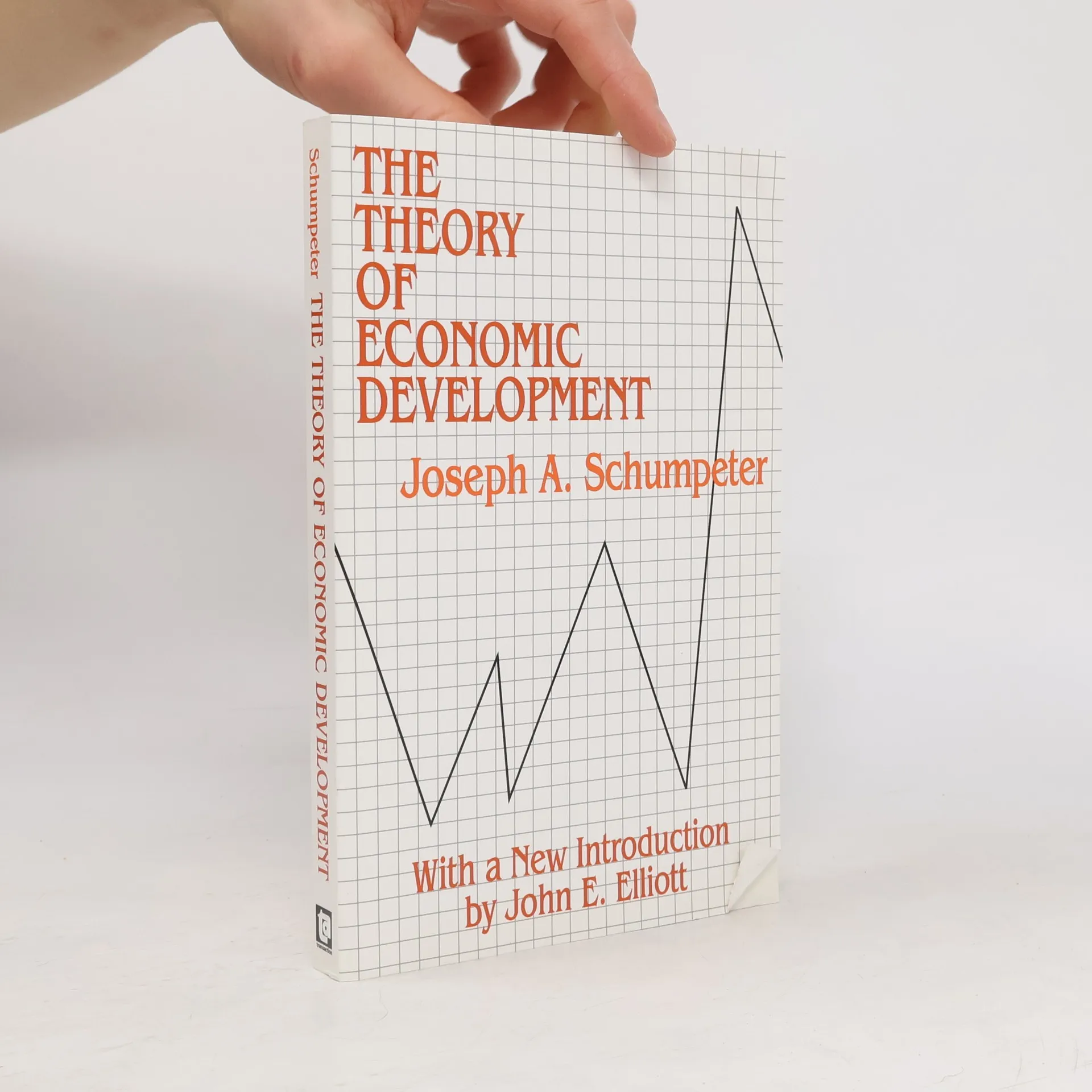


The Theory of Economic Development
An Inquiry Into Profits, Capital, Credit, Interest, and the Business Cycle
Autoři
Hodnocení knihy
Více o knize
Schumpeter proclaims in this classical analysis of capitalist society first published in 1911 that economics is a natural self-regulating mechanism when undisturbed by "social and other meddlers." In his preface he argues that despite weaknesses, theories are based on logic and provide structure for understanding fact. Of those who argue against him, Schumpeter asks a fundamental question: "Is it really artificial to keep separate the phenomena incidental to running a firm and the phenomena incidental to creating a new one?" In his answers, Schumpeter offers guidance to Third World politicians no less than First World businessman. In his substantial new introduction John E. Elliott discusses the salient ideas of The Theory of Economic Development against the historical background of three great periods of economic thought in the last two decades.

Nákup knihy
The Theory of Economic Development, Josef Alois Schumpeter
- Jazyk

- Rok vydání
- 1983
- Vazba
- (měkká)
Doručení
Platební metody
Tady nám chybí tvá recenze.
- Titul
- The Theory of Economic Development
- Podtitul
- An Inquiry Into Profits, Capital, Credit, Interest, and the Business Cycle
- Jazyk
- anglicky
- Autoři
- Josef Alois Schumpeter
- Vydavatel
- Transaction Publishers
- Rok vydání
- 1983
- Vazba
- měkká
- Počet stran
- 324
- ISBN10
- 0878556982
- ISBN13
- 9780878556984
- Série
- Kategorie
- Hodnocení
- 4,15 z 5
- Anotace
- Schumpeter proclaims in this classical analysis of capitalist society first published in 1911 that economics is a natural self-regulating mechanism when undisturbed by "social and other meddlers." In his preface he argues that despite weaknesses, theories are based on logic and provide structure for understanding fact. Of those who argue against him, Schumpeter asks a fundamental question: "Is it really artificial to keep separate the phenomena incidental to running a firm and the phenomena incidental to creating a new one?" In his answers, Schumpeter offers guidance to Third World politicians no less than First World businessman. In his substantial new introduction John E. Elliott discusses the salient ideas of The Theory of Economic Development against the historical background of three great periods of economic thought in the last two decades.