


Experimental Theatre from Stanislavsky to Peter Brook
Autoři
Více o knize
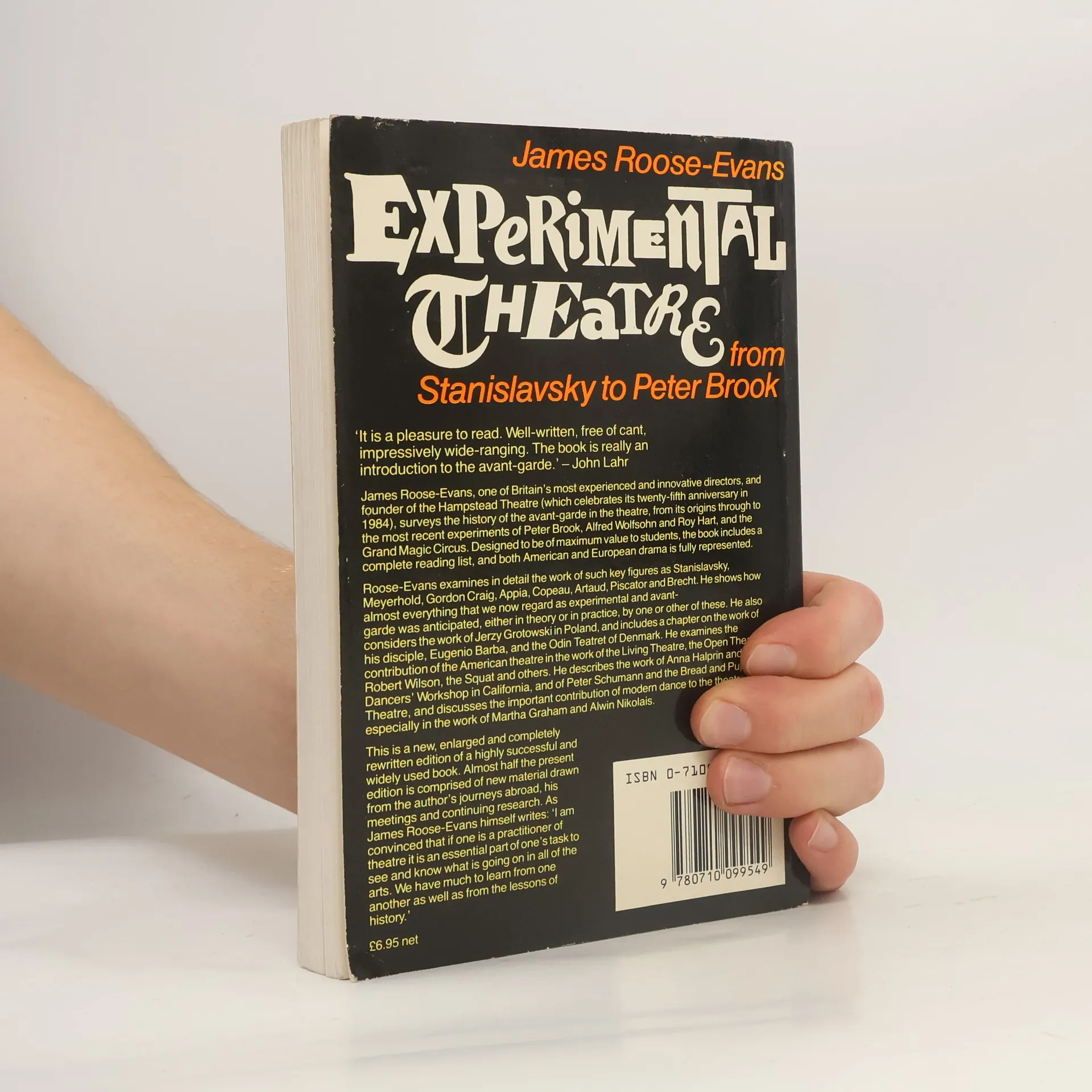
James Roose-Evans, one of Britain's most experienced and innovative directors, and founder of the Hampstead Theatre (which celebrated its twenty-fifth anniversary in 1984), surveys the history of the avant-garde in the theatre. He traces its origins through such key figures as Stanislavsky, Meyerhold, Craig, Appia, Copeau, Piscator, Brecht, Grotowski and up to the most recent experiments of Peter Brook's "Mahabharata," This is a second, enlarged edition of a highly successful and widely-used book. As James Roose-Evans himself writes: 'I am convinced that if one is a practitioner of theatre it is an essential part of one's task to see and know what is going on in all of the arts. We have much to learn from one another as well as from the lessons of history.'
Vydání

Nákup knihy
Experimental Theatre from Stanislavsky to Peter Brook, James Roose-Evans
- Jazyk

- Rok vydání
- 1984
- Vazba
- (měkká)
Doručení
Platební metody
Nikdo zatím neohodnotil.
- Titul
- Experimental Theatre from Stanislavsky to Peter Brook
- Jazyk
- anglicky
- Autoři
- James Roose-Evans
- Vydavatel
- Routledge & Kegan Paul
- Rok vydání
- 1984
- Vazba
- měkká
- Počet stran
- 210
- ISBN10
- 0710099541
- ISBN13
- 9780710099549
- Série
- Kategorie
- Štítky
- Divadlo
- Anotace
- James Roose-Evans, one of Britain's most experienced and innovative directors, and founder of the Hampstead Theatre (which celebrated its twenty-fifth anniversary in 1984), surveys the history of the avant-garde in the theatre. He traces its origins through such key figures as Stanislavsky, Meyerhold, Craig, Appia, Copeau, Piscator, Brecht, Grotowski and up to the most recent experiments of Peter Brook's "Mahabharata," This is a second, enlarged edition of a highly successful and widely-used book. As James Roose-Evans himself writes: 'I am convinced that if one is a practitioner of theatre it is an essential part of one's task to see and know what is going on in all of the arts. We have much to learn from one another as well as from the lessons of history.'