



Více o knize
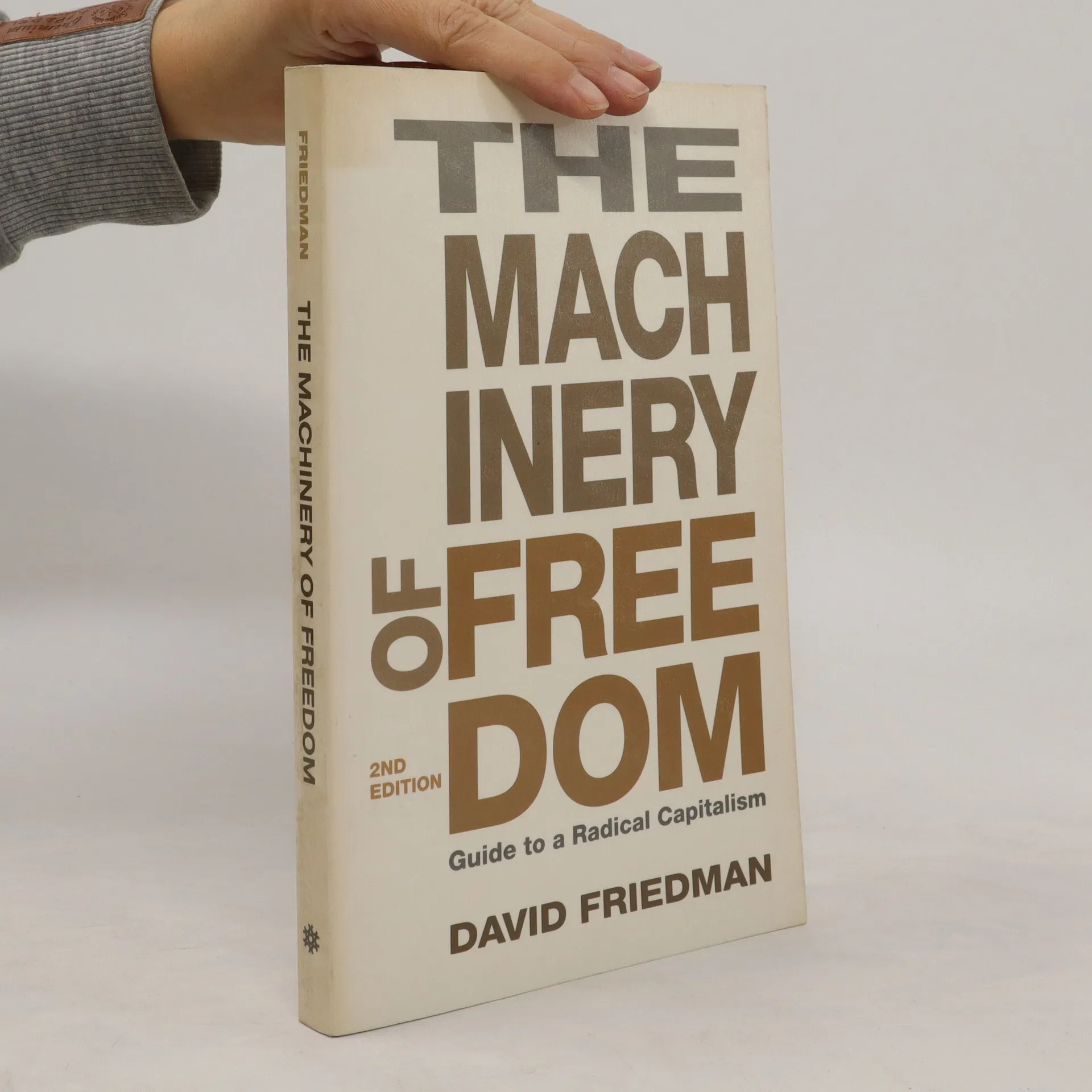
This book argues the case for a society organized by private property, individual rights, and voluntary co-operation, with little or no government. David Friedman's standpoint, known as 'anarcho-capitalism', has attracted a growing following as a desirable social ideal since the first edition of The Machinery of Freedom appeared in 1971. This new edition is thoroughly revised and includes much new material, exploring fresh applications of the author's libertarian principles. Among topics covered: how the U.S. would benefit from unrestricted immigration; why prohibition of drugs is inconsistent with a free society; why the welfare state mainly takes from the poor to help the not-so-poor; how police protection, law courts, and new laws could all be provided privately; what life was really like under the anarchist legal system of medieval Iceland; why non-intervention is the best foreign policy; why no simple moral rules can generate acceptable social policies -- and why these policies must be derived in part from the new discipline of economic analysis of law.
Nákup knihy
The Machinery of Freedom, David Friedman
- Jazyk

- Rok vydání
- 1989
- Vazba
- (měkká)
Doručení
Platební metody
Tady nám chybí tvá recenze.
- Titul
- The Machinery of Freedom
- Podtitul
- Guide to a Radical Capitalism
- Jazyk
- anglicky
- Autoři
- David Friedman
- Vydavatel
- Open Court
- Rok vydání
- 1989
- Vazba
- měkká
- ISBN10
- 0812690699
- ISBN13
- 9780812690699
- Série
- Kategorie
- Hodnocení
- 4,05 z 5
- Anotace
- This book argues the case for a society organized by private property, individual rights, and voluntary co-operation, with little or no government. David Friedman's standpoint, known as 'anarcho-capitalism', has attracted a growing following as a desirable social ideal since the first edition of The Machinery of Freedom appeared in 1971. This new edition is thoroughly revised and includes much new material, exploring fresh applications of the author's libertarian principles. Among topics covered: how the U.S. would benefit from unrestricted immigration; why prohibition of drugs is inconsistent with a free society; why the welfare state mainly takes from the poor to help the not-so-poor; how police protection, law courts, and new laws could all be provided privately; what life was really like under the anarchist legal system of medieval Iceland; why non-intervention is the best foreign policy; why no simple moral rules can generate acceptable social policies -- and why these policies must be derived in part from the new discipline of economic analysis of law.