

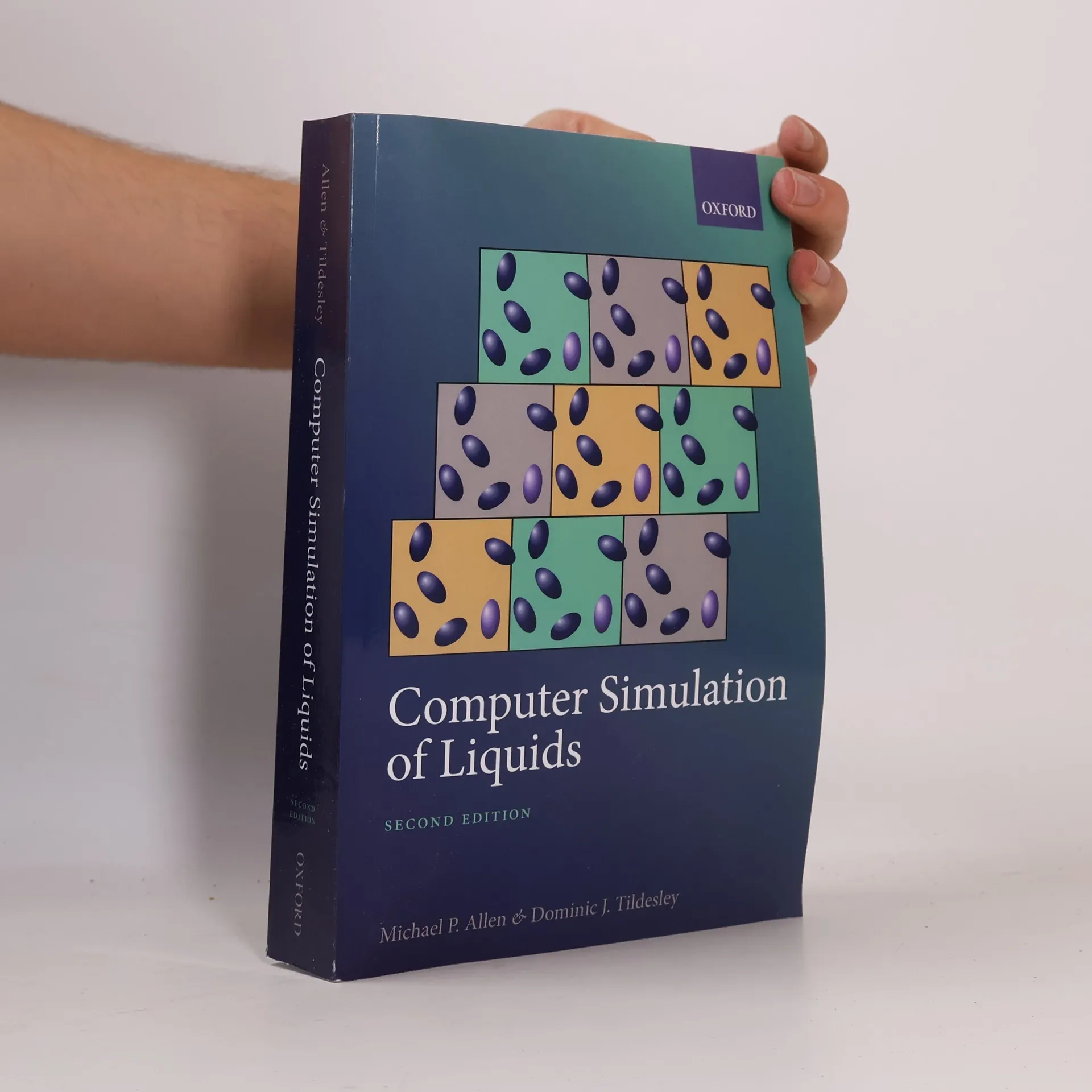
Computer Simulation of Liquids
Second Edition
Hodnocení knihy
Více o knize
This book provides a practical guide to molecular dynamics and Monte Carlo simulation techniques used in the modelling of simple and complex liquids. Computer simulation is an essential tool in studying the chemistry and physics of condensed matter, complementing and reinforcing both experiment and theory. Simulations provide detailed information about structure and dynamics, essential to understand the many fluid systems that play a key role in our daily lives: polymers, gels, colloidal suspensions, liquid crystals, biological membranes, and glasses. The second edition of this pioneering book aims to explain how simulation programs work, how to use them, and how to interpret the results, with examples of the latest research in this rapidly evolving field. Accompanying programs in Fortran and Python provide practical, hands-on, illustrations of the ideas in the text.
Vydání

Nákup knihy
Computer Simulation of Liquids, D. J. Tildesley, Michael P. Allen
- Jazyk

- Rok vydání
- 2017
- Vazba
- (měkká)
Doručení
Platební metody
Tady nám chybí tvá recenze.
- Titul
- Computer Simulation of Liquids
- Podtitul
- Second Edition
- Jazyk
- anglicky
- Autoři
- D. J. Tildesley, Michael P. Allen
- Vydavatel
- Oxford University Press
- Rok vydání
- 2017
- Vazba
- měkká
- Počet stran
- 640
- ISBN10
- 0198803206
- ISBN13
- 9780198803201
- Série
- Hodnocení
- 4,7 z 5
- Anotace
- This book provides a practical guide to molecular dynamics and Monte Carlo simulation techniques used in the modelling of simple and complex liquids. Computer simulation is an essential tool in studying the chemistry and physics of condensed matter, complementing and reinforcing both experiment and theory. Simulations provide detailed information about structure and dynamics, essential to understand the many fluid systems that play a key role in our daily lives: polymers, gels, colloidal suspensions, liquid crystals, biological membranes, and glasses. The second edition of this pioneering book aims to explain how simulation programs work, how to use them, and how to interpret the results, with examples of the latest research in this rapidly evolving field. Accompanying programs in Fortran and Python provide practical, hands-on, illustrations of the ideas in the text.