



Více o knize
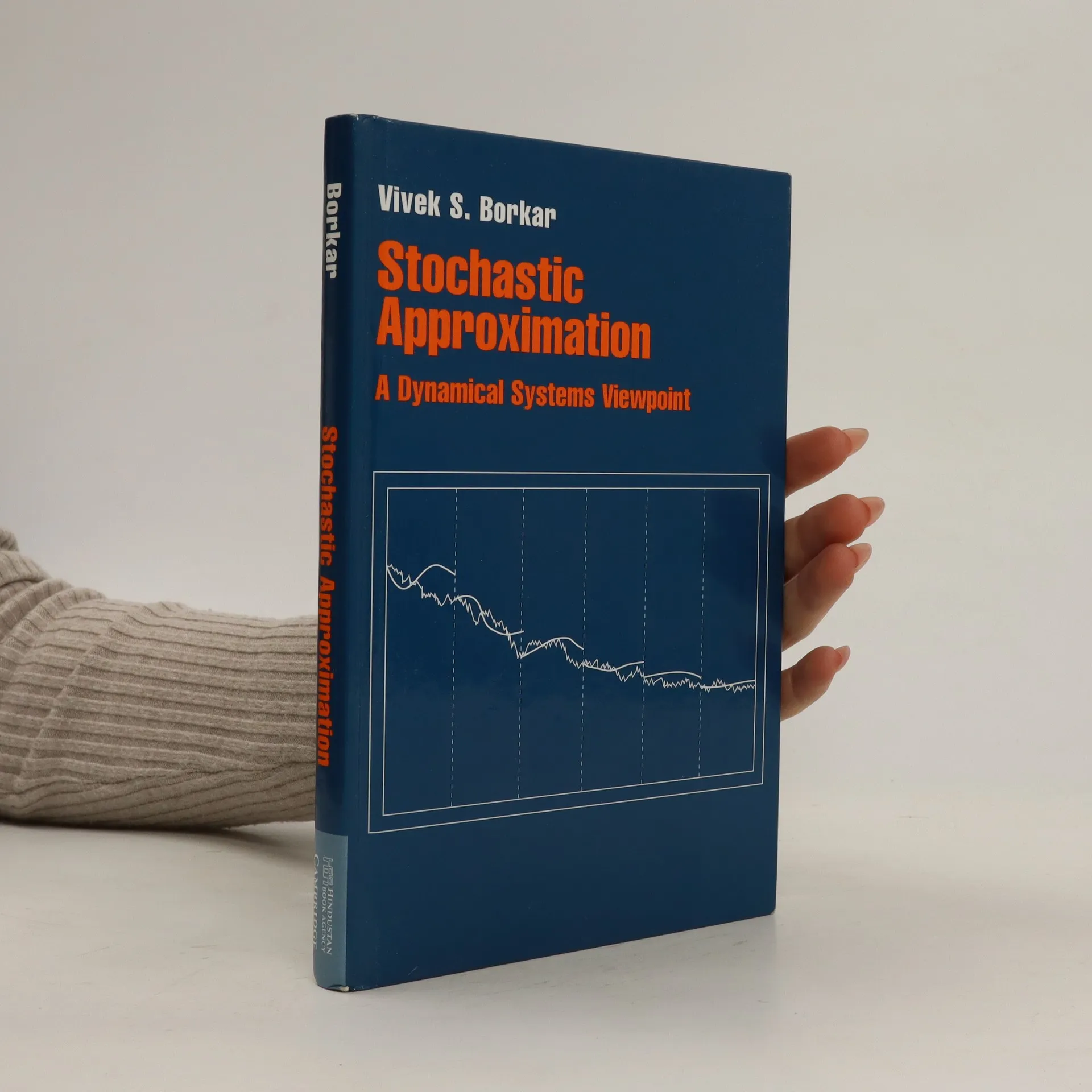
This simple, compact toolkit for designing and analyzing stochastic approximation algorithms requires only a basic understanding of probability and differential equations. Although powerful, these algorithms have applications in control and communications engineering, artificial intelligence and economic modeling. Unique topics include finite-time behavior, multiple timescales and asynchronous implementation. There is a useful plethora of applications, each with concrete examples from engineering and economics. Notably it covers variants of stochastic gradient-based optimization schemes, fixed-point solvers, which are commonplace in learning algorithms for approximate dynamic programming, and some models of collective behavior.

Nákup knihy
Stochastic Approximation, Vivek S. Borkar
- Jazyk

- Rok vydání
- 2008
- Vazba
- (pevná)
Doručení
Platební metody
Tady nám chybí tvá recenze.
- Titul
- Stochastic Approximation
- Jazyk
- anglicky
- Autoři
- Vivek S. Borkar
- Rok vydání
- 2008
- Vazba
- pevná
- Počet stran
- 164
- ISBN10
- 0521515920
- ISBN13
- 9780521515924
- Série
- Štítky
- Byznys
- Hodnocení
- 4 z 5
- Anotace
- This simple, compact toolkit for designing and analyzing stochastic approximation algorithms requires only a basic understanding of probability and differential equations. Although powerful, these algorithms have applications in control and communications engineering, artificial intelligence and economic modeling. Unique topics include finite-time behavior, multiple timescales and asynchronous implementation. There is a useful plethora of applications, each with concrete examples from engineering and economics. Notably it covers variants of stochastic gradient-based optimization schemes, fixed-point solvers, which are commonplace in learning algorithms for approximate dynamic programming, and some models of collective behavior.