



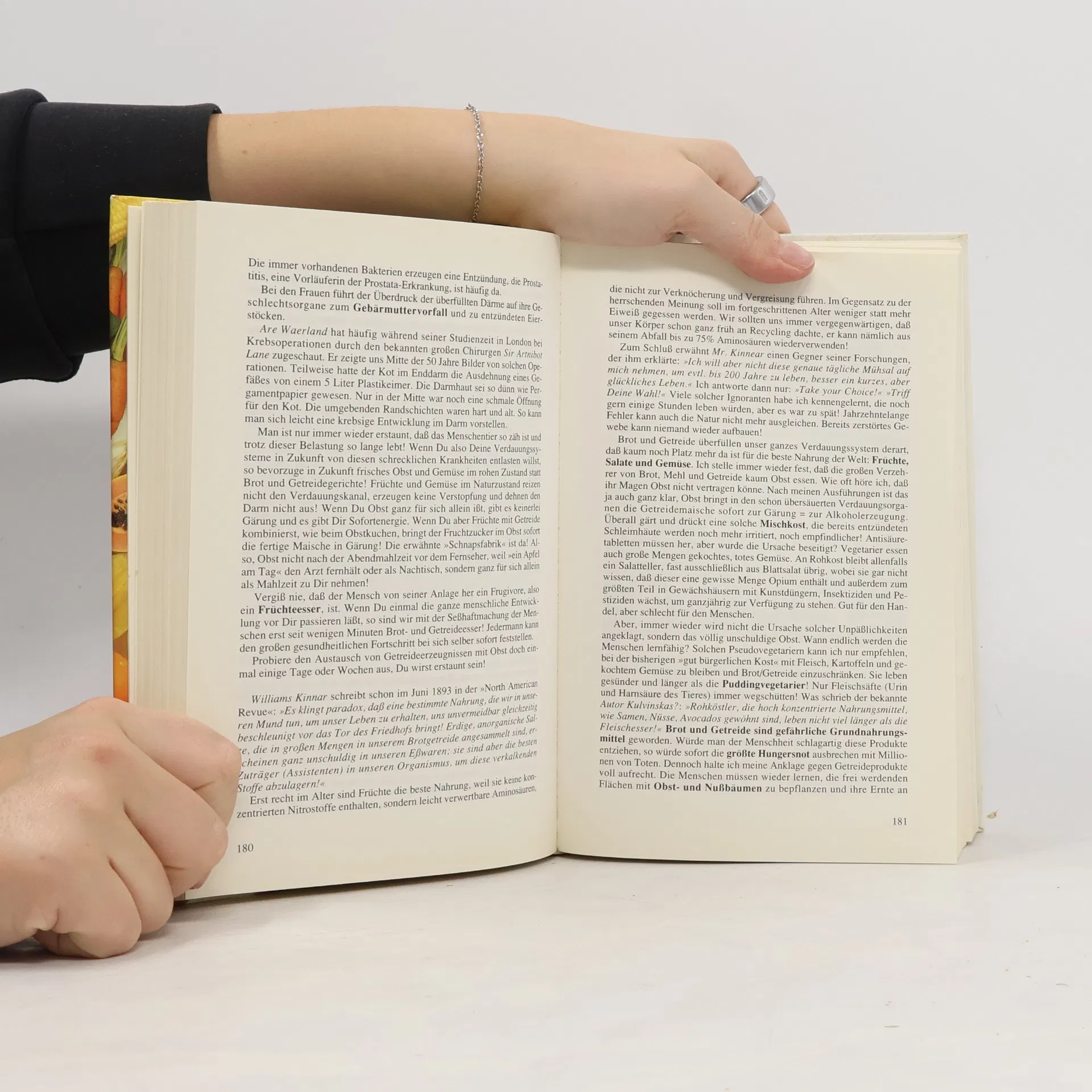
Willst Du gesund sein? Vergiß den Kochtopf - 6. Auflage überarbeitet und erweitert
Autoři
Parametry
Více o knize
"Forget the pot!" by Helmut Wandmaker reveals the secrets of longevity through fruitarianism. This book examines the idea that meat, legumes, grains, and dairy are not in harmony with the human body, and that humans were originally fruit eaters. It addresses common questions such as where to obtain the necessary protein for the body. The author poses the question of how animals like bulls, from which we may enjoy a piece of meat, or elephants, the largest land animals, obtain their protein solely from the plants they consume. The book argues that if these herbivores can meet all their nutritional needs from a single type of food, why can't we obtain what we need from fruits? Unlike herbivores, we have access to a variety of fruits and do not need to rely on just one type of plant for our entire lives. The reality is that our bodies derive the amino acids (proteins) they need from the fruits and raw vegetables we consume. We cannot fulfill our body's protein needs from ready-made meat and eggs, and the result of such consumption is toxicity and illness.
Nákup knihy
Willst Du gesund sein? Vergiß den Kochtopf - 6. Auflage überarbeitet und erweitert, Helmut Wandmaker
- Jazyk

- Rok vydání
- 1995
- Vazba
- (pevná),
- Stav knihy
- Velmi dobrá
- Cena
- 139 Kč
Doručení
Platební metody
Nikdo zatím neohodnotil.
- Titul
- Willst Du gesund sein? Vergiß den Kochtopf - 6. Auflage überarbeitet und erweitert
- Jazyk
- anglicky
- Autoři
- Helmut Wandmaker
- Vydavatel
- Waldthausen
- Rok vydání
- 1995
- Vazba
- pevná
- ISBN10
- 3926453664
- ISBN13
- 9783926453662
- Série
- Kategorie
- Štítky
- Zdraví & Lékařství, Zdraví
- Anotace
- "Forget the pot!" by Helmut Wandmaker reveals the secrets of longevity through fruitarianism. This book examines the idea that meat, legumes, grains, and dairy are not in harmony with the human body, and that humans were originally fruit eaters. It addresses common questions such as where to obtain the necessary protein for the body. The author poses the question of how animals like bulls, from which we may enjoy a piece of meat, or elephants, the largest land animals, obtain their protein solely from the plants they consume. The book argues that if these herbivores can meet all their nutritional needs from a single type of food, why can't we obtain what we need from fruits? Unlike herbivores, we have access to a variety of fruits and do not need to rely on just one type of plant for our entire lives. The reality is that our bodies derive the amino acids (proteins) they need from the fruits and raw vegetables we consume. We cannot fulfill our body's protein needs from ready-made meat and eggs, and the result of such consumption is toxicity and illness.