

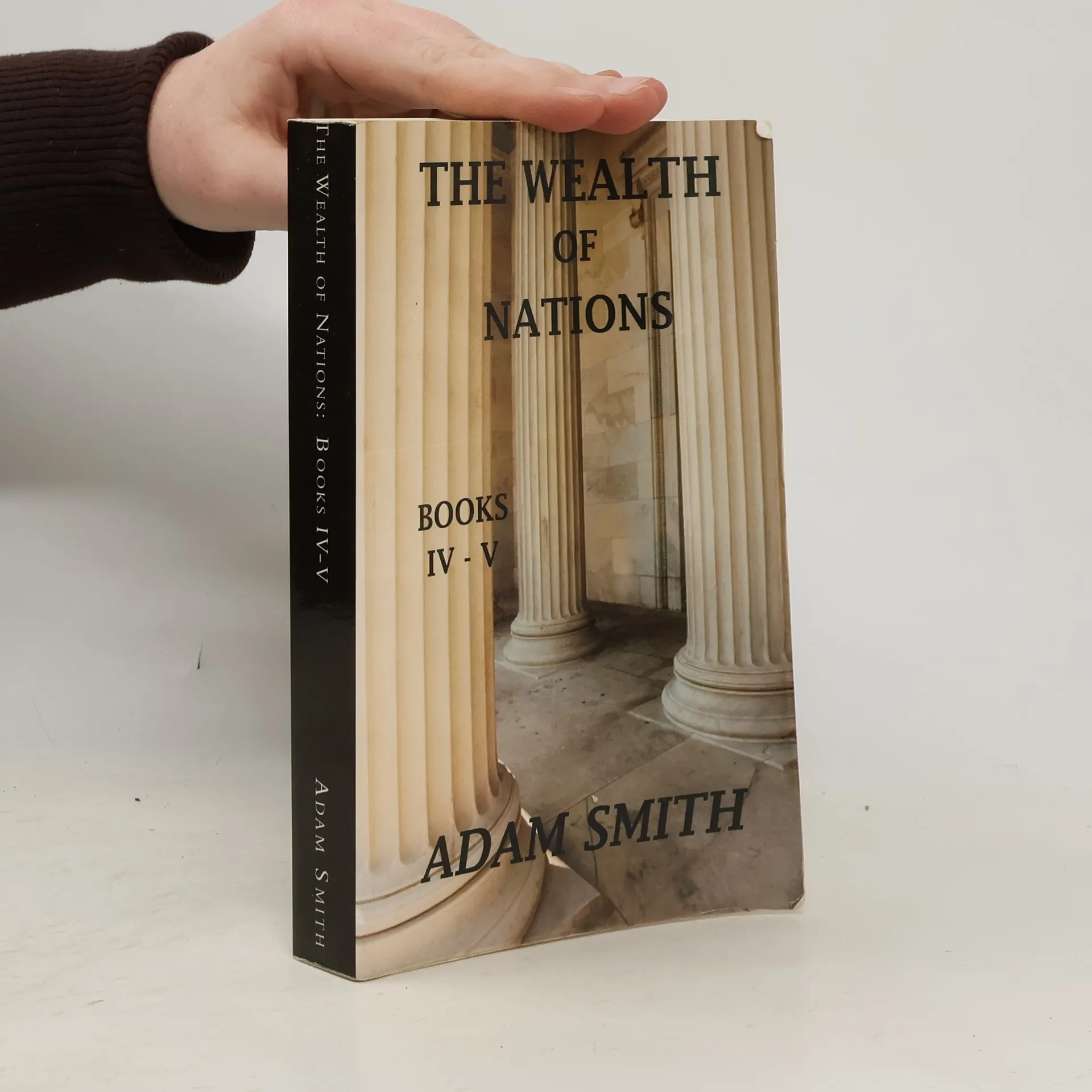


The Wealth of Nations, Books 4-5
Autoři
Více o knize
It is in Books IV and V of The Wealth of Nations that Adam Smith offers his considered response to the French Physiocrats, perhaps the first great school of economic theorists, and assesses the nature of the mercantile system, particularly the coloniaL relationship with America, whose achievements could have been even more spectacular if conditions of free trade and economic union had existed. Even on the eve of the Declaration of Independence, Smith famously predicted that America "will be one of the foremost nations of the world." It is also here that he develops the case for a limited state role in economic planning, notably to combat market failure and induce efficiency in areas such as education, public works, justice, and defense. His pioneering analysis still provides many subtle and penetrating insights into one of today's most vital and controversial policy debates.
Nákup knihy
The Wealth of Nations, Books 4-5, Adam Smith
- Jazyk

- Rok vydání
- 2009
- Vazba
- (měkká)
Doručení
Platební metody
Nikdo zatím neohodnotil.
- Titul
- The Wealth of Nations, Books 4-5
- Jazyk
- anglicky
- Autoři
- Adam Smith
- Rok vydání
- 2009
- Vazba
- měkká
- Počet stran
- 408
- ISBN10
- 1442147946
- ISBN13
- 9781442147942
- Série
- Štítky
- Byznys, Filosofická tématika, Politika, Finance
- Anotace
- It is in Books IV and V of The Wealth of Nations that Adam Smith offers his considered response to the French Physiocrats, perhaps the first great school of economic theorists, and assesses the nature of the mercantile system, particularly the coloniaL relationship with America, whose achievements could have been even more spectacular if conditions of free trade and economic union had existed. Even on the eve of the Declaration of Independence, Smith famously predicted that America "will be one of the foremost nations of the world." It is also here that he develops the case for a limited state role in economic planning, notably to combat market failure and induce efficiency in areas such as education, public works, justice, and defense. His pioneering analysis still provides many subtle and penetrating insights into one of today's most vital and controversial policy debates.