

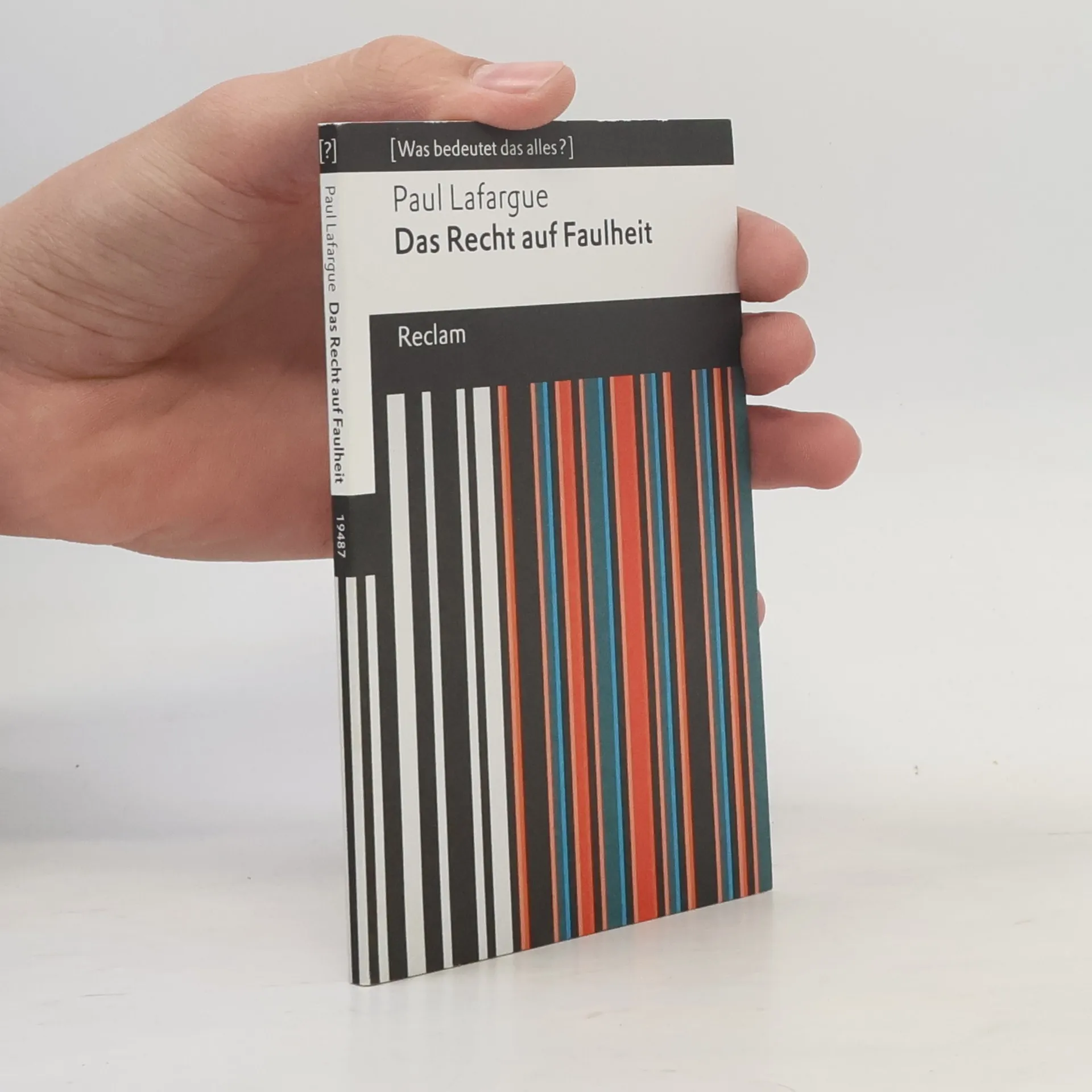

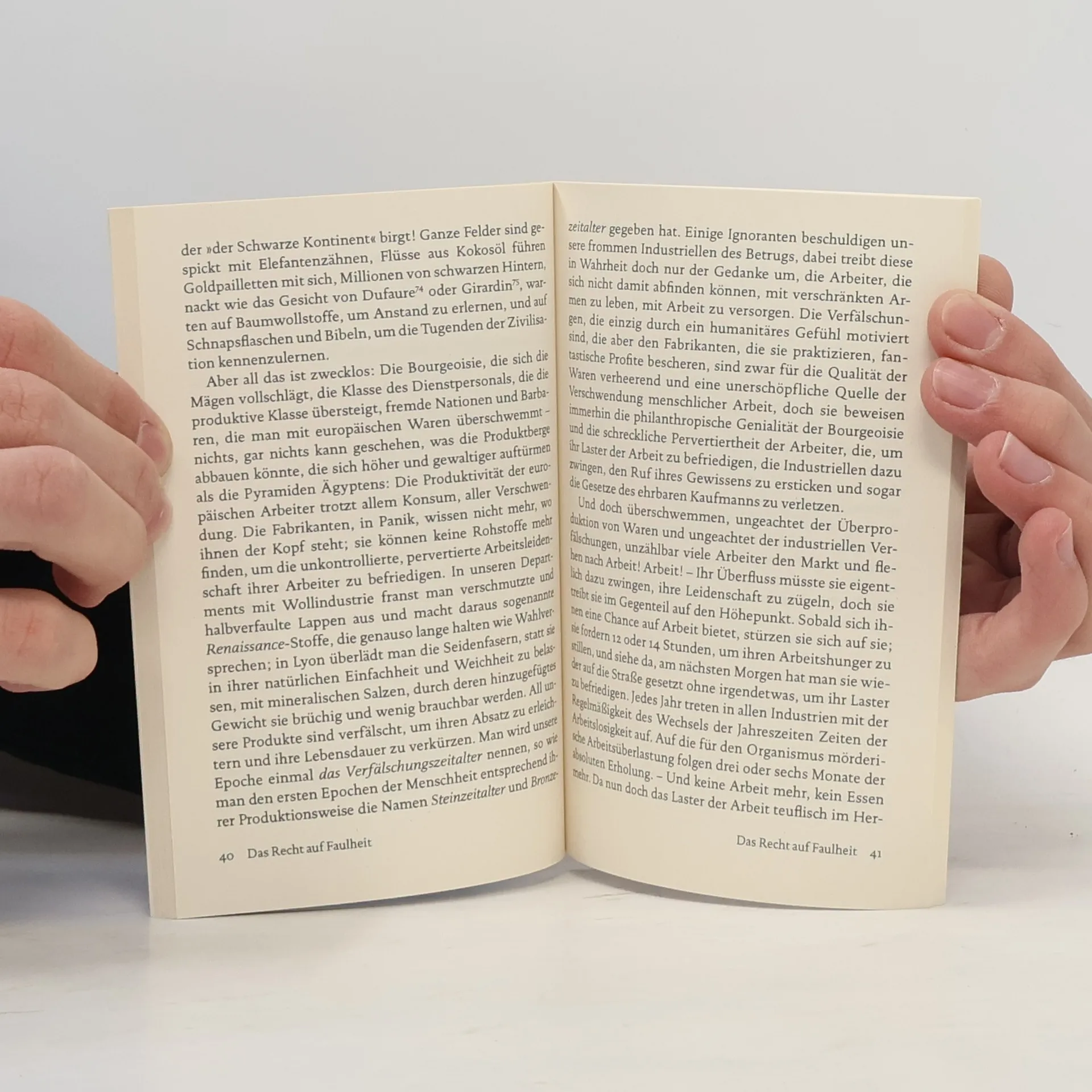
Das Recht auf Faulheit. Zurückweisung des »Rechts auf Arbeit« von 1848. [Was bedeutet das alles?]
Hodnocení knihy
Více o knize
Paul Lafargue's masterpiece, The Right To Be Lazy, at once funny and serious, witty and profound, elegant and forceful, is a logical expansion of The Right to the Pursuit of Happiness announced by Thomas Jefferson in the Declaration of Independence. It was not only extremely popular but also brought about pragmatic results, inspiring the movement for the eight-hour day and equal pay for men and women who perform equal work. It survives as one of the very few pieces of writing to come out of the international socialist movement of the nineteenth century that is not only readable-even enjoyable-but pertinent. This new translation by Len Bracken, fuller than previous versions in English, is supplemented by Lafargue's little-known talk on The Intellectuals.
Nákup knihy
Das Recht auf Faulheit. Zurückweisung des »Rechts auf Arbeit« von 1848. [Was bedeutet das alles?], Paul Lafargue, Ute Kruse-Ebeling
- Jazyk

- Rok vydání
- 2018
- Vazba
- (měkká)
Doručení
Platební metody
Tady nám chybí tvá recenze.
- Titul
- Das Recht auf Faulheit. Zurückweisung des »Rechts auf Arbeit« von 1848. [Was bedeutet das alles?]
- Jazyk
- německy
- Autoři
- Paul Lafargue, Ute Kruse-Ebeling
- Vydavatel
- Reclam
- Rok vydání
- 2018
- Vazba
- měkká
- Počet stran
- 80
- ISBN10
- 3150194873
- ISBN13
- 9783150194874
- Série
- Štítky
- Světová literatura, Filosofická tématika, Politika, Francie, Vědecké teorie, Zaměstnání, Etika, Komunismus, Úvahy a zamyšlení, Povinná četba, Demokracie, Marxismus, Dělnické hnutí, Kritické myšlení
- Hodnocení
- 3,35 z 5
- Anotace
- Paul Lafargue's masterpiece, The Right To Be Lazy, at once funny and serious, witty and profound, elegant and forceful, is a logical expansion of The Right to the Pursuit of Happiness announced by Thomas Jefferson in the Declaration of Independence. It was not only extremely popular but also brought about pragmatic results, inspiring the movement for the eight-hour day and equal pay for men and women who perform equal work. It survives as one of the very few pieces of writing to come out of the international socialist movement of the nineteenth century that is not only readable-even enjoyable-but pertinent. This new translation by Len Bracken, fuller than previous versions in English, is supplemented by Lafargue's little-known talk on The Intellectuals.