

Více o knize
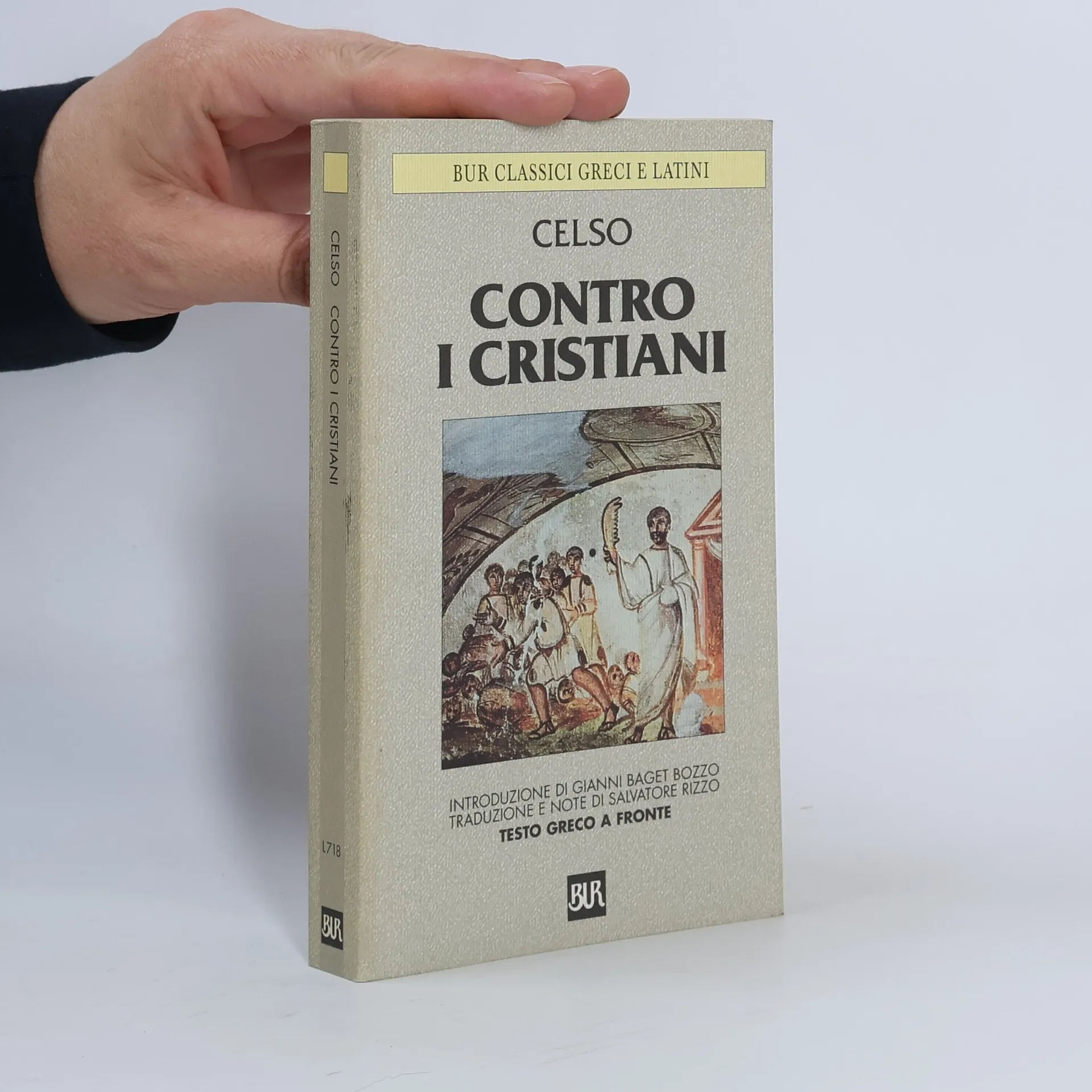
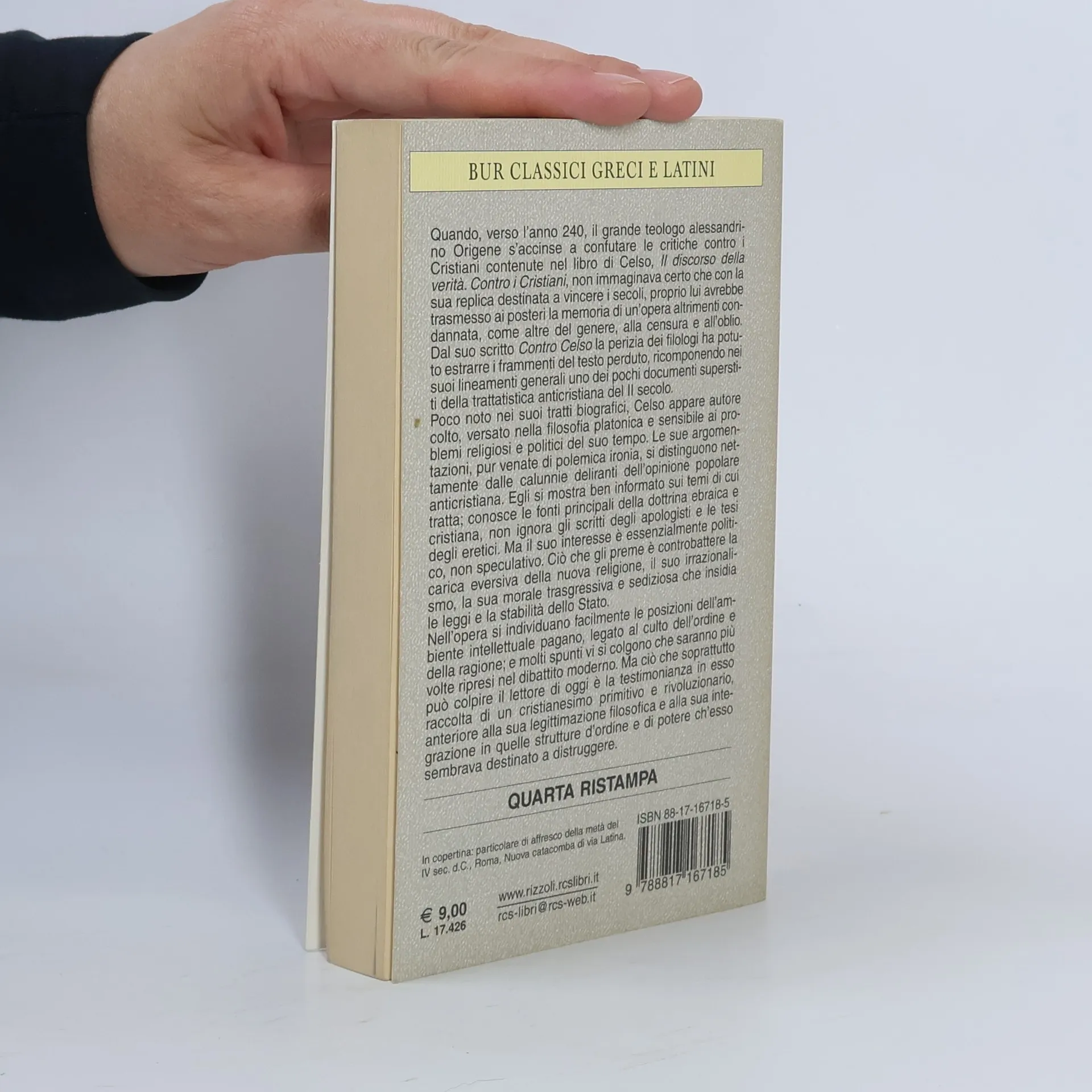
Testo greco a fronte. Although the works of many early critics of the Church were burned by Christian emperors or were otherwise destroyed in the second and third centuries, the major work of the Greek philosopher, Celsus, is an exception. His polemical attack on the beliefs and practices of Christianity, On the True Doctrine, written around 178 A.D., is one of the earliest surviving documents of its kind. Preserved almost in its entirety within Contra Celsum, a counter-polemic written by Origen of Alexandria, On the True Doctrine provides an accurate portrait of the attitudes of most detached pagan observers of the time: interested in the latest religious trends, but suspicious of the religious enthusiasm and the newer proselytizing sects of the empire.

Nákup knihy
Il discorso della verità, Gianni Baget Bozzo
- Jazyk

- Rok vydání
- 1989
- Vazba
- (měkká)
Doručení
Platební metody
Tady nám chybí tvá recenze.
- Titul
- Il discorso della verità
- Podtitul
- Contro i Cristiani
- Jazyk
- italsky
- Autoři
- Gianni Baget Bozzo
- Vydavatel
- BUR Biblioteca Univ. Rizzoli
- Rok vydání
- 1989
- Vazba
- měkká
- Počet stran
- 300
- ISBN10
- 8817167185
- ISBN13
- 9788817167185
- Série
- Kategorie
- Hodnocení
- 2,85 z 5
- Anotace
- Testo greco a fronte. Although the works of many early critics of the Church were burned by Christian emperors or were otherwise destroyed in the second and third centuries, the major work of the Greek philosopher, Celsus, is an exception. His polemical attack on the beliefs and practices of Christianity, On the True Doctrine, written around 178 A.D., is one of the earliest surviving documents of its kind. Preserved almost in its entirety within Contra Celsum, a counter-polemic written by Origen of Alexandria, On the True Doctrine provides an accurate portrait of the attitudes of most detached pagan observers of the time: interested in the latest religious trends, but suspicious of the religious enthusiasm and the newer proselytizing sects of the empire.