

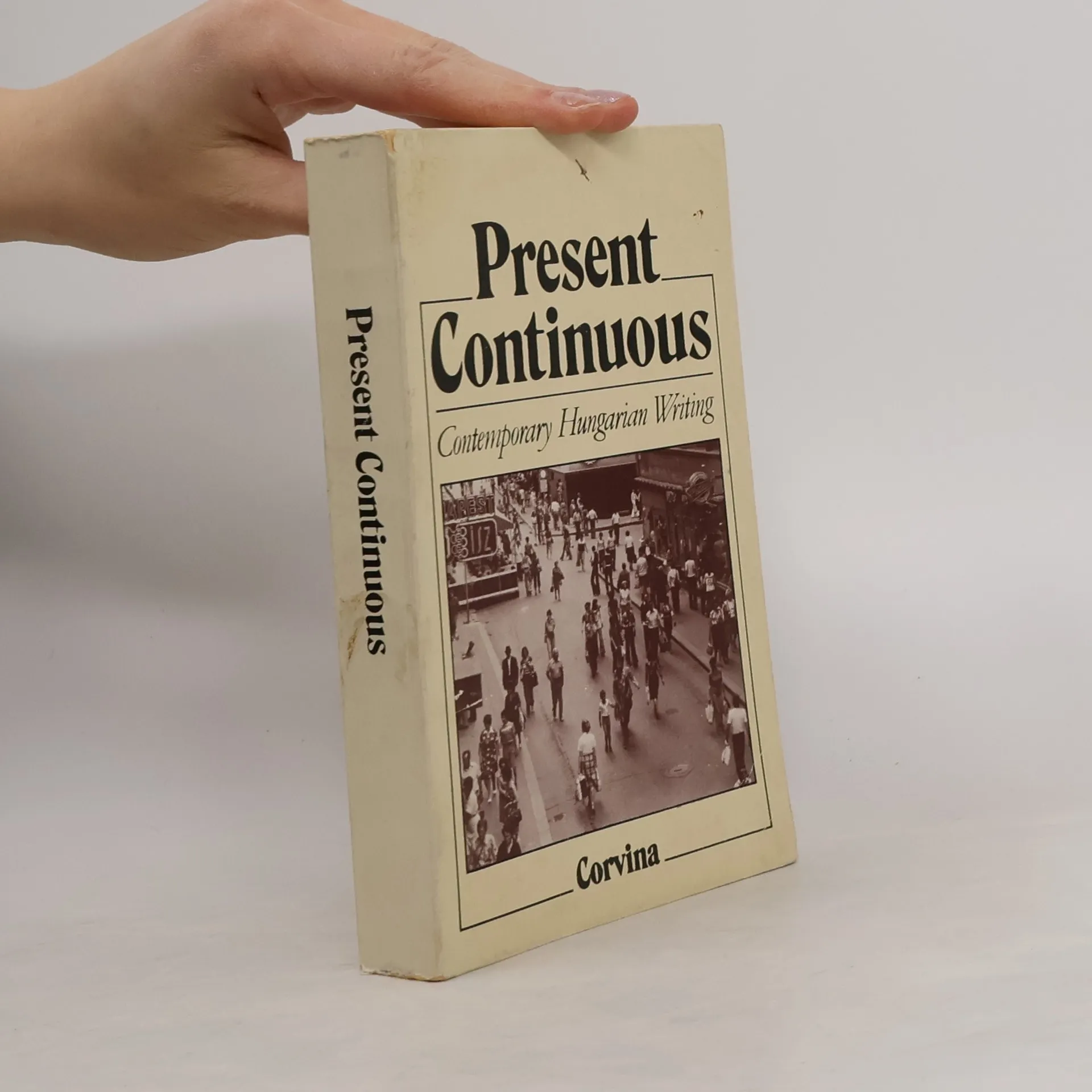
Present Continuous
Comtemporary Hungaria
Autoři
Více o knize
The present anthology is unusual in that its primary aim is to present, through a sample of recent Hungarian prose writing, the contemporary Hungarian scene from a historical angle. A piece each, by 25 Hungarian writers, including short stories, literary reportage, and 'sociographical' writings, gives the reader insight into the life of the country and its people, and by evoking historical turning-points, mirrors what has taken place in reality and, as a consequence, in the human soul in Hungary during the last fifty years. Among the criteria of the selection, then, the informative content of the writing figures as prominently as artistic value. By showing the pitfalls on the road towards the goals Hungarian society has set itself, the appropriate lessons can be drawn. The period under scrutiny has been extensively discussed by historians and sociologists. But how is Hungarian reality seen by the writer who is after all the most sensitive chronicler of his age, and who was both an active and passive participant in its events?
Nákup knihy
Present Continuous, István Bart
- Jazyk

- Rok vydání
- 1985
- Vazba
- (měkká)
Doručení
Platební metody
Nikdo zatím neohodnotil.
- Titul
- Present Continuous
- Podtitul
- Comtemporary Hungaria
- Jazyk
- anglicky
- Autoři
- István Bart
- Vydavatel
- Corvina
- Rok vydání
- 1985
- Vazba
- měkká
- Počet stran
- 400
- ISBN10
- 9631323528
- ISBN13
- 9789631323528
- Série
- Anotace
- The present anthology is unusual in that its primary aim is to present, through a sample of recent Hungarian prose writing, the contemporary Hungarian scene from a historical angle. A piece each, by 25 Hungarian writers, including short stories, literary reportage, and 'sociographical' writings, gives the reader insight into the life of the country and its people, and by evoking historical turning-points, mirrors what has taken place in reality and, as a consequence, in the human soul in Hungary during the last fifty years. Among the criteria of the selection, then, the informative content of the writing figures as prominently as artistic value. By showing the pitfalls on the road towards the goals Hungarian society has set itself, the appropriate lessons can be drawn. The period under scrutiny has been extensively discussed by historians and sociologists. But how is Hungarian reality seen by the writer who is after all the most sensitive chronicler of his age, and who was both an active and passive participant in its events?