


Více o knize
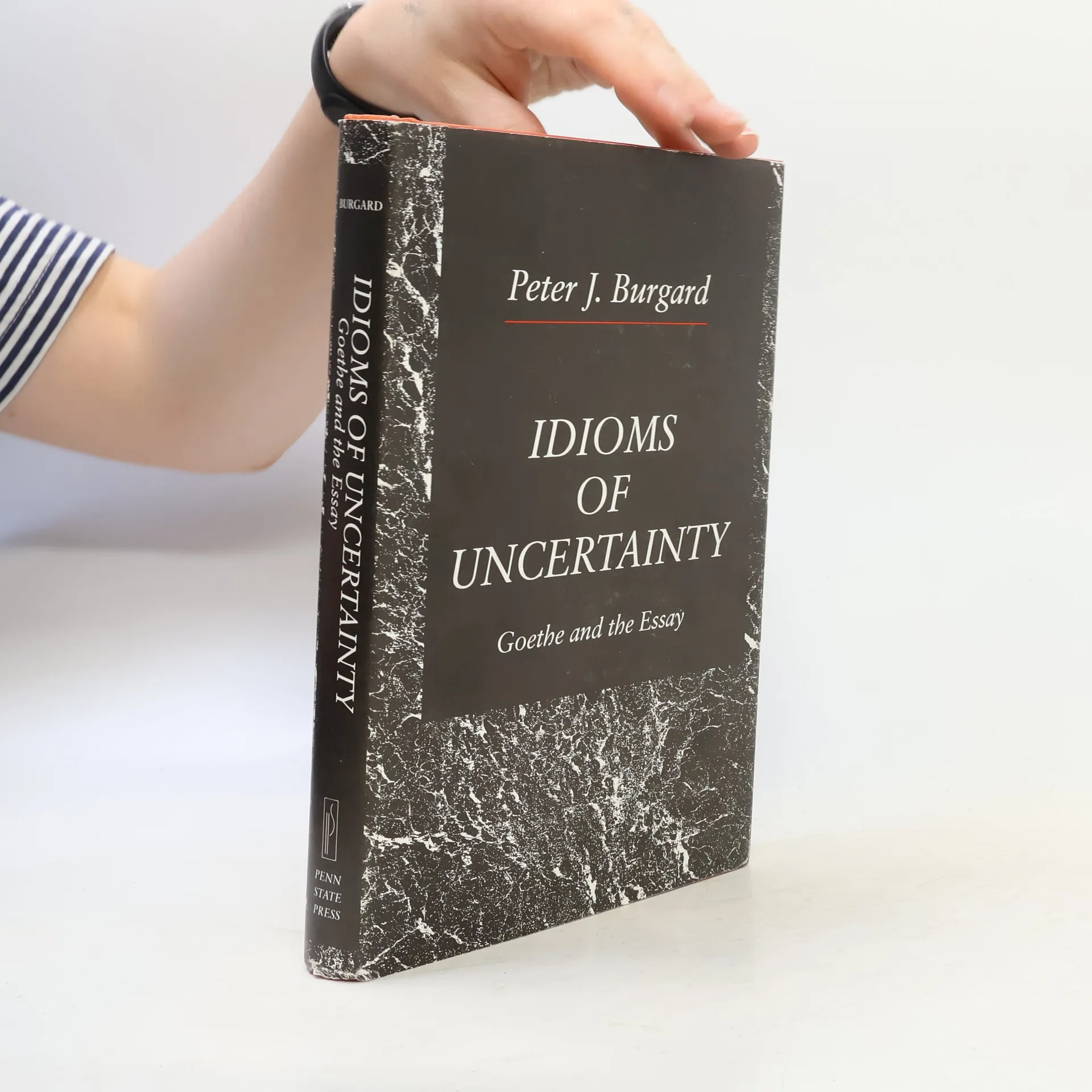
Goethe's essays, rich in literary, aesthetic, and scientific content, have not received the critical attention they merit, particularly regarding their textuality and place in literary history. In this analysis, Peter Burgard examines the rhetorical strategies, structure, and style of key essays, linking them to the traditions established by Montaigne and Johnson. He critiques the systematic philosophy within these essays and explores their role in the Laocoön debate, a significant aesthetic dialogue of the eighteenth century. By revealing the connection between Goethe's anti-systematic, dialogic approach and the theme of community in his literary works, Burgard highlights the broader social implications of the essay genre and illustrates how this analysis can enhance understanding of Goethe's entire body of work. He develops a theory of the essay as a genre, drawing on twentieth-century theoretical perspectives, including Lukacs, Bense, and Adorno, as well as Bakhtin, Kristeva, Barthes, Derrida, and Rorty's concept of literary-philosophical conversation. This study is valuable for those interested in genre and literary theory and challenges existing clichés about German literature, making it relevant for Goethe scholars and researchers of the eighteenth century across various disciplines and borders.
Nákup knihy
Idioms of Uncertainty, Peter J. Burgard
- Jazyk

- Rok vydání
- 1992
- Vazba
- (pevná)
Nikdo zatím neohodnotil.
- Titul
- Idioms of Uncertainty
- Jazyk
- anglicky
- Autoři
- Peter J. Burgard
- Vydavatel
- Pennsylvania State University Press
- Rok vydání
- 1992
- Vazba
- pevná
- Počet stran
- 264
- ISBN10
- 0271008458
- ISBN13
- 9780271008455
- Série
- Anotace
- Goethe's essays, rich in literary, aesthetic, and scientific content, have not received the critical attention they merit, particularly regarding their textuality and place in literary history. In this analysis, Peter Burgard examines the rhetorical strategies, structure, and style of key essays, linking them to the traditions established by Montaigne and Johnson. He critiques the systematic philosophy within these essays and explores their role in the Laocoön debate, a significant aesthetic dialogue of the eighteenth century. By revealing the connection between Goethe's anti-systematic, dialogic approach and the theme of community in his literary works, Burgard highlights the broader social implications of the essay genre and illustrates how this analysis can enhance understanding of Goethe's entire body of work. He develops a theory of the essay as a genre, drawing on twentieth-century theoretical perspectives, including Lukacs, Bense, and Adorno, as well as Bakhtin, Kristeva, Barthes, Derrida, and Rorty's concept of literary-philosophical conversation. This study is valuable for those interested in genre and literary theory and challenges existing clichés about German literature, making it relevant for Goethe scholars and researchers of the eighteenth century across various disciplines and borders.