




Parametry
- 424 stránek
- 15 hodin čtení
Více o knize
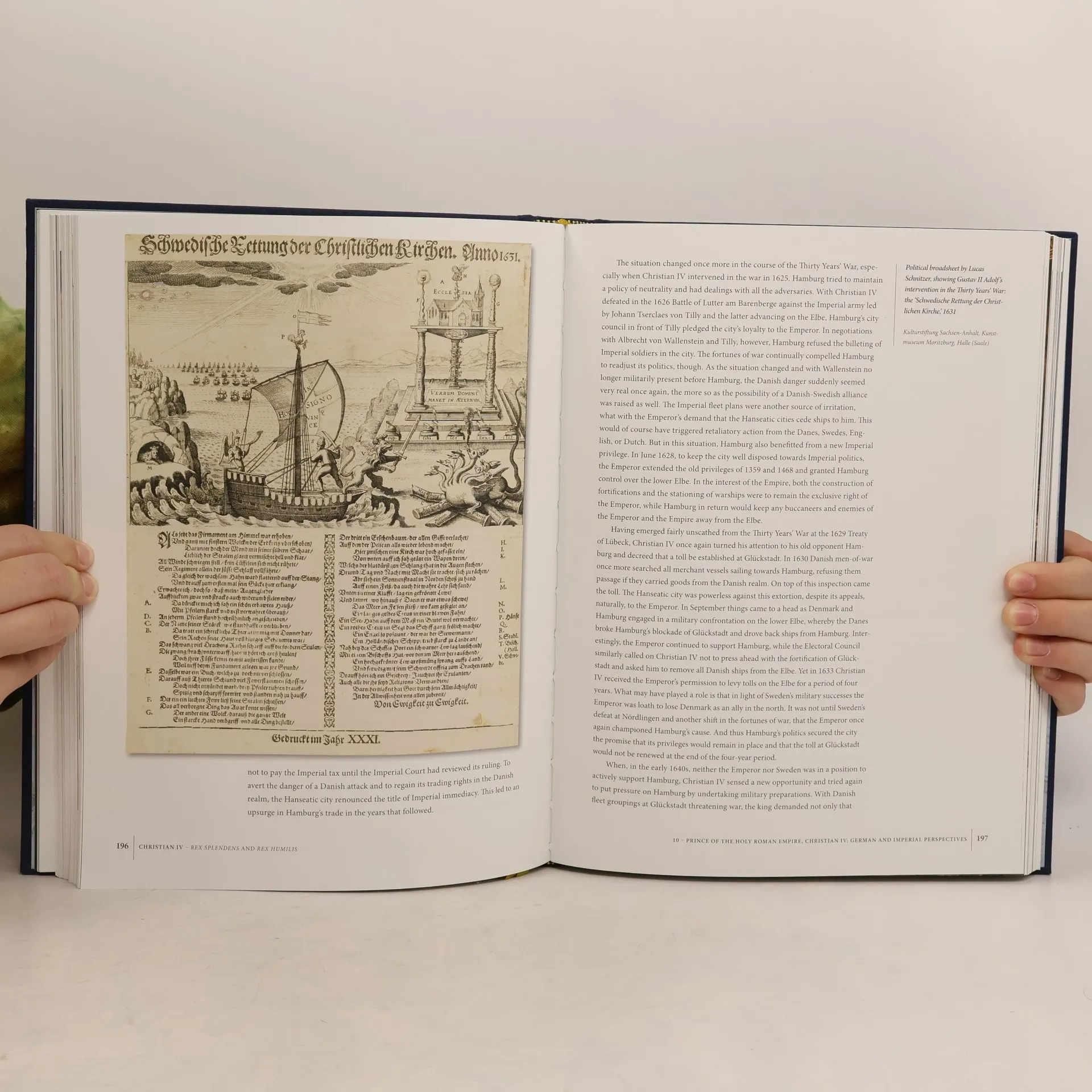
Christian IV, king of Denmark and Norway, was a notable political figure in the early seventeenth century, recognized for his cultural and entrepreneurial endeavors. A prolific builder, he established several new cities and gained an international reputation as a patron of the arts. His early reign was marked by military and political successes, enhancing his international standing. However, in his later years, he faced personal betrayal through his wife's infidelity and suffered humiliating military defeats, contributing to the decline of Danish power and widespread suffering among his people. Despite these challenges, his injuries from the naval battle at Kolberger Heide elevated him to national hero status. He perceived his transformation from a splendid king to a humbled one as a divinely imposed martyrdom, a view that resonated particularly with bourgeois circles critical of the nobility, who saw him as a ruler thwarted by self-serving elites. This book features historians from six countries who delve into Christian IV's perspectives and his political and cultural contributions within a European context, revealing the complexities of a paradoxical figure whose quest for prestige often led to misguided illusions. His enduring architectural legacies reflect both his personal ambitions and the broader cultural trends of early seventeenth-century Europe.
Nákup knihy
Protagonists of History in International Perspective - 5: Christian IV, Steffen Heiberg, Juliette Roding, Margriet Lacy-Bruijn, Rolof van Hövell tot Westerflier, Poul Holstein
- Jazyk

- Rok vydání
- 2024
- Vazba
- (pevná),
- Stav knihy
- Poškozená
- Cena
- 582 Kč
Doručení
Platební metody
Nikdo zatím neohodnotil.
- Titul
- Protagonists of History in International Perspective - 5: Christian IV
- Podtitul
- Rex Splendens and Rex Humilis
- Jazyk
- anglicky
- Autoři
- Steffen Heiberg, Juliette Roding, Margriet Lacy-Bruijn, Rolof van Hövell tot Westerflier, Poul Holstein
- Vydavatel
- Karwansaray BV
- Rok vydání
- 2024
- Vazba
- pevná
- Počet stran
- 424
- ISBN10
- 9490258229
- ISBN13
- 9789490258221
- Série
- Anotace
- Christian IV, king of Denmark and Norway, was a notable political figure in the early seventeenth century, recognized for his cultural and entrepreneurial endeavors. A prolific builder, he established several new cities and gained an international reputation as a patron of the arts. His early reign was marked by military and political successes, enhancing his international standing. However, in his later years, he faced personal betrayal through his wife's infidelity and suffered humiliating military defeats, contributing to the decline of Danish power and widespread suffering among his people. Despite these challenges, his injuries from the naval battle at Kolberger Heide elevated him to national hero status. He perceived his transformation from a splendid king to a humbled one as a divinely imposed martyrdom, a view that resonated particularly with bourgeois circles critical of the nobility, who saw him as a ruler thwarted by self-serving elites. This book features historians from six countries who delve into Christian IV's perspectives and his political and cultural contributions within a European context, revealing the complexities of a paradoxical figure whose quest for prestige often led to misguided illusions. His enduring architectural legacies reflect both his personal ambitions and the broader cultural trends of early seventeenth-century Europe.