

Více o knize
Here is a comprehensive overview of the Buddhist path from the perspective of the three vehicles of Tibetan Buddhism—the Hinayana, Mahayana, and Vajrayana. While these vehicles are usually presented as a historical development, they are equated here with the attitudes that individuals bring to their Buddhist practice. Basic to them all, however, is the need to understand our own immediate condition. The primary tool for achieving this is meditation, and The Essence of Buddhism serves as a handbook for the various meditative approaches of Buddhist practice. Beginning with the Four Noble Truths, Traleg Rinpoche incorporates the expansive vision of the Bodhisattva path and the transformative vision of Tantra. The final chapters present the transcendent view of Mahamudra. This view dispenses with all dualistic fixations and directly realizes the natural freedom of the mind itself. Along the way, the book provides vivid definitions of fundamental concepts such as compassion, emptiness, and Buddha-nature, and answers common questions: Why does Buddhism teach that there is “no self”? How is the Mahayana (“large vehicle”) different from the Hinayana (“small vehicle”)? Are Buddhist teachings pessimistic? Does Buddhism encourage social passivity? What is the role of sex in Buddhist Tantra? Why is it said that “samsara is nirvana”? Does it take countless lifetimes to attain enlightenment, or can it be achieved in a moment?
Nákup knihy
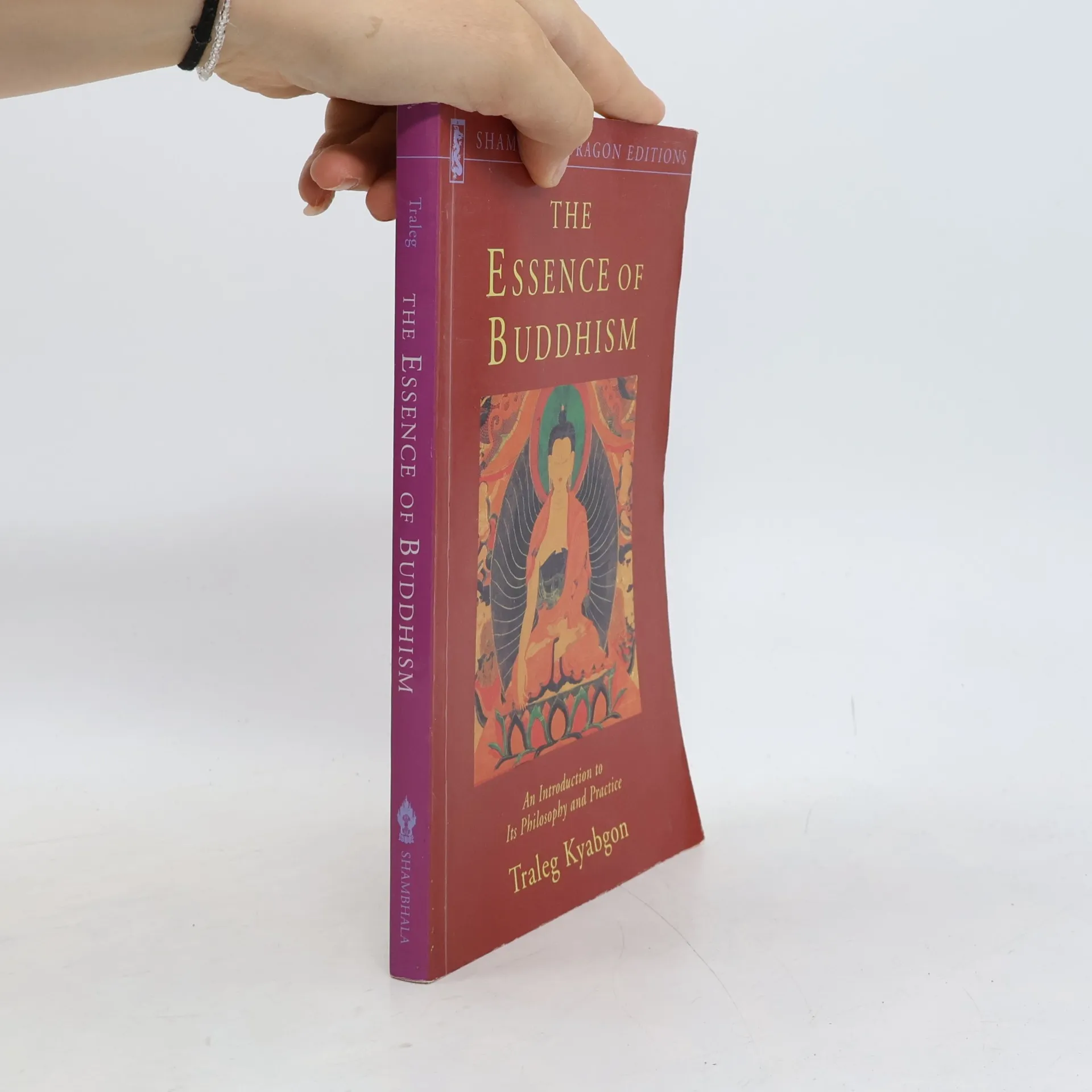
The Essence of Buddhism, Traleg Kyabgon
- Jazyk

- Rok vydání
- 2001
- Vazba
- (měkká)
Nikdo zatím neohodnotil.
- Titul
- The Essence of Buddhism
- Podtitul
- An Introduction to Its Philosophy and Practice
- Jazyk
- anglicky
- Autoři
- Traleg Kyabgon
- Vydavatel
- Shambhala
- Rok vydání
- 2001
- Vazba
- měkká
- ISBN10
- 1569570140
- ISBN13
- 9781569570142
- Série
- Štítky
- Anotace
- Here is a comprehensive overview of the Buddhist path from the perspective of the three vehicles of Tibetan Buddhism—the Hinayana, Mahayana, and Vajrayana. While these vehicles are usually presented as a historical development, they are equated here with the attitudes that individuals bring to their Buddhist practice. Basic to them all, however, is the need to understand our own immediate condition. The primary tool for achieving this is meditation, and The Essence of Buddhism serves as a handbook for the various meditative approaches of Buddhist practice. Beginning with the Four Noble Truths, Traleg Rinpoche incorporates the expansive vision of the Bodhisattva path and the transformative vision of Tantra. The final chapters present the transcendent view of Mahamudra. This view dispenses with all dualistic fixations and directly realizes the natural freedom of the mind itself. Along the way, the book provides vivid definitions of fundamental concepts such as compassion, emptiness, and Buddha-nature, and answers common questions: Why does Buddhism teach that there is “no self”? How is the Mahayana (“large vehicle”) different from the Hinayana (“small vehicle”)? Are Buddhist teachings pessimistic? Does Buddhism encourage social passivity? What is the role of sex in Buddhist Tantra? Why is it said that “samsara is nirvana”? Does it take countless lifetimes to attain enlightenment, or can it be achieved in a moment?