

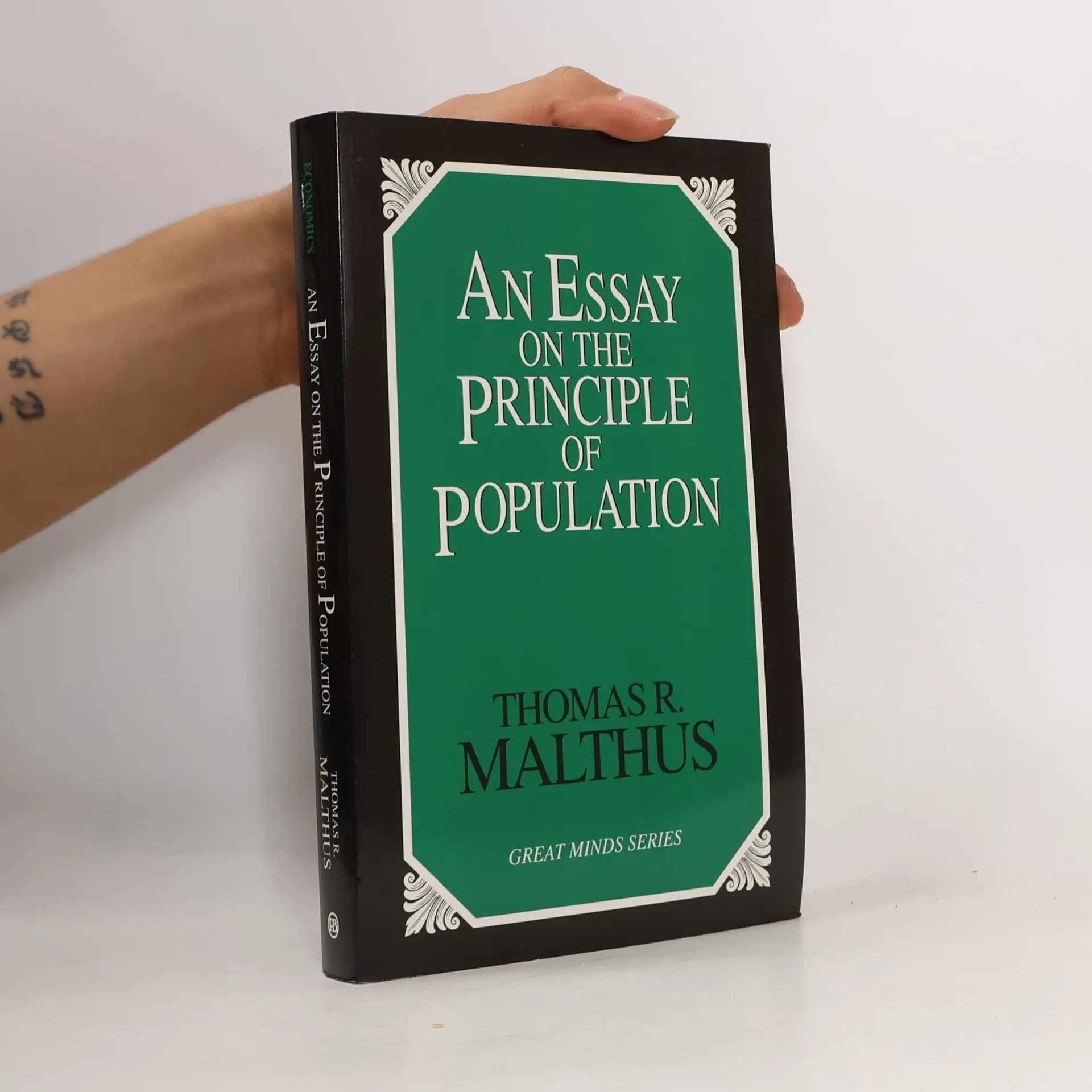
Kupuješ přesně tu knihu, která je na fotce



Parametry
- 400 stránek
- 14 hodin čtení
Více o knize
Focusing on the critical theme of population dynamics, the book presents Thomas R. Malthus's argument that unchecked population growth outpaces food supply, leading to dire societal consequences. Through mathematical proofs and scientific evidence, Malthus contends that preventive measures are essential to avoid overcrowding, disease, war, and poverty. His pessimistic outlook on humanity's future sparked significant debate among contemporary optimists and laid foundational ideas that influenced Charles Darwin's research.
Nákup knihy
Great Minds Series: An Essay on the Principle of Population, Thomas Robert Malthus
- Jazyk

- Rok vydání
- 1998
- Vazba
- (měkká),
- Stav knihy
- Velmi dobrá
- Cena
- 449 Kč
Nikdo zatím neohodnotil.
- Titul
- Great Minds Series: An Essay on the Principle of Population
- Jazyk
- anglicky
- Autoři
- Thomas Robert Malthus
- Vydavatel
- Globe Pequot Press
- Rok vydání
- 1998
- Vazba
- měkká
- Počet stran
- 400
- ISBN10
- 1573922552
- ISBN13
- 9781573922555
- Série
- Kategorie
- Štítky
- Historické téma, Byznys, Příroda, Příručky a návody, Filosofická tématika, Politika, Věda, USA, Zdraví, Technologie, Vzdělávání & školství, Škola, Společnost, Lingvistika, Historie Evropy, Vůdcovství, Finance, Politické teorie, Kultura, Historie USA, Rasa, rasismus, Peníze, Etika, Evoluce, Sociální spravedlnost, Demokracie, Pozorování přírody, Marxismus, Genetika, Socialismus, Kapitalismus, Osvícenství, Vláda, Aktivismus, Kosmologie, Politická filozofie, Filozofie vědy, Ateismus, Liberalismus, Kritické myšlení, Demografie, Kritická teorie, Obyvatelstvo
- Anotace
- Focusing on the critical theme of population dynamics, the book presents Thomas R. Malthus's argument that unchecked population growth outpaces food supply, leading to dire societal consequences. Through mathematical proofs and scientific evidence, Malthus contends that preventive measures are essential to avoid overcrowding, disease, war, and poverty. His pessimistic outlook on humanity's future sparked significant debate among contemporary optimists and laid foundational ideas that influenced Charles Darwin's research.