

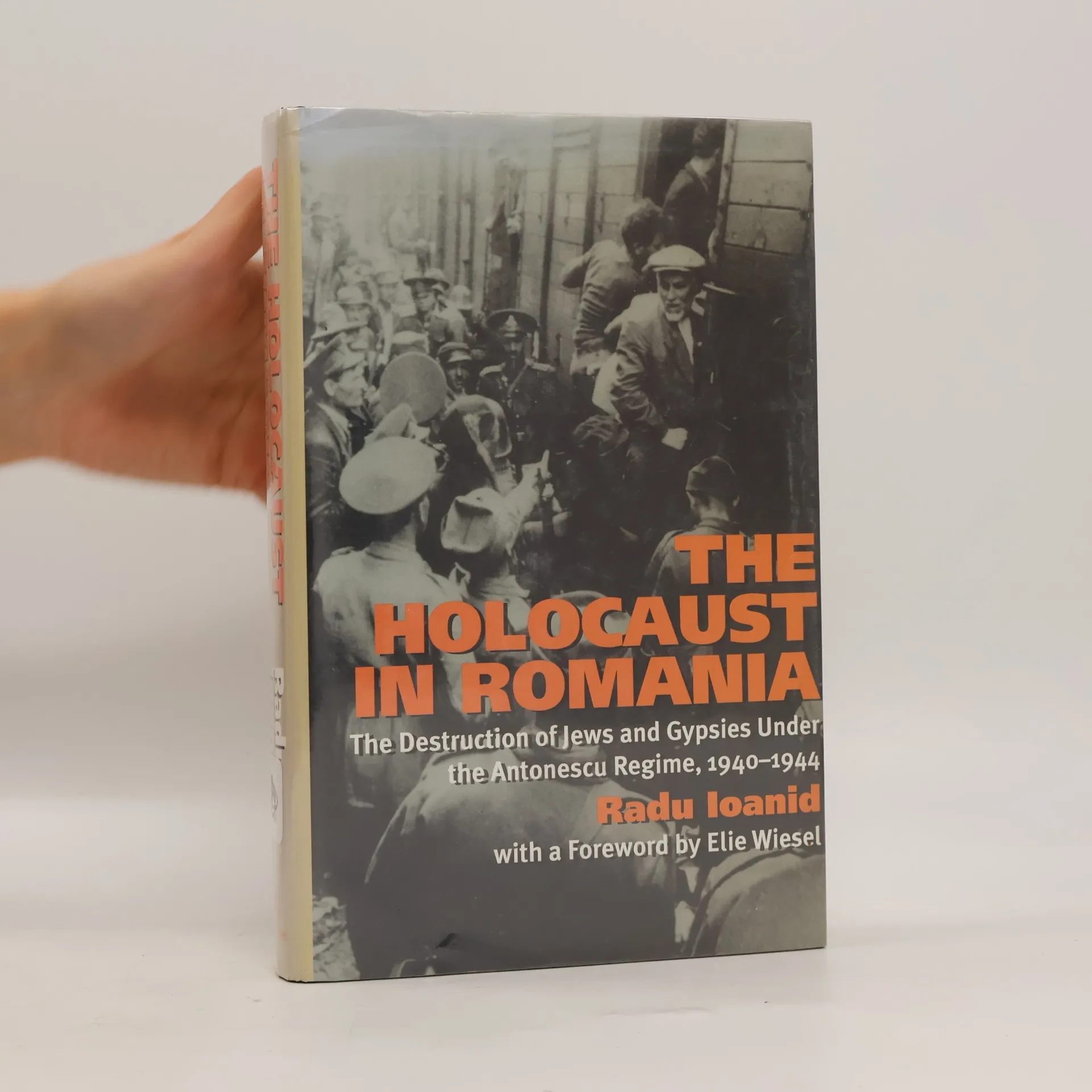
The Holocaust in Romania
The Destruction of Jews and Gypsies Under the Antonescu Regime, 1940-1944
Autoři
Více o knize
Radu Ioanid's account of the destruction of Jews and Gypsies under the regime of Ion Antonescu, based upon privileged access to secret East European government archives, is an unprecedented analysis of heretofore purposely hidden materials. He builds an accurate perspective on Romanian policies of racism, anti-Semitism, and Jewish extermination during this extraordinary period in world history. Published in association with the United States Holocaust Memorial Museum. With a Foreword by Elie Wiesel. Invaluable...monumental...no comparable work in any language has documented this important history with the thoroughness, skill, and analytical sophistication this book demonstrates. —Leo Spitzer, Dartmouth College
Nákup knihy
The Holocaust in Romania, Elie Wiesel, Radu Ioanid
- Jazyk

- Rok vydání
- 1999
- Vazba
- (pevná)
Doručení
Platební metody
Nikdo zatím neohodnotil.
- Titul
- The Holocaust in Romania
- Podtitul
- The Destruction of Jews and Gypsies Under the Antonescu Regime, 1940-1944
- Jazyk
- anglicky
- Autoři
- Elie Wiesel, Radu Ioanid
- Vydavatel
- Ivan R Dee, Inc
- Rok vydání
- 1999
- Vazba
- pevná
- Počet stran
- 381
- ISBN10
- 1566632560
- ISBN13
- 9781566632560
- Série
- Kategorie
- Štítky
- Historické téma, USA, 20. století, Druhá světová válka, Války, Evropa, Historie Evropy, Židé, Holokaust, Židovská literatura, Východní Evropa, Rumunsko
- Anotace
- Radu Ioanid's account of the destruction of Jews and Gypsies under the regime of Ion Antonescu, based upon privileged access to secret East European government archives, is an unprecedented analysis of heretofore purposely hidden materials. He builds an accurate perspective on Romanian policies of racism, anti-Semitism, and Jewish extermination during this extraordinary period in world history. Published in association with the United States Holocaust Memorial Museum. With a Foreword by Elie Wiesel. Invaluable...monumental...no comparable work in any language has documented this important history with the thoroughness, skill, and analytical sophistication this book demonstrates. —Leo Spitzer, Dartmouth College