
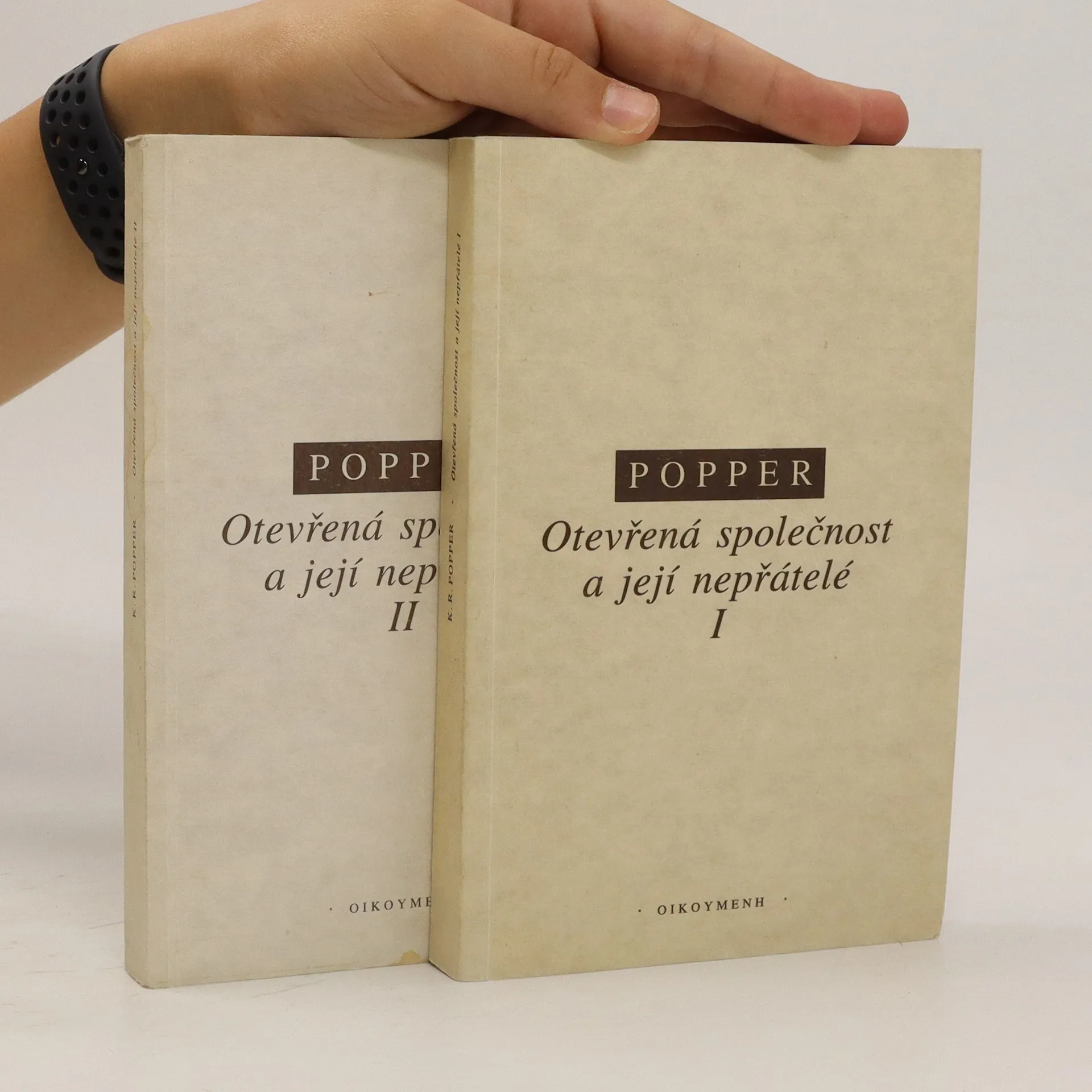

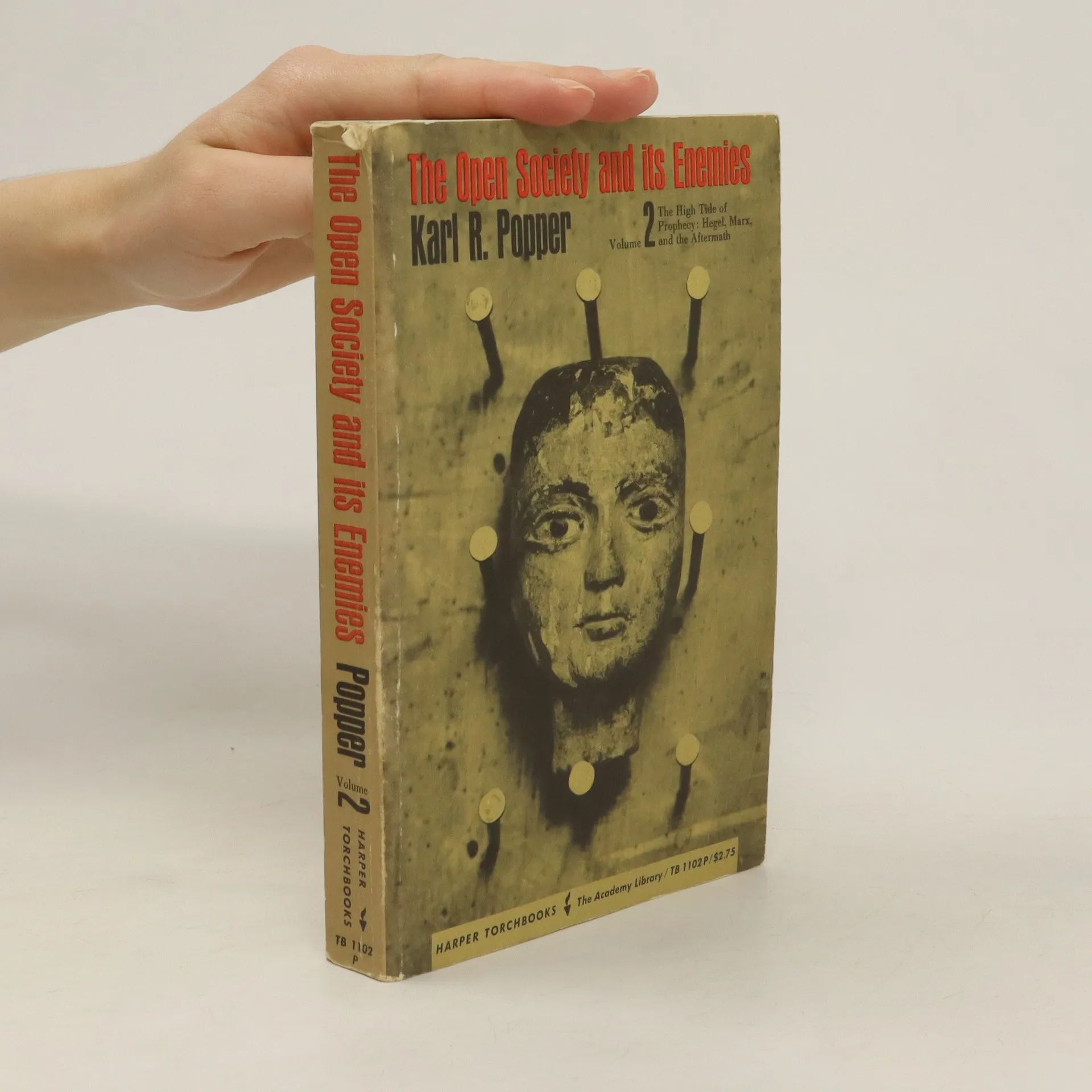

Podtitul: „Uhranutí Platónem“ Autor v knize nastiňuje některé obtíže, které stojí před naší civilizací. Ta může podle Poppera směřovat buďto k lidskosti, svobodě a rovnosti nebo k totalitě.
Otevřená společnost a její nepřátelé Série
Tato série se zabývá fundamentálními otázkami politické filozofie a povahy společnosti. Zkoumá napětí mezi svobodou jednotlivce a potřebou kolektivního řádu a analyzuje historické a filozofické kořeny totalitních myšlenkových proudů. Nabízí hluboký vhled do argumentů pro otevřenou, demokratickou společnost a kritiku pokusů o její nahrazení. Poselstvím je víra v otevřenou budoucnost, kde rozhodnutí lidí formují směřování světa, nikoli předem dané historické trendy.


Doporučené pořadí čtení
In this two-volume work, Karl Popper explores the evolution of historicism, the belief in laws governing historical development, as articulated by Plato (Volume I) and later by Hegel, Marx, and their successors (Volume II). The text also engages with a range of epistemological, philosophical, ethical, and political issues that remain relevant today. Since its publication in 1945, the book has been translated into 23 languages, highlighting its significance as more than just a critique of philosophical systems from antiquity to modern times. Popper's theory of the open society emphasizes the continuous improvement of institutions within parliamentary democracies, a concept that is thoroughly developed across both volumes. This work is essential for anyone interested in the foundations and advancement of civil societies.
After The Open Society
- 528 stránek
- 19 hodin čtení
In this long-awaited volume, Jeremy Shearmur collects the most important writings Popper made in the years after The Open Society was first published. Many are published here for the first time.