
Knihobot

Aleksandr Mikhaĭlovich Rodchenko

    Alexander Rodtschenko
    Alexandre Rodtchenko
    Graphic Design Theory
    The New Moscow
    • The New Moscow

      • 120 stránek
      • 5 hodin čtení

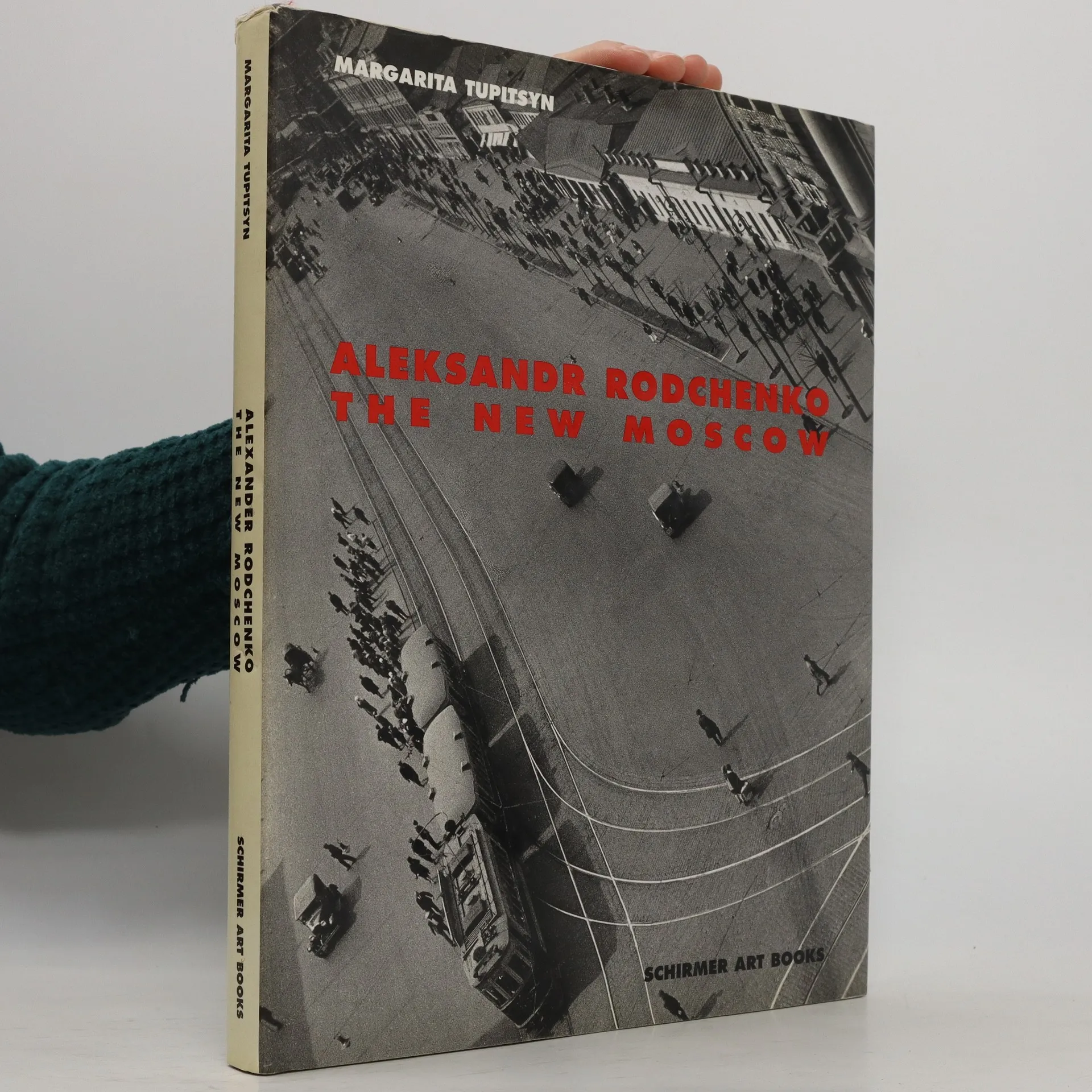
      City portraits were a favorite theme of avant-garde photographers. The booming industrial metropolises, whose faces were to change radically within a few years, called for a new vision and unaccustomed perspectives. This is revealed in The New Moscow, Aleksandr Rodchenko’s view of the capital of the then still young Soviet Union, whose dynamic awakening during the Socialist era inspired the avant-garde artist to create this unusual project. After being expelled from the October group in 1932, Rodchenko was commissioned to take pictures of Moscow. Out of this series Varvara Stepanova, his wife and colleague, compiled a narrative sequence of eight-nine gelatin silver prints adding to it some photographs from the October period. The photos of street parades, housing projects, technical buildings, new sport facilities, and factories taken between the late twenties and early thirties were meant to appeal on two firstly for their new aesthetics—the famous Rodchenko perspective and secondly for their film-like sequencing. The artist prepared the series for a 1933 edition, which was never published. Many of his high quality vintage prints were preserved, however, and are now published in a complete reconstruction of The New Moscow. • Over 80 photos• Will be of interest from a photographic as well as cinematic viewpoint• Compelling document of what was then a young Soviet Union

      The New Moscow
      4,0
    • Graphic Design Theory

      • 151 stránek
      • 6 hodin čtení

      Graphic Design Theory presents groundbreaking, primary texts from the most important historical and contemporary design thinkers. From Aleksandr Rodchenko’s "Who We Are: Manifesto of the Constructivist Group" to Kenya Hara’s "Computer Technology and Design," this essential volume provides the necessary foundation for contemporary critical vocabulary and thought. Graphic Design Theory is organized in three sections: "Creating the Field" traces the evolution of graphic design over the course of the early 1900s, including influential avant-garde ideas of futurism, constructivism, and the Bauhaus; "Building on Success" covers the mid- to late twentieth century and considers the International Style, modernism, and postmodernism; and "Mapping the Future" opens at the end of the last century and includes current discussions on legibility, social responsibility, and new media. Striking color images illustrate each of the movements discussed and demonstrate the ongoing relationship between theory and practice. A brief commentary prefaces each text, providing a cultural and historical framework through which the work can be evaluated.

      Graphic Design Theory
    • Peintre, graphiste, photographe. Alexandre Rodchenko (1891-1957) a été un artiste tous azimuts, participant dans les années vingt à toutes formes d'expression, du théâtre au cinéma, de la publicité au design. Mue par une curiosité toujours renouvelée, habitée par une ferveur idéale peu commune, sa création se lie étroitement à l'histoire de la Russie. Artiste moderne s'il en est, il participe au mouvement constructiviste qui se veut proche des réalités sociales, économiques, intellectuelles et politiques.

      Alexandre Rodtchenko
      4,0