Knihobot

George F. Gilder

    29. listopad 1939
    Life after Capitalism
    The Israel test
    Visible Man
    Knowledge and Power
    Wealth and Poverty
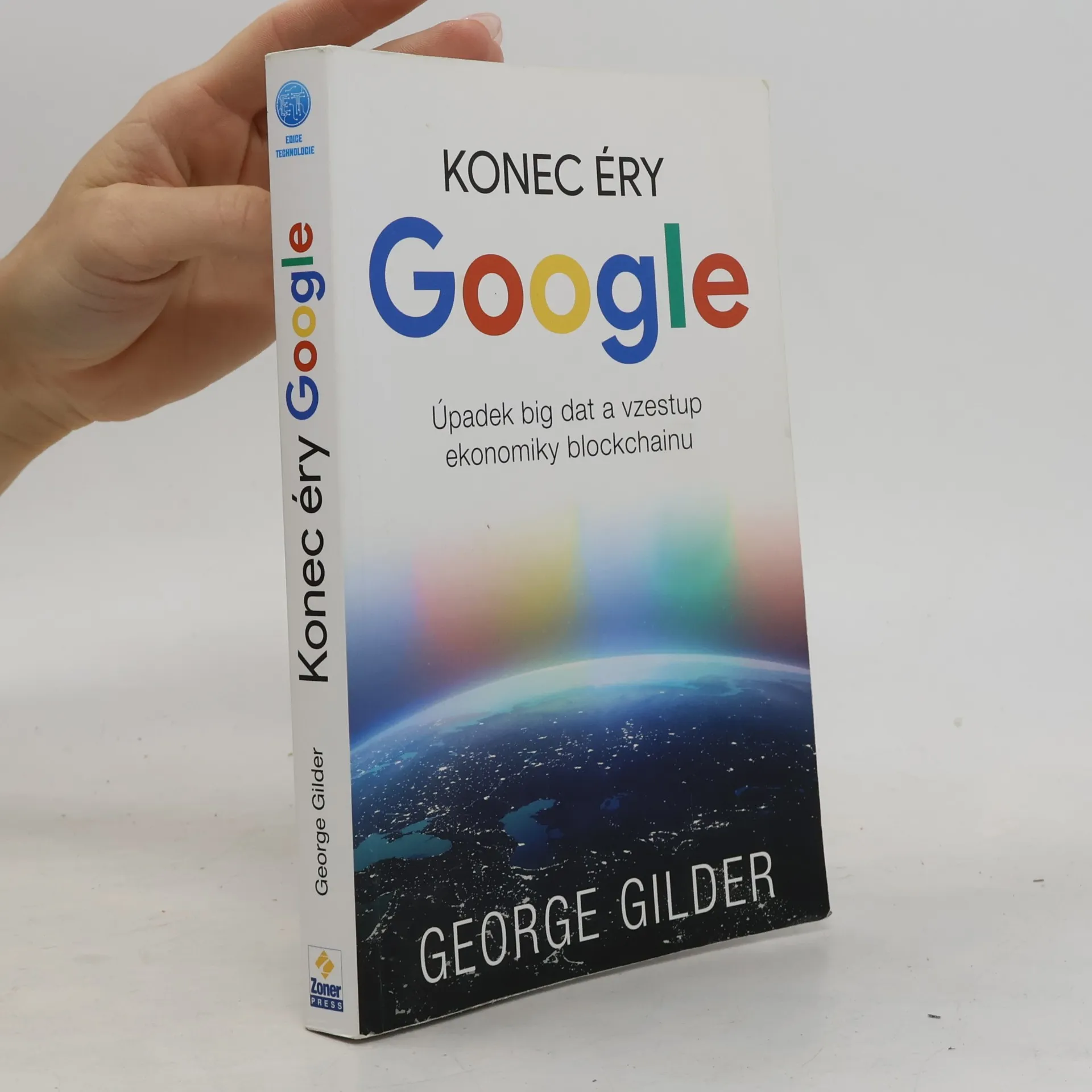
    Konec éry Google : úpadek big dat a vzestup ekonomiky blockchainu
    • Věk Googlu, založený na big datech a strojové inteligenci, se blíží ke svému konci. Co přijde po něm? Algoritmy Googlu naznačují, že budoucnost je jen dalším náhodným procesem. George Gilder v knize Konec éry Google zkoumá, proč Silicon Valley zažívá krizi a co očekávat po této éře. Google, se svou schopností „hledat a třídit“, přitahuje uživatele k mnoha službám, jako jsou videa, mapy a e-maily, které se staly nepostradatelnými. Ačkoli se zdá, že vše je zdarma, uživatelé platí reklamou. Pokroky v umělé inteligenci vyvolávají obavy o její budoucí moc, zatímco Silicon Valley zanedbává bezpečnost. Internetové brány firewall, které měly chránit osobní údaje, se ukázaly jako nedostatečné. Budoucnost spočívá v „kryptokosmu“ – architektuře blockchainu, která nabídne bezpečný platební systém a ukončí éru Googlu. Autor vyvrací názory prominentních osobností, které považují umělou inteligenci za revoluční. Podle něj je stávající systém v krizi, kterou současná technologie nedokáže vyřešit. Konec éry Google se blíží.

      Konec éry Google : úpadek big dat a vzestup ekonomiky blockchainu
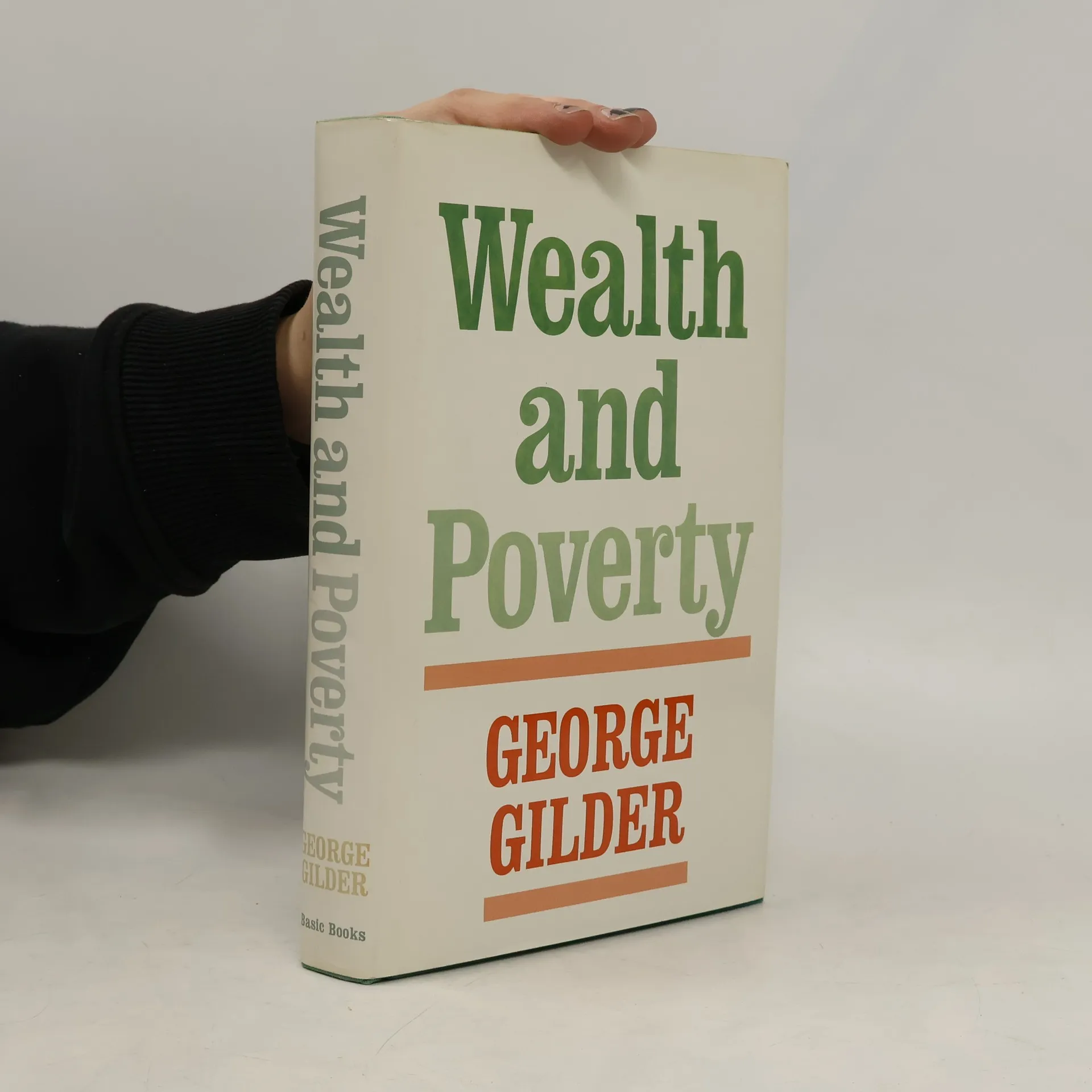
    • Wealth and Poverty

      • 306 stránek
      • 11 hodin čtení
      4,3(13)Ohodnotit

      In this acclaimed work, Gilder offers an illuminating discussion of how to increase wealth and curtail poverty, arguing that most welfare programs only serve to keep the poor in poverty as victims of welfare dependency.

      Wealth and Poverty
    • Legendary economist, investor, tech philosopher, and public treasure George Gilder argues that a hard-driving culture of entrepreneurial ideas is now in conflict with a growing mindset of government regulation combined with a total surrender of the individual imagination. The winner of this battle may determine a new paradigm of economics and thought for the next century, whether we like it or not.Ronald Reagan’s most-quoted living author—George Gilder—is back with an all-new paradigm-shifting theory of capitalism that will upturn conventional wisdom.Gilder breaks away from the supply-side model of economics to present a new economic the epic conflict between the knowledge of entrepreneurs on one side, and the blunt power of government on the other. The knowledge of entrepreneurs, and their freedom to share and use that knowledge, are the sparks that light up the economy and set its gears in motion. The power of government to regulate, stifle, manipulate, subsidize or suppress knowledge and ideas is the inertia that slows those gears down, or keeps them from turning at all.One of the twentieth century’s defining economic minds has returned with a new philosophy to carry us into the twenty-first. Knowledge and Power is a must-read for fiscal conservatives, business owners, CEOs, investors, and anyone interested in propelling America’s economy to future success.

      Knowledge and Power
    • Meet Mitchell "Sam" Brewer. Young. African-American. An ex-Marine with charm and intelligence. Highly valued by his employers in his state job. Yet Sam repeatedly gets into trouble - much of it the kind that lands him in hospitals and police stations. George Gilder, one of the most important sociopolitical authors of our time, brings us a life in which the ultimate trap is not racism, but the very system that's meant to help. Not since Claude Brown's "Manchild in the Promised Land" has there been such a forthright, unvarnished, and humanizing portrait of life and struggle for young African-American men in the inner city.From the author's new introduction decrying the lack of vision in welfare reform to the chilling postscript on the story's protagonist, "Visible Man" rings even more disturbingly true today than when it was first published.

      Visible Man
    • The Israel test

      • 296 stránek
      • 11 hodin čtení
      3,9(192)Ohodnotit

      Israel is the crucial battlefield for Capitalism and Freedom in our time. George Gilder's global best-seller Wealth and Poverty made the moral case for capitalism. Now Gilder makes the case for Israel, portraying a conflict of barbarism and envy against civilization and creativity. Gilder reveals Israel as a leader of human civilization, technological progress, and scientific advance. Tiny Israel stands behind only the United States in its contributions to the hi-tech economy. Israel has become the world's paramount example of the blessings of freedom. Hatred of Israel, like anti-Semitism through history, arises from resentment of Jewish success. Rooted in a Marxist zero-sum-game theory of economics, this vision has fueled the anti-Semitic rantings of Hitler, Arafat, Osama, and history's other notorious haters. Faced with a contest between murderous regimes sustained by envy and Nazi ideology, and a free, prosperous, and capitalist, Israel—whose side are you on?

      The Israel test
    • Life after Capitalism

      • 256 stránek
      • 9 hodin čtení
      3,6(92)Ohodnotit

      For more than two hundred years, capitalism spread wealth around the globe, bringing unprecedented prosperity and progress, liberating human potential. But something has gone terribly wrong in the world economy. The bestselling futurist and venture capitalist George Gilder explains why economics is not an incentive system to be manipulated but an information system to be freed. Material resources are essentially as plentiful as the atoms of the universe. What drives economic growth in a free market is our limitless human ingenuity and creativity.

      Life after Capitalism
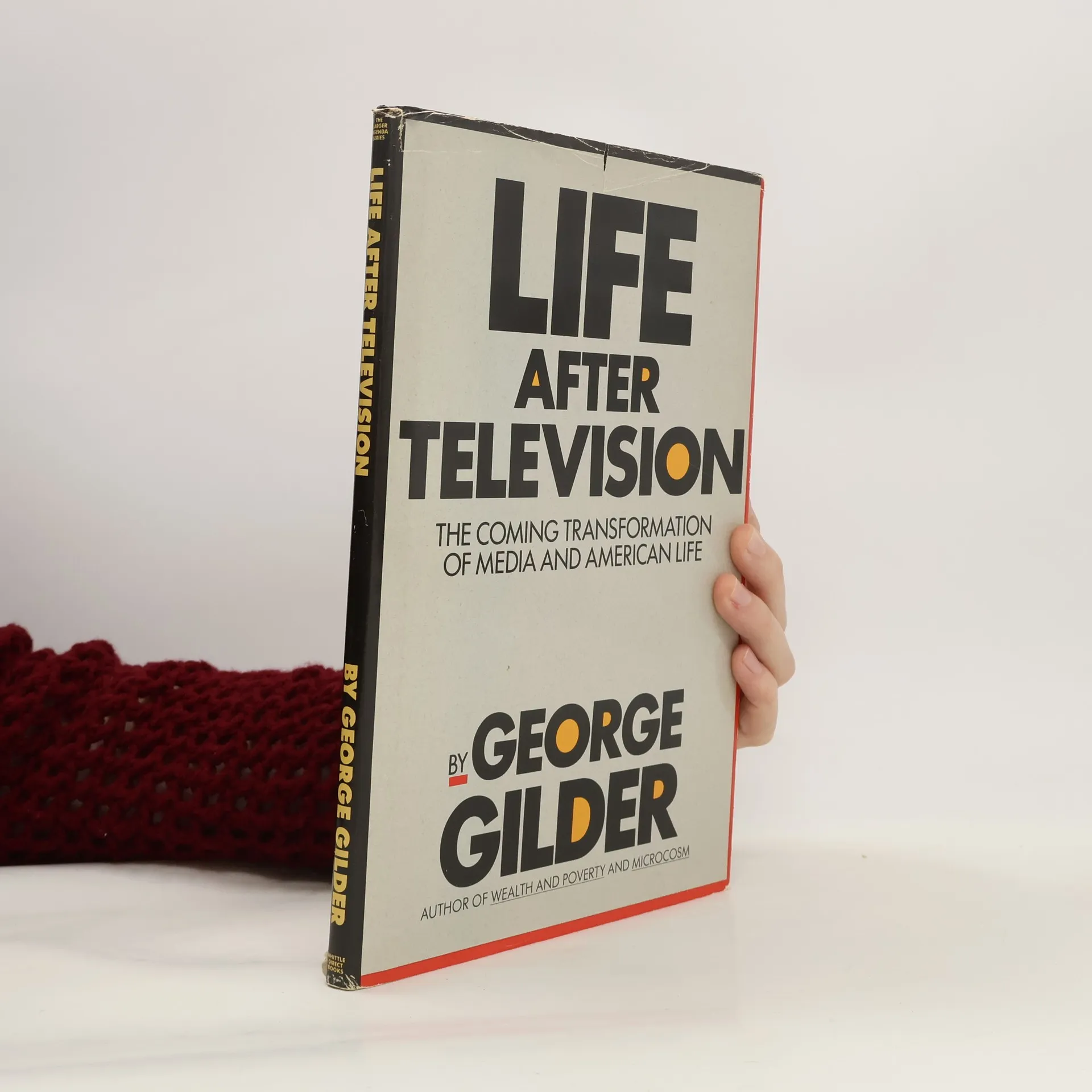
    • Life After Google

      • 320 stránek
      • 12 hodin čtení
      3,6(1936)Ohodnotit

      Google's algorithms assume the world's future is nothing more than the next moment in a random process. George Gilder shows how deep this assumption goes, what motivates people to make it, and why it's wrong: the future depends on human action. - Peter Thiel, founder of PayPal and Palantir Technologies and author of Zero to One: Notes on Startups, or How to Build the Future If you want to be clued in to the unfolding future, then you have come to the right place. For decades, George Gilder has been the undisputed oracle of technology's future. Are giant companies like Google, Amazon, and Facebook the unstoppable monopolistic juggernauts that they seem, or are they dysfunctional giants about to be toppled by tech-savvy, entrepreneurial college dropouts? - Nick Tredennick, Ph.D., Chief Scientist, QuickSilver Technology The Age of Google, built on big data and machine intelligence, has been an awesome era. But it's coming to an end. In Life after Google, George Gilder-the peerless visionary of technology and culture-explains why Silicon Valley is suffering a nervous breakdown and what to expect as the post-Google age dawns. Google's astonishing ability to search and sort attracts the entire world to its search engine and countless other goodies-videos, maps, email, calendars....And everything it offers is free, or so it seems. Instead of paying directly, users submit to advertising. The system of aggregate and advertise works-for a while-if you control an empire of data centers, but a market without prices strangles entrepreneurship and turns the Internet into a wasteland of ads. The crisis is not just economic. Even as advances in artificial intelligence induce delusions of omnipotence and transcendence, Silicon Valley has pretty much given up on security. The Internet firewalls supposedly protecting all those passwords and personal information have proved hopelessly permeable. The crisis cannot be solved within the current computer and network architecture. The future lies with the cryptocosm-the new architecture of the blockchain and its derivatives. Enabling cryptocurrencies such as bitcoin and ether, NEO and Hashgraph, it will provide the Internet a secure global payments system, ending the aggregate-and-advertise Age of Google. Silicon Valley, long dominated by a few giants, faces a great unbundling, which will disperse computer power and commerce and transform the economy and the Internet. Life after Google is almost here. For fans of Wealth and Poverty, Knowledge and Power, and The Scandal of Money.

      Life After Google
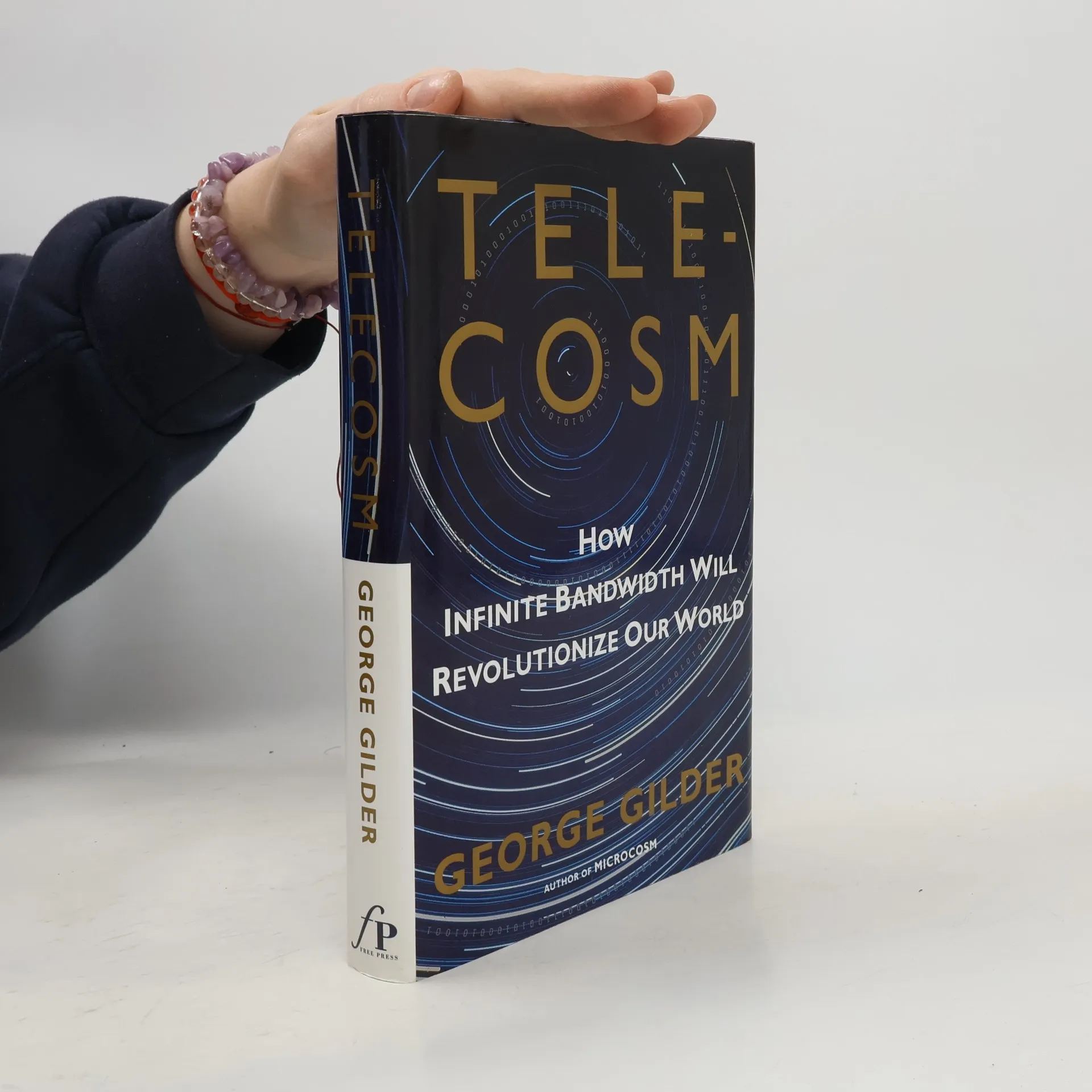
    • Telecosm

      How Infinite Bandwidth Will Revolutionize Our World

      • 368 stránek
      • 13 hodin čtení

      The computer age is over. After a cataclysmic global run of thirty years, it has given birth to the age of the telecosm - the world enabled and defined by new communications technology. Chips and software will continue to make great contributions to our lives, but the action is elsewhere. To seek the key to great wealth and to understand the bewildering ways that high tech is restructuring our lives, look not to chip speed but to communication power, or bandwidth. Bandwidth is exploding, and its abundance is the most important social and economic fact of our time. George Gilder is one of the great technological visionaries, and the man who put the 's' in 'telecosm' (Telephony magazine). He is equally famous for understanding and predicting the nuts and bolts of complex technologies, and for putting it all together in a soaring view of why things change, and what it means for our daily lives. His track record of futurist predictions is one of the best, often proving to be right even when initially opposed by mighty corporations and governments. He foresaw the power of fiber and wireless optics, the decline of the telephone regime, and the explosion of handheld computers, among many trends. His list of favored companies outpaced even the soaring Nasdaq in 1999 by more than double. His long-awaited Telecosm is a bible of the new age of communications. Equal parts science story, business history, social analysis, and prediction, it is the one book you need to make sense of the titanic changes underway in our lives. Whether you surf the net constantly or not at all, whether you live on your cell phone or hate it for its invasion of private life, you need this book. It has been less than two decades since the introduction of the IBM personal computer, and yet the enormous changes wrought in our lives by the computer will pale beside the changes of the telecosm. Gilder explains why computers will empty out, with their components migrating to the net; why hundreds of low-flying satellites will enable hand-held computers and communicators to become ubiquitous; why television will die; why newspapers and magazines will revive; why advertising will become less obnoxious; and why companies will never be able to waste your time again. Along the way you will meet the movers and shakers who have made the telecosm possible. From Charles Townes and Gordon Gould, who invented the laser, to the story of JDS Uniphase, the Intel of the Telecosm, to the birthing of fiberless optics pioneer TeraBeam, here are the inventors and entrepreneurs who will be hailed as the next Edison or Gates. From hardware to software to chips to storage, here are the technologies that will soon be as basic as the air we breathe.

      Telecosm