Vénus Khoury-Ghata je libanonská autorka, která ve svých dílech zkoumá složitost lidské existence a kulturní identity. Její psaní, charakteristické poetickým jazykem a pronikavým vhledem, se často zaměřuje na témata paměti, exilu a hledání smyslu v moderním světě. Khoury-Ghata mistrně propojuje osobní příběhy s širšími společenskými a historickými kontexty, čímž čtenářům nabízí hluboce rezonující literární zážitek. Její unikátní hlas přispívá k obohacení světové literatury.
Yudah is a young Jewish girl from the Algerian desert. The day Rabbi Haïm chooses her to be the new wife of Emir Abdelkader, her life changes dramatically. Yudah dreamed of palaces but finds herself in a wind-swept tent camp. The Emir remains invisible, but soon he surrenders: he is brought to Toulon with his generals. It is in France that Yudah will continue her quest for a future husband she has yet to see... Will the wonderful destiny of the young girl from the desert come true?
A lyrical novel concerning belonging, foreignness, and ethnicity. Following the path of her late geneticist husband, Laure arrives in the town of Malaterra in the harsh mountains of Abruzzo in Italy, where her husband was studying the close-knit Albanian inhabitants. At first an intruder, she is gradually accepted by the population, which is made up of amusing, eccentric characters. Among them: Helena, who hanged her dishonored daughter from the fig tree in her garden, and who has been waiting for thirty years with her gun for her daughter's rapist to return; the Kosovar, a distrusted bookseller languishing in his dusty shop; Mourad, the baker, who proposes marriage to Laure and every other woman who enters his bakery; and Yussuf, the postman, who makes his rounds even if there is no mail to deliver. We also meet the unfortunate assailant who returns from his exile to reclaim and restore his family home. With humor and compassion, this book brings to life the inhabitants of a small, remote town in the mountains of Abruzzo.
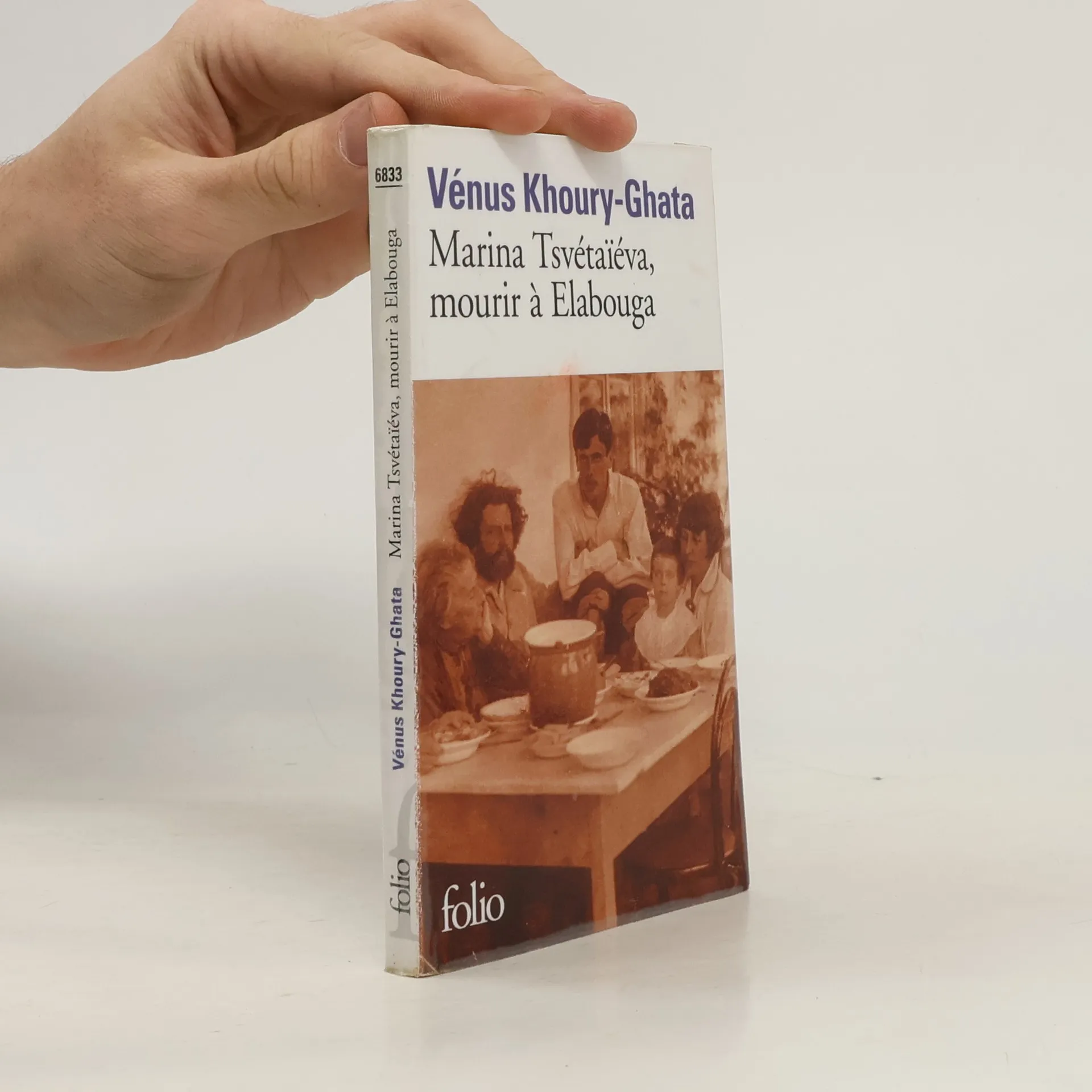
A biographic novel that captures the tempestuous and moving life of the poet Marina Tsvetaeva. The life of Marina Tsvetaeva (1892-1941) coincided with turbulent years in Russian history. She was an eminent Russian poet and a passionate lover involved with several men at the same time, including Rilke, who chose Lou Andreas-Salomé over her, and Pasternak, who married someone else, but protected her until her death. Her life included many trials such as her poverty during the grueling Russian civil war, her young daughter's death from hunger in an orphanage, and the death of her husband, who fought against the Communist regime and was executed by the Soviet state. Rejected by official poets, then by the wealthy Russian diaspora in France, she finally returned to her country to end her wandering life. She hanged herself from a rope in an attic from which she could see the field where she had dug with bare hands for potatoes abandoned by local farmers. A poet-martyr of the Stalinist era--buried in an unmarked plot in the cemetery of Yelabuga--Tsvetaeva is brought to life in this poetic biographical novel by celebrated Lebanese author Vénus Khoury-Ghata.
People of the Water sings the life of a community like a myth. While waiting for the return of the men who went hunting, the women erase their pain with the rainwater. All the people of the earth are seen as strange, familiar, and sometimes threatening brothers. Vénus Khoury-Ghata skillfully presents concrete images of overwhelming beauty. In this new collection, she delivers ample, direct, and almost magical poetry.
Immense poète russe, fervente amoureuse menant de front plusieurs liaisons à la fois : Rilke lui préfère Lou Andreas-Salomé, Pasternak en épouse une autre mais la protège jusqu’à sa mort, au bout d’une corde dans un grenier d’où elle avait vue sur le champ qu’elle grattait à mains nues à la recherche des pommes de terre oubliées des paysans. Une vie débordante d’épreuves : la misère pendant la guerre civile, sa fille de trois ans morte de faim dans un orphelinat, son mari qui se bat contre le régime soviétique... Rejetée par les poètes officiels, puis par la riche diaspora russe en France, elle retourne dans son pays pour mettre fin à sa vie d’errance. Enterrée sous une motte de terre anonyme dans le cimetière d’Elabouga, Marina Tsvétaïéva martyre de l’époque stalinienne.
The year is 1938. The great Russian poet and essayist Osip Mandelstam is forty-seven years old and is dying in a transit camp near Vladivostok after having been arrested by Stalin's government during the repression of the 1930s and sent into exile with his wife. Stalin, "the Kremlin mountaineer, murderer, and peasant-slayer," is undoubtedly responsible for his fatal decline. From the depths of his prison cell, lost in a world full of ghosts, Mandelstam sees scenes from his life pass before him: constant hunger, living hand to mouth, relying on the assistance of sympathetic friends, shunned by others, four decades of creation and struggle, alongside his beloved wife Nadezhda, and his contemporaries Anna Akhmatova, Marina Tsvetaeva, Boris Pasternak, and many others. With her sensitive prose and innate sense of drama, French-Lebanese writer V nus Khoury-Ghata brings Mandelstam back to life and allows him to have the last word--proving that literature is one of the surest means to fight against barbarism.
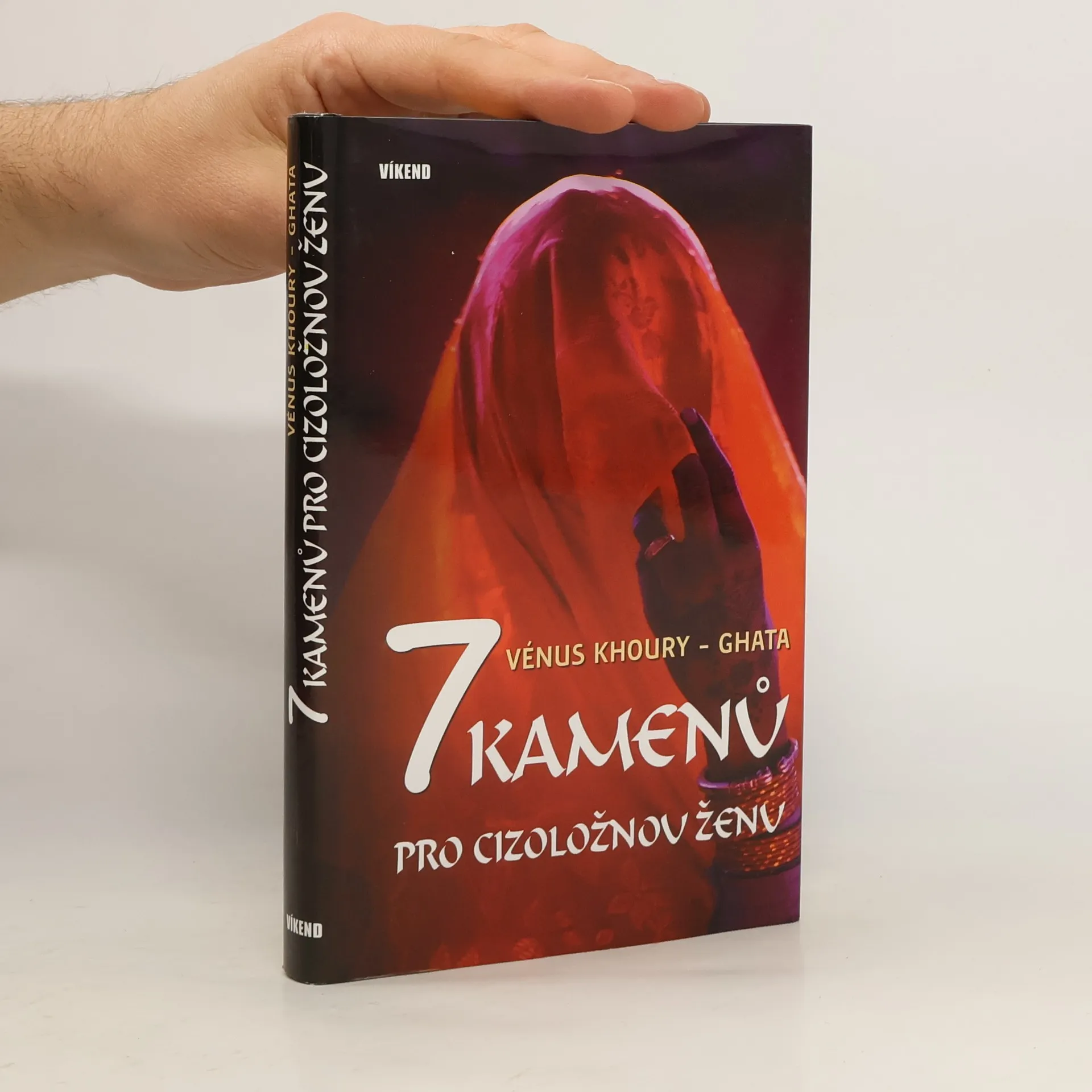
V malé vesnici na okraji pouště se odehrává příběh Noor, jenž je jednoho dne znásilněna cizincem. Otěhotní a má být ukamenována za cizoložství. Celá vesnice je k jejímu osudu naprosto lhostejná. Její obyvatelé mají jiné zájmy, než lidé z měst. Nebojují o moc a bohatství. Bojují proti písku, který napadá jejich chatrče, suchu a horkému větru ze Sahary. Pouze Francouzka, humanitární pracovnice, jež odešla z Paříže, aby unikla své osamělosti, žalu a milostnému životu v troskách, se snaží Noor zachránit a požádá o milost náboženské vůdce. Pokusí se o nemožné. Poprosí nejvyššího představeného, aby trest odložil alespoň do doby, než Noor porodí dítě, které čeká… Skvělá vypravěčka Vénus Khoury-Ghata nastiňuje portréty žen s odlišným pohledem na svět, žen s tragickým osudem, zmítajících se mezi úctou k tradicím, touhou po svobodě a právem na lásku a rozkoš.
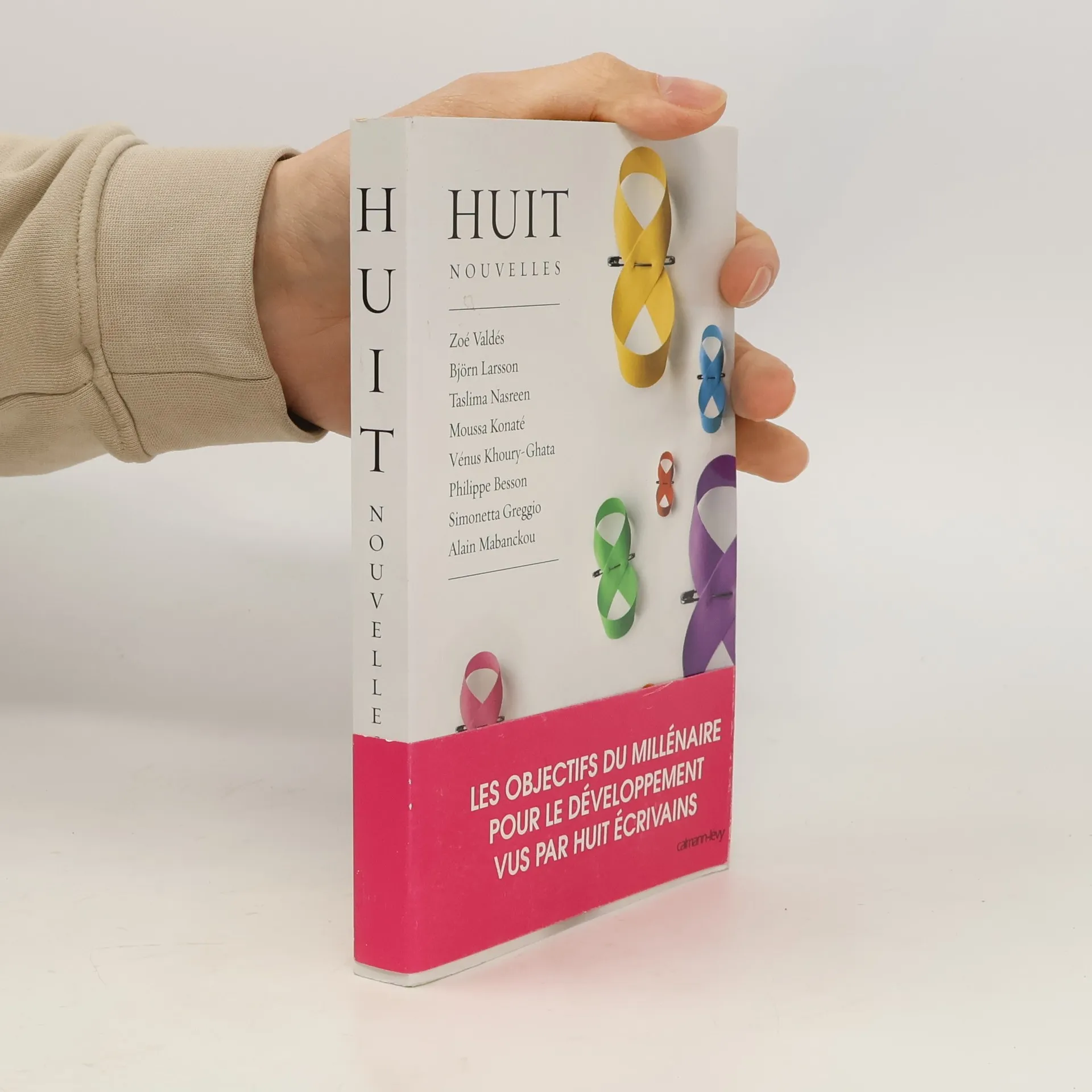
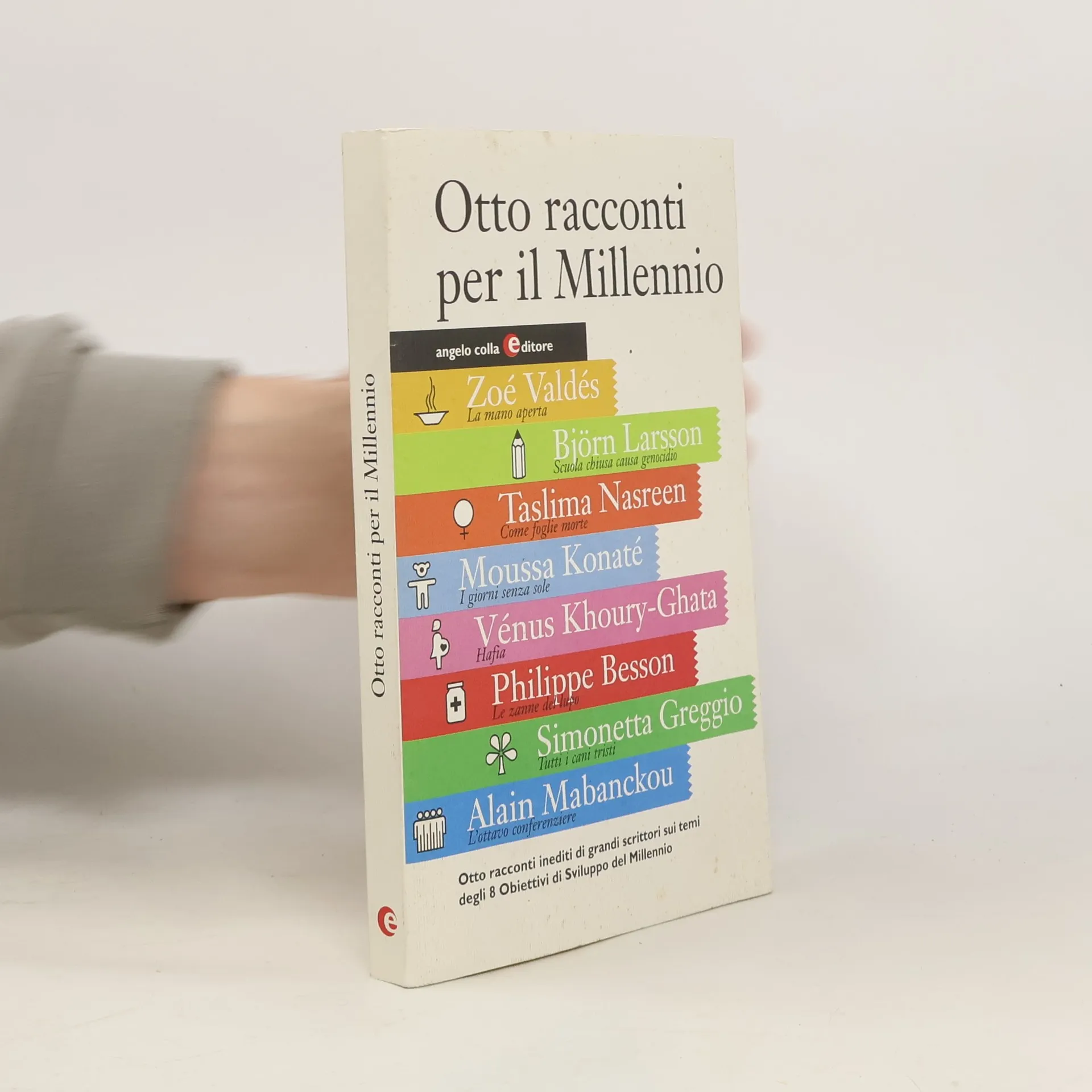
En septembre 2000, pour la première fois, tous les Etats membres des Nations unies se sont engagés à réaliser un projet commun pour s'attaquer à la fatalité de la misère. Ils ont adopté huit objectifs ambitieux et réalistes qui visent à, combattre la faim et la pauvreté, à préserver l'environnement, à améliorer l'accès à l'éducation et a la santé, à promouvoir l'égalité des sexes, et à mettre en place un partenariat mondial d'ici à 2015. Dans les huit nouvelles inédites qui composent ce recueil, on croise une réalisatrice de documentaires qui découvre le quotidien des Haïtiens, un garçon rwandais qui rêve d'aller à l'école refoulé aux portes de l'Europe, une jeune fille arpentant les trottoirs de Ramana, un marchand de tamis qui se bat pour la survie de ses enfants au Mali, une fille mère en danger de mort au Liban, un Européen confronté à la maladie dans un pays lointain, un producteur aux prises avec les cadavres de ses ancêtres dans le Sud de la France, un conférencier des Nations unies interpellé par les habitants d'une grande ville du Congo... Avec humour, gravité, tendresse et lucidité, Zoé Valdés, Björn Larsson, Taslima Nasreen, Moussa Konaté, Vénus Khoury-Ghata, Philippe Besson, Simonetta Greggio et Alain Mabanckou brossent les portraits de femmes, d'hommes et d'enfants qui mettent en lumière l'urgente nécessité d'agir pour un nouveau modèle de développement.
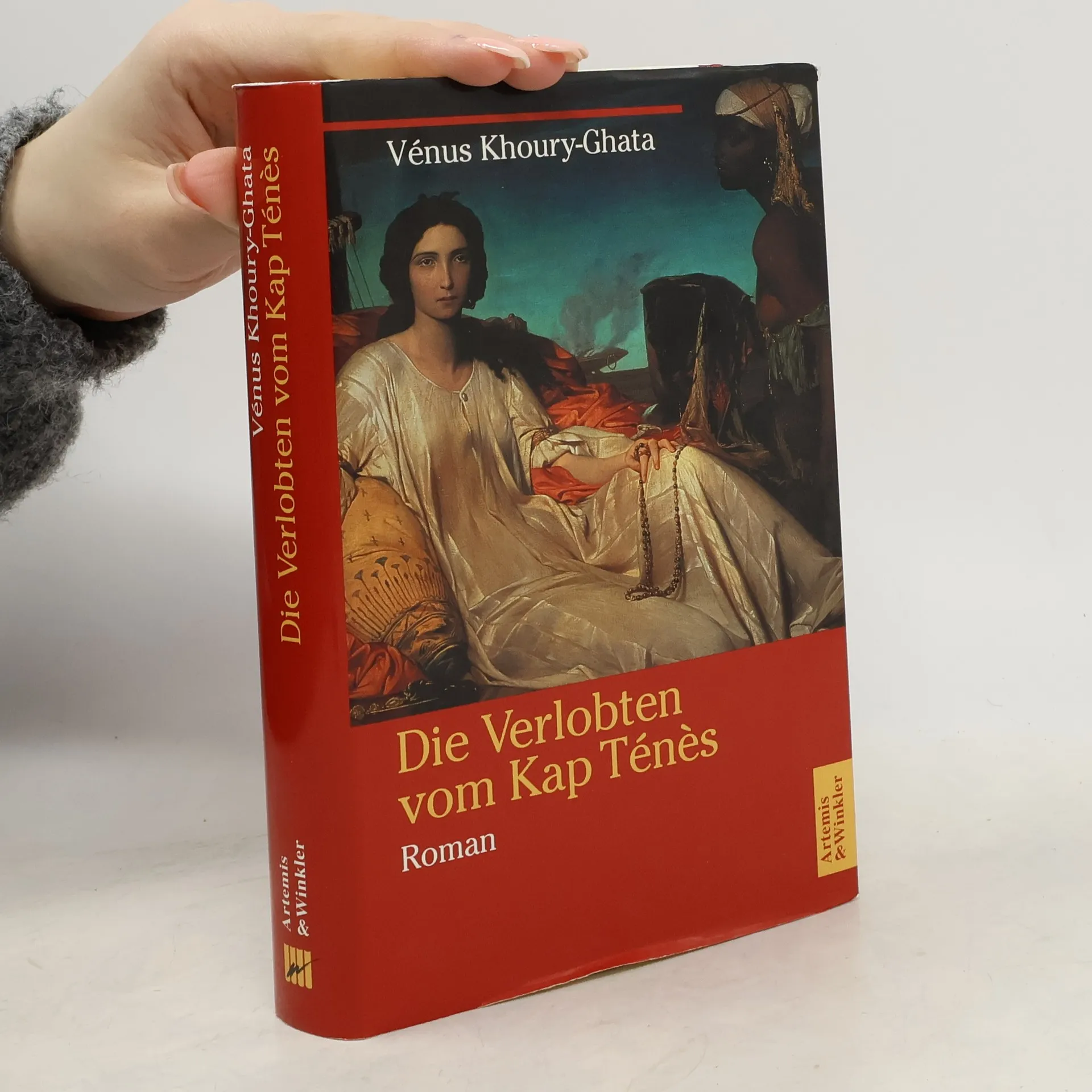
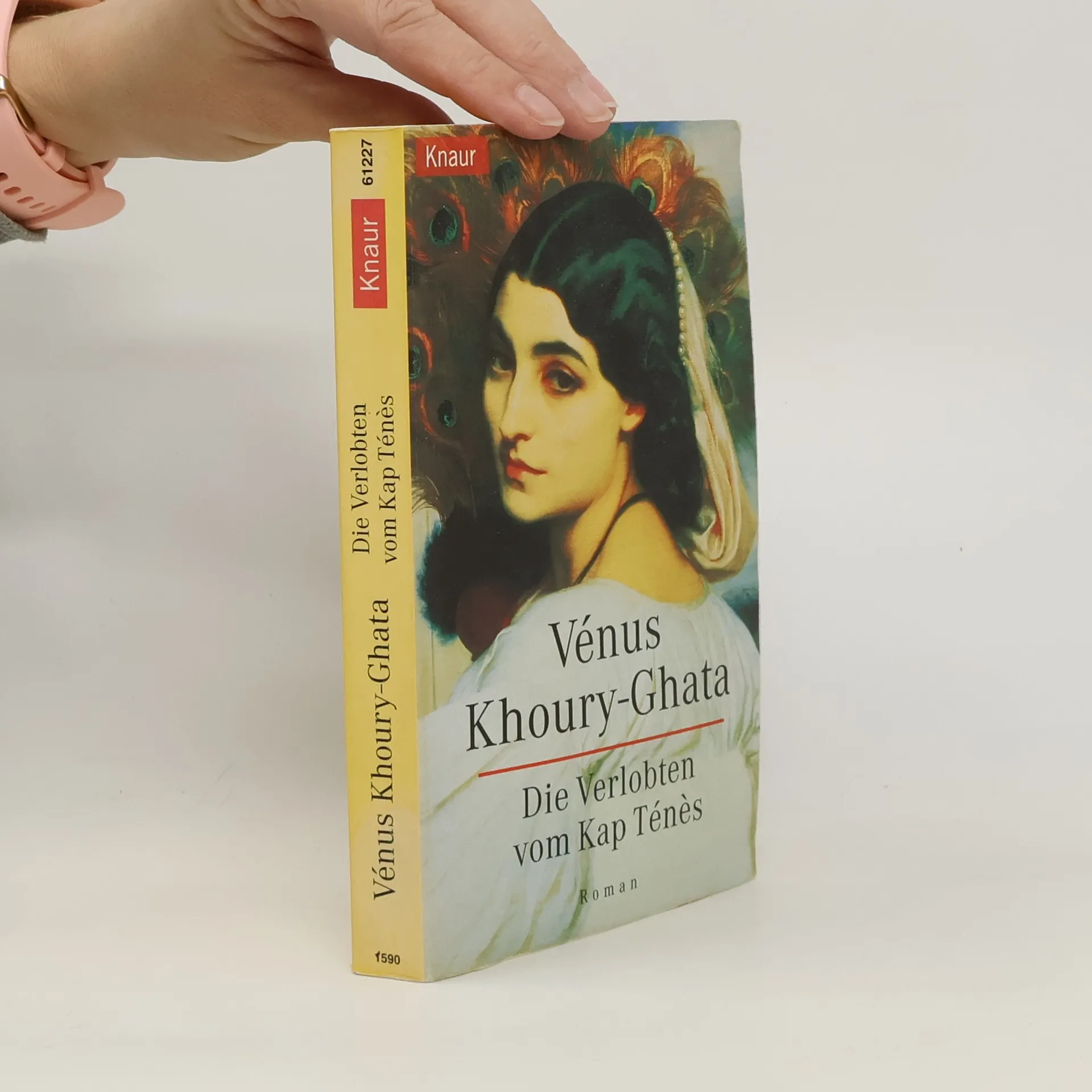
Dezember 1802. Ein französisches Kriegsschiff, die Banel, sinkt vor der Küste von Ténès, einem algerischen Fischerdorf. Die meisten Seeleute kommen ums Leben. Diejenigen, die nicht ertrinken, werden von dem Stamm der Bani Hauwa abgeschlachtet, der vom Berg zum Strand eilt. Die einzigen Überlebenden sind fünf Frauen, um die die Bani Hauwa wetteifern werden. Unter ihnen ist Lauza, das kleine Mädchen aus Toulon, das den Schläger von Algier bezaubern wird, und Hélène de Courtavre, die erste französische Lehrerin auf algerischem Boden. Außerdem ist da Marie, die von einem Landwirt aus dem Rif als zweite Frau genommen wird, und die zwölfjährige Élise, die mit dem Sohn des Emirs einer Festung in der Wüste verheiratet werden soll. Doch das glänzendste Schicksal erwartet die Äbtissin Johanna, genannt "Gemma B'net", die zur Heilerin von Körper und Seele und Mitglied des Gemeinderats des Dorfes wird.