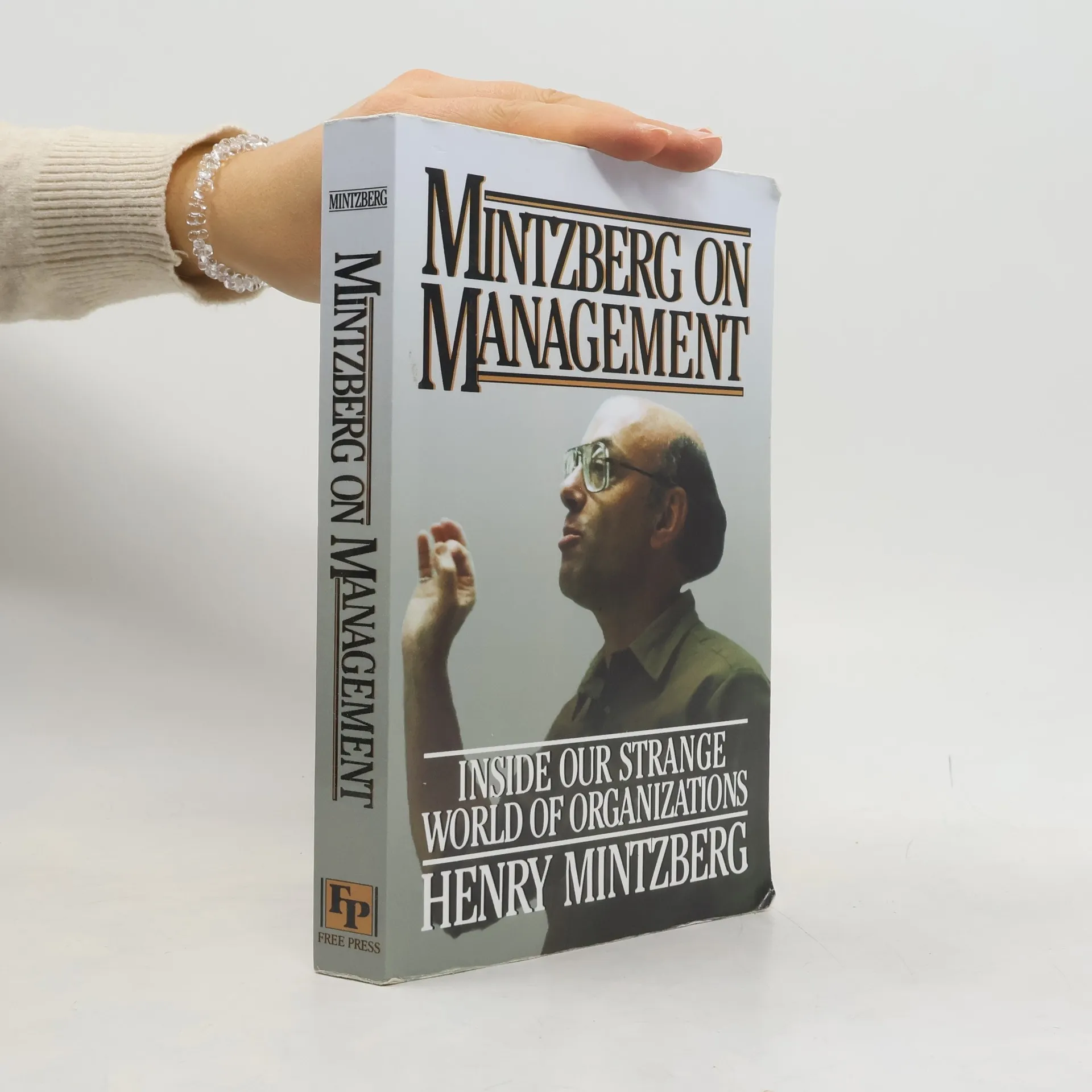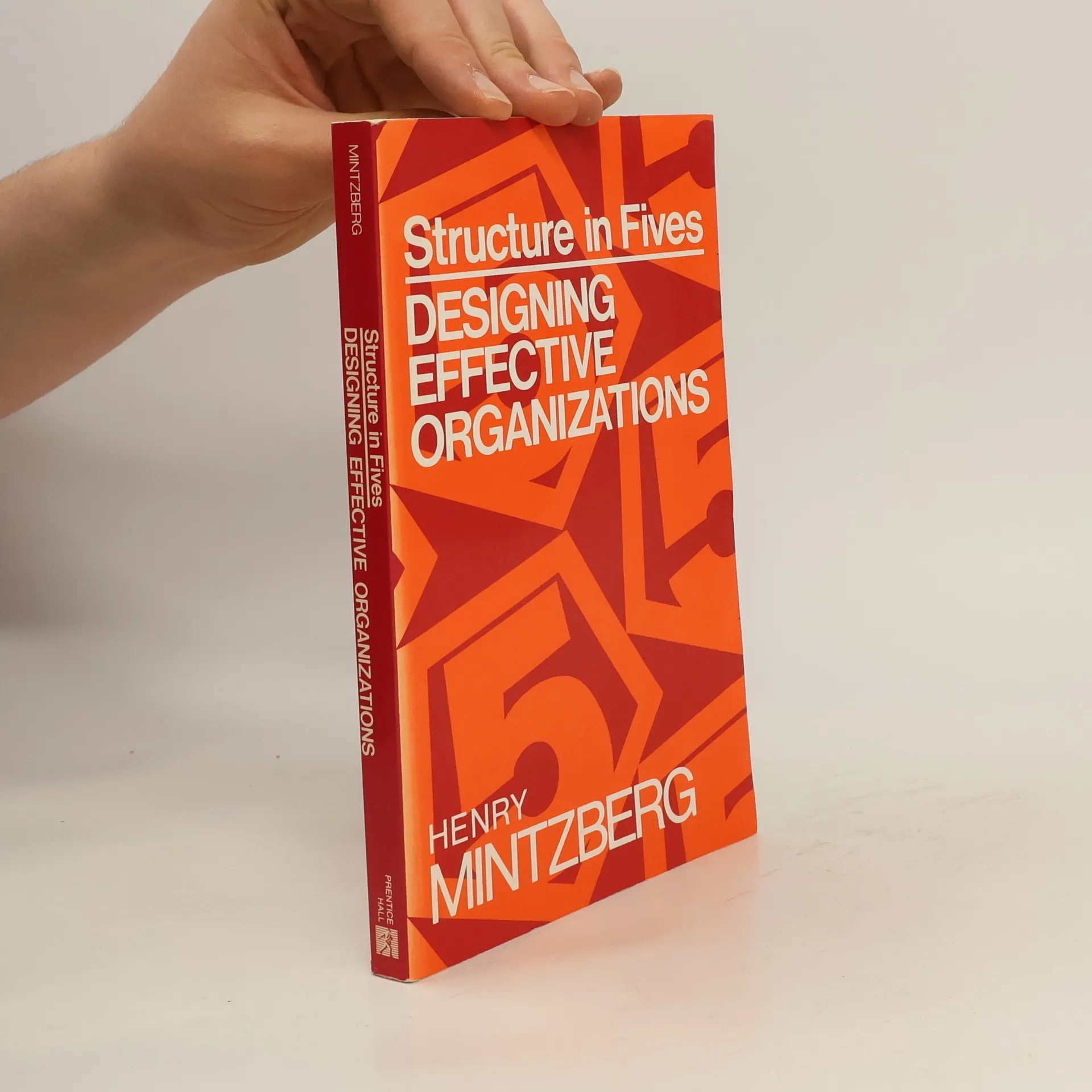

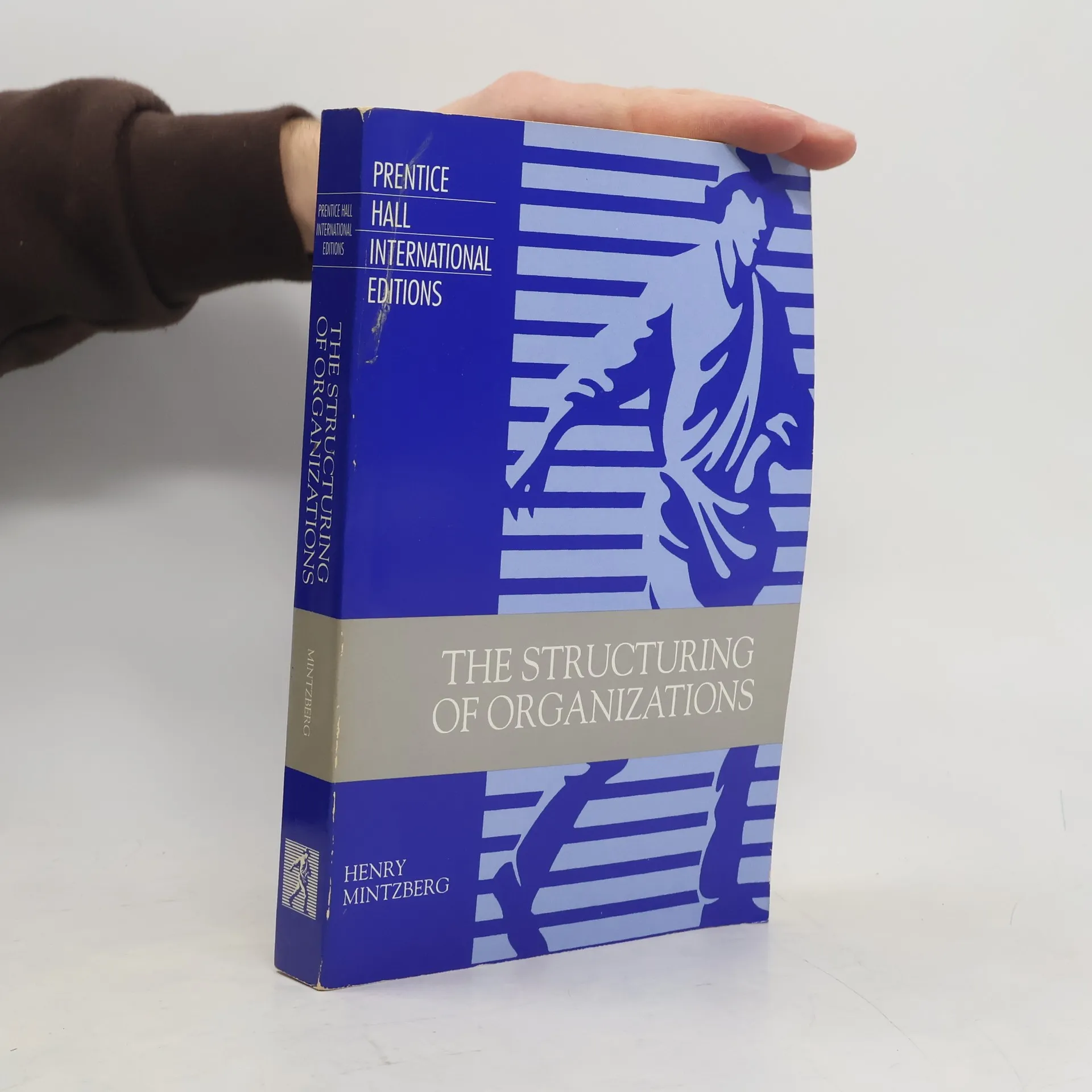

Nadszedł czas, aby zrozumieć, jak funkcjonują organizacje! Żyjemy w świecie pełnym organizacji. Odgrywają one zasadniczą rolę we wszystkim, co robimy. Przychodzimy na świat w szpitalach, a w ostatnią drogę wyprawia nas dom pogrzebowy. Między tym pierwszym a ostatnim momentem kształcimy się, znajdujemy zatrudnienie i korzystamy z rozrywek za pośrednictwem organizacji, których… niekiedy mamy dość. Czy jednak rozumiemy ich istotę? Warto je dobrze poznać i zrozumieć, jak działają. Zestaw niezbędnych informacji o funkcjonowaniu specyficznych bytów społecznych, które zwykliśmy nazywać organizacjami Ta książka to synteza 50 lat doświadczeń jednego z najwybitniejszych teoretyków zarządzania. Henry Mintzberg od pół wieku obserwuje organizacje, doradza im, wchodzi z nimi w interakcje lub przed nimi ucieka. Teraz proponuje nam wprawnie napisaną aktualizację swojej książki Structure in Fives, klasyka z 1983 roku. Organizacja to zbiór uporządkowanych działań podejmowanych w celu realizacji pewnej wspólnej misji. To grupa ludzi, która działa w jakiś sformalizowany sposób, aby czegoś konkretnego dokonać. Struktura organizacji może być zdefiniowana jako schemat zależności, które umożliwiają tworzącym ją ludziom podejmowanie wspólnych działań. Nie ma gorszego podejścia do zarządzania niż przekonanie, że istnieje jeden idealny sposób na ukształtowanie organizacji – a przecież każda z nich jest inna! Każda należy do jednego z siedmiu gatunków: zindywidualizowana, zaprogramowana, profesjonalna, projektowa, oddziałowa, okręt z załogą i arena polityczna. I każda mierzy się z siedmioma siłami, pod których wpływem w cyklu swojego życia przeistacza się i tworzy różne hybrydy. Te siły to: konsolidacja, wydajność, biegłość, współpraca, nawarstwienie odrębności, zastrzyk kultury i klin konfliktu. Każdy z nas jako członek społeczeństwa powinien rozumieć istotę funkcjonowania organizacji. Ta książka to wspaniały przewodnik po tym świecie, a także wielobarwny i żywy opis stworzeń, które go zamieszkują. Henry Mintzberg jest pisarzem, badaczem i pedagogiem, który w swojej pracy koncentruje się na zarządzaniu organizacjami, doskonaleniu menedżerów, a ostatnio także przywracaniu równowagi społecznej. To dwudziesta pierwsza książka w jego dorobku. Za wcześniejsze autor został odznaczony ponad dwudziestoma honorowymi tytułami naukowymi. Pracuje w katedrze badań nad zarządzaniem im. Cleghorna, na Wydziale Zarządzania im. Desautelsa, na McGill University w Montrealu. W 1979 r. wydał The Structuring of Organizations: A Synthesis of the Research, a w 1983 r. jej skróconą wersję pt. Structures in Fives. Więc ej informacji znaleźć można na stronach: mintzberg.org oraz na rebalancingsociety.org.
Henry Mintzberg Pořadí knih
Henry Mintzberg je uznávaný akademik a autor v oblasti managementu a obchodní strategie. Jeho práce se zaměřuje na kritiku současných přístupů k řízení a strategickému plánování, přičemž zdůrazňuje význam praktických zkušeností a kritického myšlení před pouhým uplatňováním kvantitativních metod. Mintzberg zpochybňuje tradiční modely obchodního vzdělávání a navrhuje reformy zaměřené na rozvoj skutečných manažerských dovedností a hlubšího porozumění organizačním procesům. Jeho analýzy nabízejí čtenářům osvěžující a provokativní pohled na svět managementu.


- 2024
- 2023
Understanding Organizations--Finally!
- 244 stránek
- 9 hodin čtení
The iconic Henry Mintzberg provides a crystal-clear map to the seven forces that shape all human organizations, synthesizing sixty years of research on organizational design and theory. Human beings have been organizing to accomplish work for as long as we’ve existed. So why is organizational behavior still so elusive and mysterious? In this book, one of the greatest scholars in his field reframes his career’s work around the seven forces that drive all organizations. Mintzberg identifies them as efficiency, proficiency, consolidation, collaboration, culture, division, and conflict. Each of these forces aligns with one of the seven basic organizational forms: the Personal Enterprise, the Programmed Machine, the Professional Assembly, the Project Pioneer, the Divisional Form, the Community Ship, and the Political Arena. Mintzberg explores how these forms combine and hybridize and offers a life-cycle model to explain how organizations transition between the forms and hybrids. Mintzberg says that organizations are formed by a set of relationships, yet their purpose is achieved only through individual work—making the act of organizing a unique science. This brilliant book not only explains why organizations are the way they are, but it also shows how we can make our individual organizations function at the highest possible level.
- 2019
Bedtime Stories for Managers
- 200 stránek
- 7 hodin čtení
In forty-two succinct, surprising essays, legendary scholar Henry Mintzberg brings management down from the clouds and onto solid ground.If you're like most managers and things keep you up at night, now you can turn to a book that's designed especially for you! But you won't find talking rabbits or princesses here. (There is a cow, but it doesn't jump.) Henry Mintzberg has culled forty-two of the best posts from his widely read blog and turned them into a deceptively light, sneakily serious compendium of sometimes heretical reflections on management.The moral here is managers need to leave their castles and find out what's actually going on in their kingdoms. And like real bedtime stories, these essays have metaphors galore. So prepare to grow strategies like weeds and organize like a cow. Discover the maestro myth of managing, find the soft underbelly of hard data, and learn why downsizing is bloodletting and your board should be a bee. Mintzberg writes, "Just try not to be outraged by anything you read, because some of my most outrageous ideas turn out to be my best. They just take a while to become obvious."
- 2015
Rebalancing Society: Radical Renewal Beyond Left, Right, and Center
- 168 stránek
- 6 hodin čtení
"Our world is out of balance, says Henry Mintzberg, and the consequences are proving fateful: the degradation of our environment, the demise of our democracies, and the denigration of ourselves, with greed having been raised to some sort of high calling. But we can set things right. Mintzberg argues that a healthy society is built on three balanced pillars: a public sector of respected governments, a private sector of responsible enterprises, and what he calls a plural sector of robust voluntary associations (nonprofits, NGOs, etc.)"--Amazon.com
- 2010
Managen beleuchtet den vielleicht wichtigsten Job, den es gibt. Seine Dynamik, seine Vielfalt, seine Rätsel und wie Manager ihn effektiv und gut beherrschen. Managen ist eine dynamische Tätigkeit, kein statische Wissenschaft. Mintzberg zeigt, dass Manager vielfach als überlegte und systematische Planer idealisiert werden und diesem Anspruch gar nicht gerecht werden können. Er skizziert Management als dynamischen Prozess. Mintzberg gilt als Enfant terrible unter den Managementvordenkern. Eine seiner Thesen: Management und Leadership sind Bestandteile des gleichen Jobs. Manager, die keine Leader sind, sind langweilig. Und Leader, die nicht managen, wissen nichts vom Geschäft. Die Trennung von Management und Leadership ist Unsinn. Mintzberg fordert auf zu einer längst überfälligen Diskussion über modernes Management: Wie kann man managen, wenn verlässliche Daten fehlen. Wie kann man eine Balance herstellen zwischen notwendiger Veränderung und Kontinuität? Wie kann man Dinge durchdenken, wenn die Zeit dazu fehlt? Effektive Manager sind nicht frei von Fehler, aber sie treffen die in der jeweiligen Situation bestmöglichen Entscheidungen.
- 2009
A half century ago Peter Drucker put management on the map. Leadership has since pushed it off. Henry Mintzberg aims to restore management to its proper front and center. “We should be seeing managers as leaders.” Mintzberg writes, “and leadership as management practiced well.”This landmark book draws on Mintzberg’s observations of twenty-nine managers, in business, government, health care, and the social sector, working in settings ranging from a refugee camp to a symphony orchestra. What he saw—the pressures, the action, the nuances, the blending—compelled him to describe managing as a practice, not a science or a profession, learned primarily through experience and rooted in context.But context cannot be seen in the usual way. Factors such as national culture and level in hierarchy, even personal style, turn out to have less influence than we have traditionally thought. Mintzberg looks at how to deal with some of the inescapable conundrums of managing, such as, How can you get in deep when there is so much pressure to get things done? How can you manage it when you can’t reliably measure it?This book is vintage iconoclastic, irreverent, carefully researched, myth-breaking. Managing may be the most revealing book yet written about what managers do, how they do it, and how they can do it better.
- 2009
Bousculant les idées reçues sur le management et ouvrant de nouvelles perspectives, Mintzberg se propose ici de décrire et interpréter ce que font vraiment les managers au quotidien... et pas seulement dans les entreprises : dans tout type d'organisation. Ce livre est le fruit d'une immersion dans le quotidien de 29 managers, issus de secteurs aussi variés que ceux des affaires, la politique, la santé et le social, exerçant aussi bien dans un camp de réfugiés que dans un orchestre... Donnant sens à la simple réalité concrète et quotidienne de ces hommes et femmes, Mintzberg décrit le management comme une pratique, et non pas comme une science ni une profession, acquise d'abord par l'expérience. Dans Managing, il reprend quelques-unes de ses conclusions antérieures, en reconsidère d'autres, et en introduit de nouvelles. Managing pourrait bien être le livre le plus éclairant sur ce que font les managers, comment ils le font et comment ils pourraient le faire encore mieux.
- 2005
Eine kritische Analyse. Übersetzt von Jan W. Haas. Der MBA "Master of Business Administration" ist der begehrteste Studienabschluss für angehende Manager. Doch Henry Mintzberg, einer der international angesehensten Managementexperten, warnt: Das MBA-Studium bereitet nicht ausreichend auf die Managementpraxis vor. Der Autor Henry Mintzberg ist Cleghorn Professor of Management Studies an der Mc- Gill University in Montréal. Er gilt als" Strategie-Papst"und ist einer der bekanntesten Managementautoren der Welt. Pressestimmen, 23.03.2005 Die Zeit, Die Führungskrise "Mintzberg macht Vorschläge, die in die richtige Richtung gehen, können sie doch jene Wende herbeiführen, die notwendig ist, damit die Gesellschaft nicht länger die Zeche zahlt für den Erfolg des MBA." 21.01.2005 Handelsblatt: Scharfe MBA-Kritik jetzt auch auf Deutsch "Eine fulminante Kritik."
- 2005
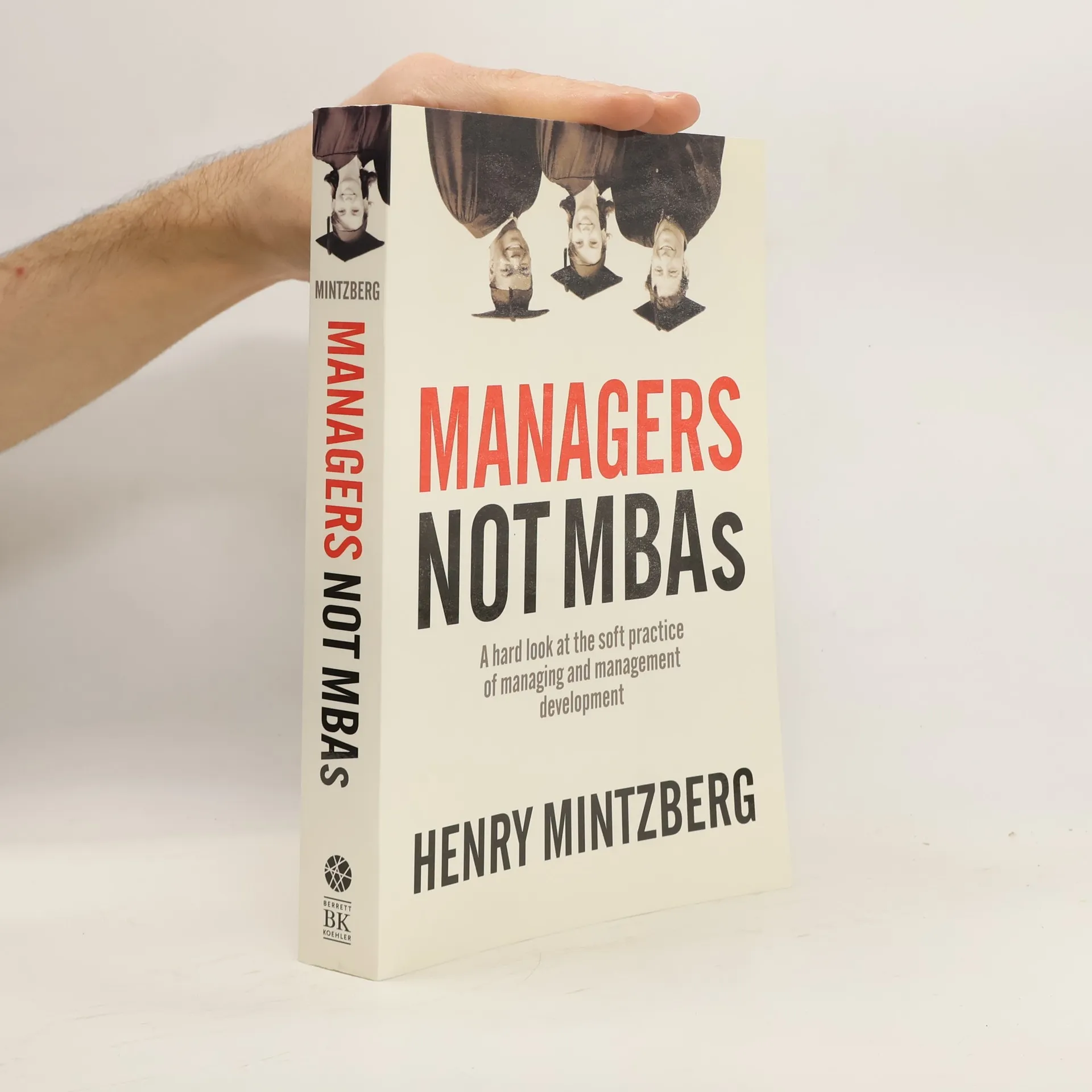
Managers Not MBAs: A Hard Look at the Soft Practice of Managing and Management Development
- 464 stránek
- 17 hodin čtení
In this sweeping critique of how managers are educated and how, as a consequence, management is practiced, Henry Mintzberg offers thoughtful and controversial ideas for reforming both.“The MBA trains the wrong people in the wrong ways with the wrong consequences,” Mintzberg writes. “Using the classroom to help develop people already practicing management is a fine idea, but pretending to create managers out of people who have never managed is a sham.”Leaders cannot be created in a classroom. They arise in context. But people who already practice management can significantly improve their effectiveness given the opportunity to learn thoughtfully from their own experience. Mintzberg calls for a more engaging approach to managing and a more reflective approach to management education. He also outlines how business schools can become true schools of management.
- 2005
Strategy Bites Back
- 223 stránek
- 8 hodin čtení
SWOTed by strategy models? Crunched by analysis? Strategy doesn't have to be this way. Strategy is really all about being different. Thinking about it shouldn't make you reach for the snooze button. Strategy Bites Back brings you a provocative, imaginative and surprising mix of perspectives to help stimulate more creative strategic thinking and more enjoyable strategy making. From voices as diverse as and Lucy Kellaway, Mao Tse Tung and Jack Welch, even Michael Porter and Gary Hamel, you can enjoy exploring the sharper side of strategy. Strategy as a Little Black Dress Forecasting: Whoops! Management and Magic Strategy and the Art of Seduction The Soft Underbelly of Hard Data Strategy as destiny Jack Welch on Planning The Seven Deadly Sins of Planning Strategy One Step at a Time and many, many more. Why not have a good time reading a strategy book for a change?