




Knihobot

Henry Mintzberg

    2. září 1939

    Henry Mintzberg je uznávaný akademik a autor v oblasti managementu a obchodní strategie. Jeho práce se zaměřuje na kritiku současných přístupů k řízení a strategickému plánování, přičemž zdůrazňuje význam praktických zkušeností a kritického myšlení před pouhým uplatňováním kvantitativních metod. Mintzberg zpochybňuje tradiční modely obchodního vzdělávání a navrhuje reformy zaměřené na rozvoj skutečných manažerských dovedností a hlubšího porozumění organizačním procesům. Jeho analýzy nabízejí čtenářům osvěžující a provokativní pohled na svět managementu.

    Strategy Bites Back
    Strategy Safari
    Managing
    The Structuring of Organizations
    The Strategy Process
    Understanding Organizations--Finally!
    • Understanding Organizations--Finally!

      • 244 stránek
      • 9 hodin čtení

      The iconic Henry Mintzberg provides a crystal-clear map to the seven forces that shape all human organizations, synthesizing sixty years of research on organizational design and theory. Human beings have been organizing to accomplish work for as long as we’ve existed. So why is organizational behavior still so elusive and mysterious? In this book, one of the greatest scholars in his field reframes his career’s work around the seven forces that drive all organizations. Mintzberg identifies them as efficiency, proficiency, consolidation, collaboration, culture, division, and conflict. Each of these forces aligns with one of the seven basic organizational forms: the Personal Enterprise, the Programmed Machine, the Professional Assembly, the Project Pioneer, the Divisional Form, the Community Ship, and the Political Arena. Mintzberg explores how these forms combine and hybridize and offers a life-cycle model to explain how organizations transition between the forms and hybrids. Mintzberg says that organizations are formed by a set of relationships, yet their purpose is achieved only through individual work—making the act of organizing a unique science. This brilliant book not only explains why organizations are the way they are, but it also shows how we can make our individual organizations function at the highest possible level.

      Understanding Organizations--Finally!
      4,6
    • Readings and cases are arranged to provide students with a conceptual insight into actual business situations. The book integrates the various strands of the strategy process - strategy itself, strategy analysis, structure, power and culture - and shows how they operate in different businesses - entrepreneurial, innovative, diversified, specialized and established.

      The Strategy Process
      4,1
    • The Structuring of Organizations

      • 512 stránek
      • 18 hodin čtení

      Presents methods and examples of organizational structure using empirical literature to describe how organizations structure themselves. The book discusses the nature of managerial work, strategy formation process and issues associated with each type of structure.

      The Structuring of Organizations
      4,1
    • A half century ago Peter Drucker put management on the map. Leadership has since pushed it off. Henry Mintzberg aims to restore management to its proper front and center. “We should be seeing managers as leaders.” Mintzberg writes, “and leadership as management practiced well.”This landmark book draws on Mintzberg’s observations of twenty-nine managers, in business, government, health care, and the social sector, working in settings ranging from a refugee camp to a symphony orchestra. What he saw—the pressures, the action, the nuances, the blending—compelled him to describe managing as a practice, not a science or a profession, learned primarily through experience and rooted in context.But context cannot be seen in the usual way. Factors such as national culture and level in hierarchy, even personal style, turn out to have less influence than we have traditionally thought. Mintzberg looks at how to deal with some of the inescapable conundrums of managing, such as, How can you get in deep when there is so much pressure to get things done? How can you manage it when you can’t reliably measure it?This book is vintage iconoclastic, irreverent, carefully researched, myth-breaking. Managing may be the most revealing book yet written about what managers do, how they do it, and how they can do it better.

      Managing
      3,4
    • Strategy Safari

      • 407 stránek
      • 15 hodin čtení

      Strategy Safari, the international bestseller on business strategy by leading management thinker Henry Mintzberg and his colleagues Bruce Ahlstrand and Joseph Lampel, is widely considered a classic work in the field.No other book synthesizes the entire history and evolution of strategic management in so lively and entertaining a fashion. Since the initial publication of Strategy Safari , managers, consultants, and academics all over the world have found this book an indispensable and delightful tool—it has been translated into more than ten languages, including Chinese, Russian, and French, and has been used in top MBA programs worldwide.Strategy Safari makes sense of a field that often seems to make no sense. Mintzberg, Ahlstrand, and Lampel pair their sweeping vision of strategy making with an authoritative catalog in which they identify ten schools of strategy that have emerged over the past four decades.Why struggle through the vast, confusing terrain of strategy formation? With clarity and depth, Strategy Safari maps the strategic landscape and facilitates intelligent, informed strategy formation.

      Strategy Safari
      4,1
    • Strategy Bites Back

      It Is a Lot More, and Less, Than You Ever Imagined....

      • 284 stránek
      • 10 hodin čtení

      Strategy Bites Back is the antidote to conventional strategy books -- and conventional strategy formation. Edited by the legendary Henry Mintzberg, it contains contributions from everyone from Gary Hamel to Napoleon Bonaparte, Michael Porter to Hans Christian Andersen: essays, poems, case studies, cartoons, whatever it takes to 'free your mind' and unleash the crucial emotional side of strategy formation. Coverage includes: strategy and brinkmanship, culture, seduction; strategy lessons from your mother, from beehives, chess grandmasters, even the National Zoo. Along the way, Mintzberg and his colleagues take on the sacred cows and entrenched beliefs that keep strategists from recognizing their most powerful options. Strategy Bites Back doesn't just make strategy fun: it helps define strategies that offer huge upsides and real inspiration.

      Strategy Bites Back
      4,0
    • Structure in Fives

      • 312 stránek
      • 11 hodin čtení

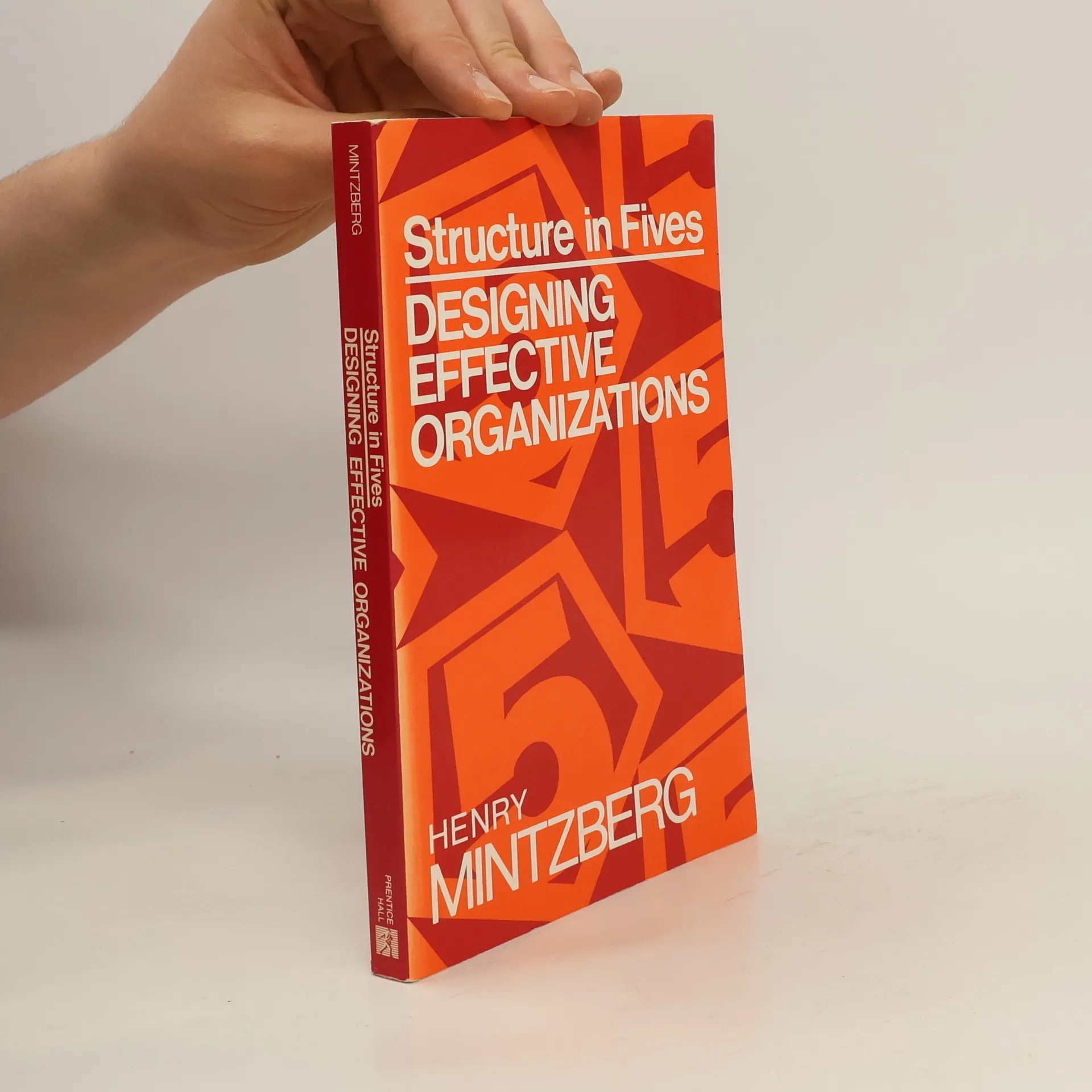
      Here's a guide that shows managers how to choose the best organizational design for their business from five basic structures identified by the author. In it readers will discover how to avoid typical mistakes, especially those pertaining to conflict among different divisions.

      Structure in Fives
      4,0
    • The Rise and Fall of Strategic Planning

      Reconceiving Roles for Planning, Plans and Planners

      • 458 stránek
      • 17 hodin čtení

      In this revealing history, Henry Mintzberg, a prominent figure in management thought, critiques the concept of strategic planning, which has captivated organizations since 1965. He argues that the term is an oxymoron, as strategy involves synthesis while planning focuses on analysis, leading to frequent failures in the process. Mintzberg explores the origins and evolution of strategic planning, highlighting its rise and subsequent decline. He advocates for a reimagined approach to strategy creation that prioritizes informal learning and personal vision, redefining the roles of planners. By examining various strategic planning models, he uncovers reasons for their failures and discusses the pitfalls of planning, such as its tendency to undermine commitment, limit vision, stifle change, and foster political environments. Mintzberg identifies three fundamental fallacies: the belief that discontinuities can be predicted, that strategists can remain detached from operations, and that strategy-making can be formalized. He emphasizes a new role for planners, suggesting they should support the strategy-making process rather than be embedded within it, contributing inputs and fostering strategic thinking. This work is essential for anyone involved in organizational planning or strategy-making.

      The Rise and Fall of Strategic Planning
      3,9
    • In this sweeping critique of how managers are educated and how, as a consequence, management is practiced, Henry Mintzberg offers thoughtful and controversial ideas for reforming both.“The MBA trains the wrong people in the wrong ways with the wrong consequences,” Mintzberg writes. “Using the classroom to help develop people already practicing management is a fine idea, but pretending to create managers out of people who have never managed is a sham.”Leaders cannot be created in a classroom. They arise in context. But people who already practice management can significantly improve their effectiveness given the opportunity to learn thoughtfully from their own experience. Mintzberg calls for a more engaging approach to managing and a more reflective approach to management education. He also outlines how business schools can become true schools of management.

      Managers Not MBAs: A Hard Look at the Soft Practice of Managing and Management Development
      3,9
    • "Our world is out of balance, says Henry Mintzberg, and the consequences are proving fateful: the degradation of our environment, the demise of our democracies, and the denigration of ourselves, with greed having been raised to some sort of high calling. But we can set things right. Mintzberg argues that a healthy society is built on three balanced pillars: a public sector of respected governments, a private sector of responsible enterprises, and what he calls a plural sector of robust voluntary associations (nonprofits, NGOs, etc.)"--Amazon.com

      Rebalancing Society: Radical Renewal Beyond Left, Right, and Center
      3,6