


Knihobot

Aaron T. Beck

    18. červenec 1921 – 1. listopad 2021

    Aaron Temkin Beck je americký psychiatr, který je považován za otce kognitivní terapie. Jeho průkopnické teorie se široce používají při léčbě klinické deprese a jeho práce inspirovala rozvoj dalších kognitivních technik. Beck také vyvinul sebeposuzovací metody pro měření deprese a úzkosti. Jeho výzkum v oblasti psychoterapie, psychopatologie a sebevražd vedl k publikaci více než 600 odborných článků a 25 knih, čímž zásadně ovlivnil historii americké psychiatrie a psychoterapie.

    Depression : causes and treatment
    Cognitive Therapy: Basics and Beyond
    Cognitive therapy of depression
    Evil: inside human violence and cruelty
    Anxiety disorders and phobias : a cognitive perspective
    Kognitivní terapie a emoční poruchy
    • Gedanken verändern Gefühle

      Fertigkeiten, um Stimmungen, Verhalten und Beziehungen grundlegend zu verbessern

      • 260 stránek
      • 10 hodin čtení

      Sie haben dieses Buch in die Hand genommen und denken vermutlich darüber nach, wie Sie bestimmte Dinge in Ihrem Leben verändern können. In Gedanken verändern Gefühle erklären zwei klinische Psychologen, wie Sie Techniken der kognitiven Therapie - einer der wirksamsten und heute gebräuchlichsten Psychotherapieformen - in Ihrer derzeitigen Lebenssituation anwenden können. Mit Hilfe von Arbeitsblättern erlernen Sie Schritt für Schritt Fertigkeiten, die bereits Tausenden von Menschen geholfen haben, Depression, Panikattacken, Ängste, Ärger, Schuldgefühle, Scham, ein schwaches Selbstwertgefühl, Essstörungen, Drogen-, Medikamenten- und Alkoholmissbrauch sowie Beziehungsprobleme zu überwinden. Ob Sie sich nun in einer Therapie befinden oder nicht, mit Hilfe dieses Buches können Sie in jedem Fall lernen, Ihre Stimmungslage zu verbessern und die Veränderungen zu erreichen, die Sie anstreben.

      Gedanken verändern Gefühle2007
    • Nejrůznější terapeutické školy se shodují v tom, že člověk trpící např. depresemi, fobiemi, obsesemi a jinými poruchami, je obětí sil, nad kterými nemá vládu. Renomovaný autor na poli kognitivní terapie nabízí perspektivu, ve které emoční problémy člověka souvisejí do značné míry s pokřivením reality, založeným na chybných předpokladech a závěrech. V průběhu kognitivní terapie pomáhá terapeut pacientovi objasnit tato pokřivení a naučit se alternativní, realističtější způsoby, jak formulovat vlastní zkušenosti. Ve své knize se A. T. Beck konkrétněji zabývá nejčastějšími typy emočních poruch a jejich kognitivním obsahem a následně předkládá principy a techniky kognitivní terapie.

      Kognitivní terapie a emoční poruchy2005
      4,0
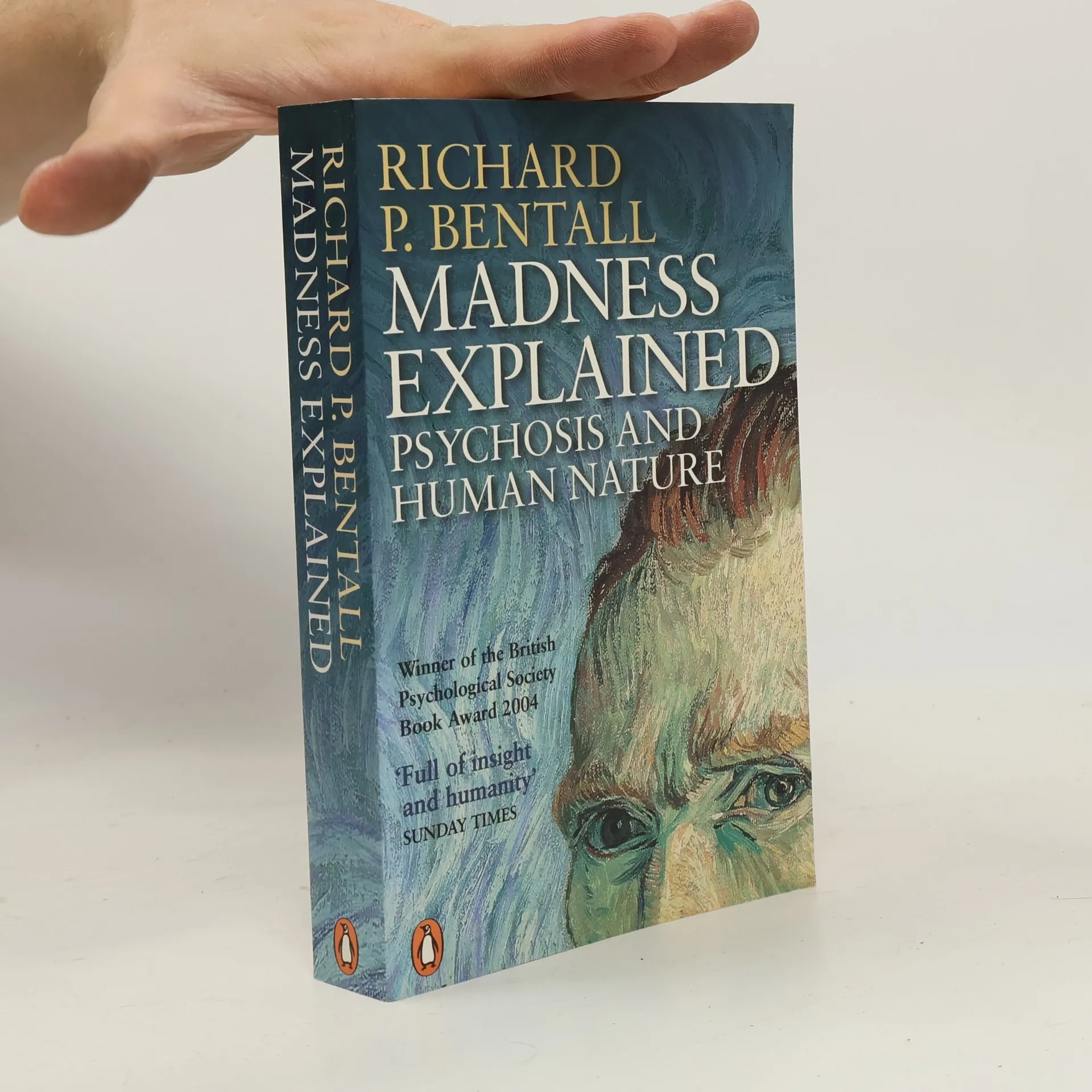
    • Part of a Growing International Movement to Change the Face of Mental Illness.Is madness purely a medical condition that can be treated with drugs? Is there really a clear dividing line between mental health and mental illness - or is it not so easy to classify who is sane and who is insane?In Madness Explained leading clinical psychologist Richard Bentall shatters the modern myths that surround psychosis. This groundbreaking work argues that we cannot define madness as an illness to be cured like any other; that labels such as 'schizophrenia' and 'manic depression' are meaningless, based on nineteenth-century classifications; and that experiences such as delusions and hearing voices are in fact exaggerations of the mental foibles to which we are all vulnerable.We need, Bentall argues, a radically new way of thinking about psychiatric problems - one that does not reduce madness to bain chemistry, but understands and accepts it as part of human nature.'Bentall destroys many of the foundations underlying psychiatric thinking' - Oliver James'A monumental study ... brave, well-researched and accessible' - Scotland on Sunday'Bental demystifies psychosis and restores the patient to a proper place with the rest of humankind' - Aaron T. Beck

      Madness explained : psychosis and human nature2004
      4,2
    • Evil: inside human violence and cruelty

      • 448 stránek
      • 16 hodin čtení

      Explores cruelty and violence in human behavior, tracing its roots in psychology, sociology, anthropology, criminology, and history.

      Evil: inside human violence and cruelty2001
      4,2
    • Cognitive Therapy: Basics and Beyond

      • 338 stránek
      • 12 hodin čtení

      Written in a clear, step-by-step style, this ideal teaching text makes cognitive therapy immediately accessible to students as well as to professionals new to cognitive therapy. The author uses a single case example to demonstrate how to conceptualize patients according to the cognitive model, plan treatment, conduct an initial session, structure therapy within and across sessions, incorporate homework, and use cognitive and behavioral techniques. Instructors will appreciate the book's emphasis on formulating cases, making decisions within therapy sessions, diagnosing problems in therapy, and using advanced techniques to modify core beliefs and underlying assumptions. Transcripts in every chapter richly illustrate the narrative.

      Cognitive Therapy: Basics and Beyond1995
      4,2
    • Love is Never Enough

      • 432 stránek
      • 16 hodin čtení

      With eloquence and accessibility, Dr. Aaron T. Beck analyzes the actual dialogue of troubled couples to illuminate the most common problems in marriage--the power of negative thinking, disillusionment, rigid rules and expectations, and miscommunication.

      Love is Never Enough1988
      4,1
    • The founder of cognitive therapy and two colleagues apply the concepts of cognitive therapy, used successfully in treating depression, to the treatment of anxiety disorders and phobias. Part I shows how the activation of specific nonadaptive cognitive patterns leads to the complex symptoms of generalized anxiety disorder, agoraphobia, simple phobias, and the evaluation anxieties. Part II shows how distorted perceptions of threat and danger are corrected through cognitive restructuring, relaxation, and distraction techniques and through such behavioral methods as exposure therapy and activity scheduling.

      Anxiety disorders and phobias : a cognitive perspective1985
      4,2
    • Kognitive Verhaltenstherapie bei Angst und Phobien

      Eine Anleitung für Therapeuten

      • 217 stránek
      • 8 hodin čtení

      Das Buch ist als Handlungsanweisung für kognitive Therapie verfasst. Dabei ist es den Autoren gelungen, das Grundkonzept der kognitionstheoretischen Erklärung von Angst und Phobien sowie deren Behandlung so zu verdeutlichen, dass ihr praktischer Nutzen für die LeserInnen direkt umsetzbar wird. Vor allem PraktikerInnen werden die Schilderung von konkreten Methoden, Techniken und Fallbeispielen zu schätzen wissen. Sehr wertvoll sind auch die in der Praxis erprobten Tipps und Vorschläge, die sich nicht nur mit sehr weit verbreiteten, sondern auch mit sehr seltenen Problemen beschäftigen. Unter Eingeweihten ein Geheimtipp.

      Kognitive Verhaltenstherapie bei Angst und Phobien1981
    • Mezinárodně uznávaná profesionální příručka na léčbu deprese a podobných problémů (negativní stavy, špatná nálada, slabá motivace...). Její mimořádnost spočívá v tom, že se jí každý může řídit svépomocně. Vynikající terapeut v ní předkládá množství ukázkových dialogů, příkladů, rozborů případů, podrobných návodů a důležitých vysvětlení (včetně pojednání o pozitivech i negativech užívání antidepresiv nebo jiných léků).

      Cítit se dobře : jak se dostat z pasti ničivých myšlenek1980
      4,1
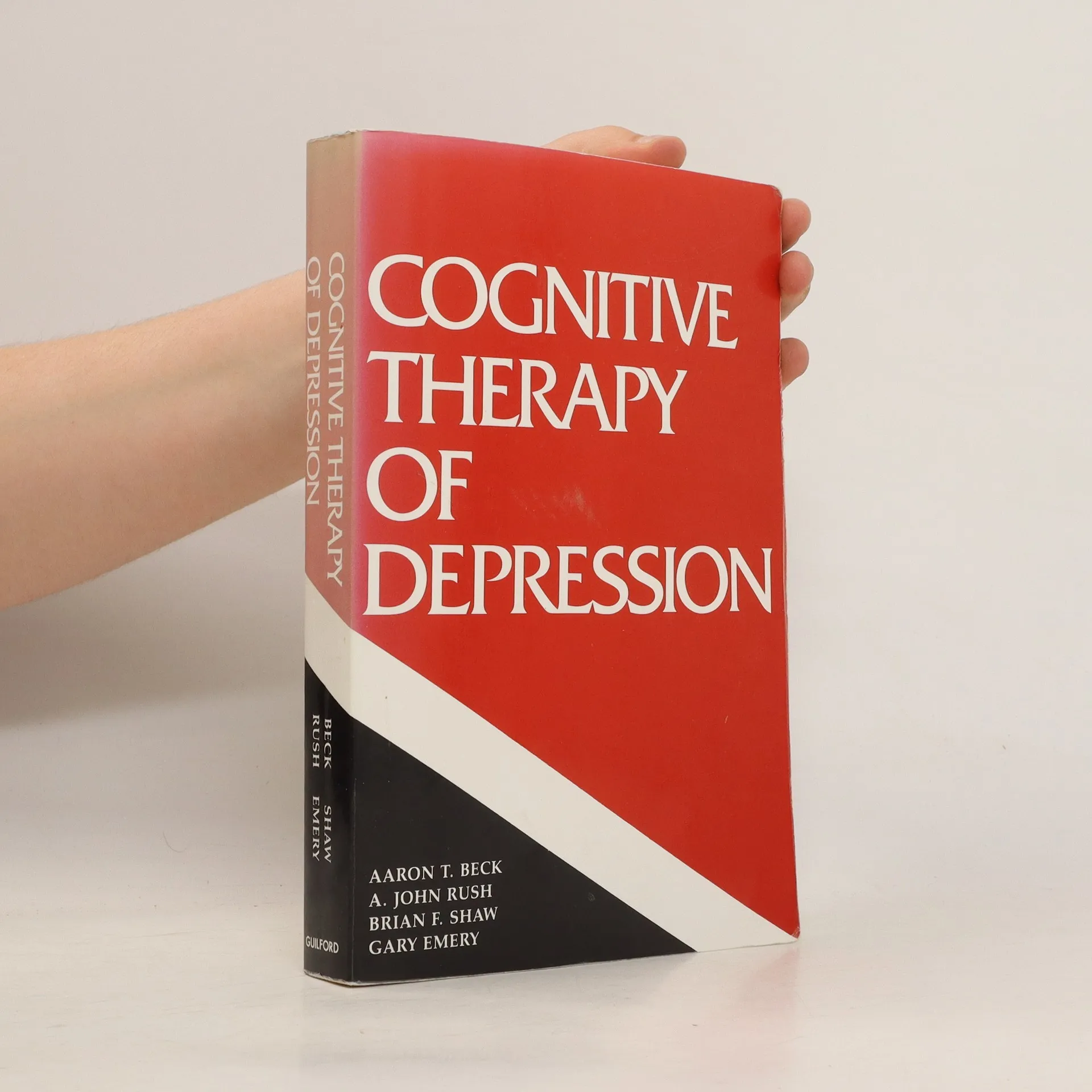
    • Cognitive therapy of depression

      • 425 stránek
      • 15 hodin čtení

      This bestselling, classic work offers a definitive presentation of the theory and practice of cognitive therapy for depression. Aaron T. Beck and his associates set forth their seminal argument that depression arises from a "cognitive triad" of errors and from the idiosyncratic way that one infers, recollects, and generalizes. From the initial interview to termination, many helpful case examples demonstrate how cognitive-behavioral interventions can loosen the grip of "depressogenic" thoughts and assumptions. Guidance is provided for working with individuals and groups to address the full range of problems that patients face, including suicidal ideation and possible relapse. 

      Cognitive therapy of depression1979
      4,2
    • Wahrnehmung der Wirklichkeit und Neurose

      • 289 stránek
      • 11 hodin čtení

      Die kognitive Therapie behauptet, dass die meisten Probleme, die eine Person erlebt, das Ergebnis ihrer eigenen verzerrten Wahrnehmung der Realität aufgrund falscher Überzeugungen und Annahmen sind. Die Grundlage der Fehlwahrnehmung liegt in fehlerhaften Lernprozessen während der kognitiven Entwicklung des Individuums. Die Behandlung ist recht einfach: Der Patient muss eine Verbindung zur Quelle der Fehlwahrnehmungen herstellen. In diesem Prozess besteht die Rolle des Therapeuten darin, die Verzerrungen im Denken des Patienten zu klären, ihm alternative Denkweisen beizubringen und ihm zu helfen, seine Erfahrungen realistischer zu interpretieren. Dieser neue Ansatz zu emotionalen Störungen verändert die Sichtweise des Individuums auf sich selbst und seine Probleme. Der Mensch ist kein hilfloses Wesen, das in unlösbaren biochemischen Reaktionen, blinden Trieben oder automatischen Reflexen gefangen ist; er ist eine Persönlichkeit, die in der Lage ist, ihre eigenen Fehler zu erkennen. So wie der Mensch die Fähigkeit hat, falsche Überzeugungen zu entwickeln, hat er auch die Fähigkeit, sie zu korrigieren. Daher hat der Einzelne die Kraft, sein Leben durch das Erkennen und Korrigieren falscher Gedanken viel lebenswerter zu gestalten.

      Wahrnehmung der Wirklichkeit und Neurose1979
    • "This is a book which should be read by every medical student and psychiatric resident as well as by psychiatrists already in practice."--American Journal of Psychiatry

      Depression : causes and treatment1970
      4,0