

British economist ALFRED MARSHALL (1842-1924) was one of the most prominent thinkers of his age on the philosophy of finance, and this, considered his greatest work, was for years the standard text on the subject. First published in 1890, it serves as an excellent primer on such topics as: - basic economic laws - the purpose of economic studies - fundamental concepts including wealth, production, consumption, labor, income, capital, and others - understanding consumer demand - an introduction to market studies - and much more. This replica of the 1920 eighth edition is completely unabridged, and features the vital Mathematical Appendix, including all of Marshall's equations and diagrams.
Alfred Marshall Knihy
Alfred Marshall byl jedním z nejvlivnějších ekonomů své doby, známý jako jeden ze zakladatelů moderní ekonomie. Jeho dílo spojilo klíčové koncepty jako nabídka a poptávka, mezní užitek a výrobní náklady do uceleného celku. Jeho přístup formoval ekonomické myšlení po mnoho let. Marshallova práce položila základy pro současné chápání ekonomických principů.


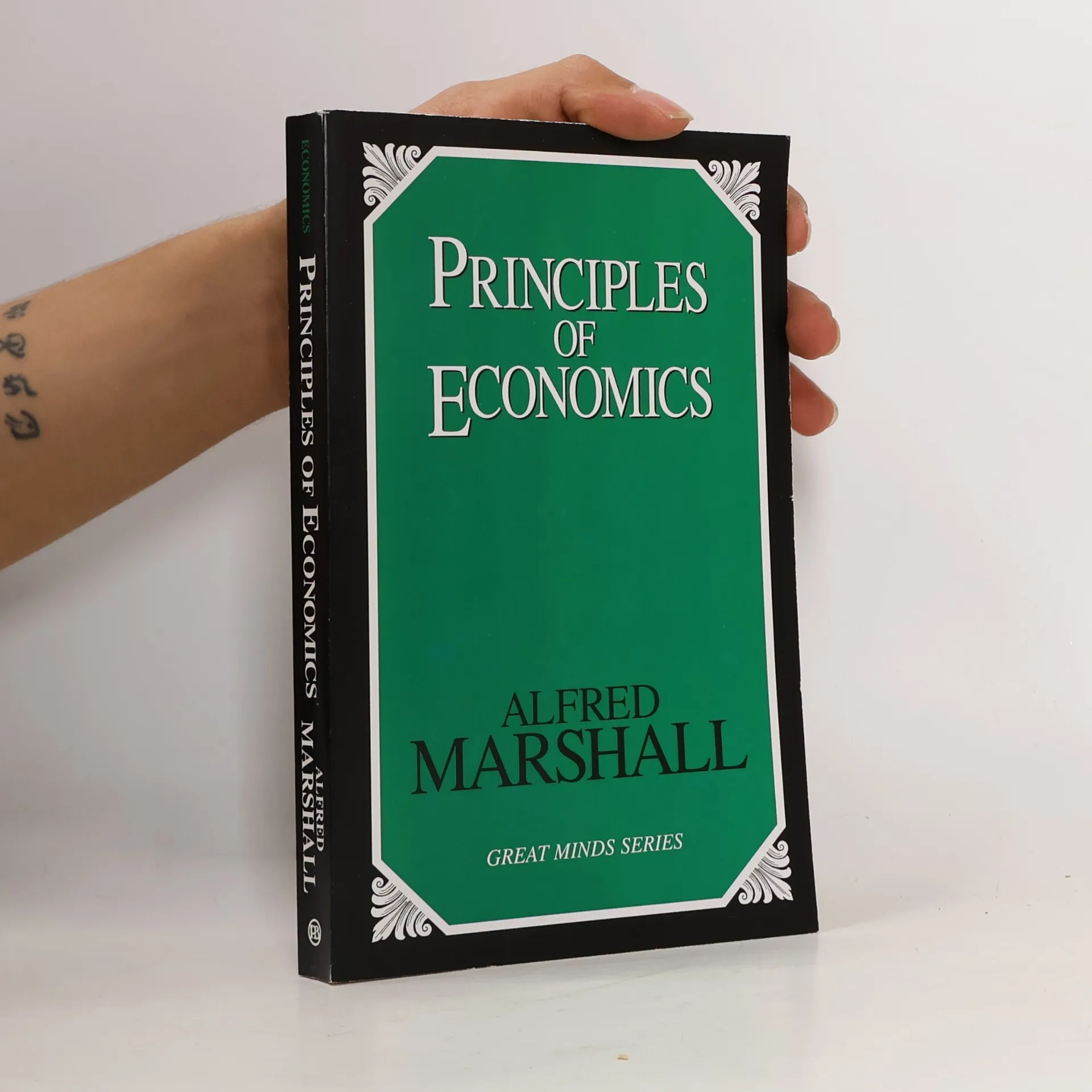

Principles Of Economics
- 320 stránek
- 12 hodin čtení
British economist Alfred Marshall (1842-1924) was one of the founders of the "neoclassical" school in which economists studied both wealth and human behavior to understand why we make the choices we do. First published in 1890, Principles of Economics stands as Marshall's most influential work. This abridged edition offers a general introduction to the study of economics, dealing mainly with normal conditions of industry, employment, and wages. It begins by isolating the primary relations of supply, demand, and price in regard to a particular commodity. Following his study of science, history, and philosophy, Marshall argues that, while fragmentary statistical hypotheses are used as temporary aids to dynamic economic concepts, the central idea of economics must be that of a living force and movement, and its main concern must be with human beings who are impelled, for better or worse, to change and progress.