



Více o knize
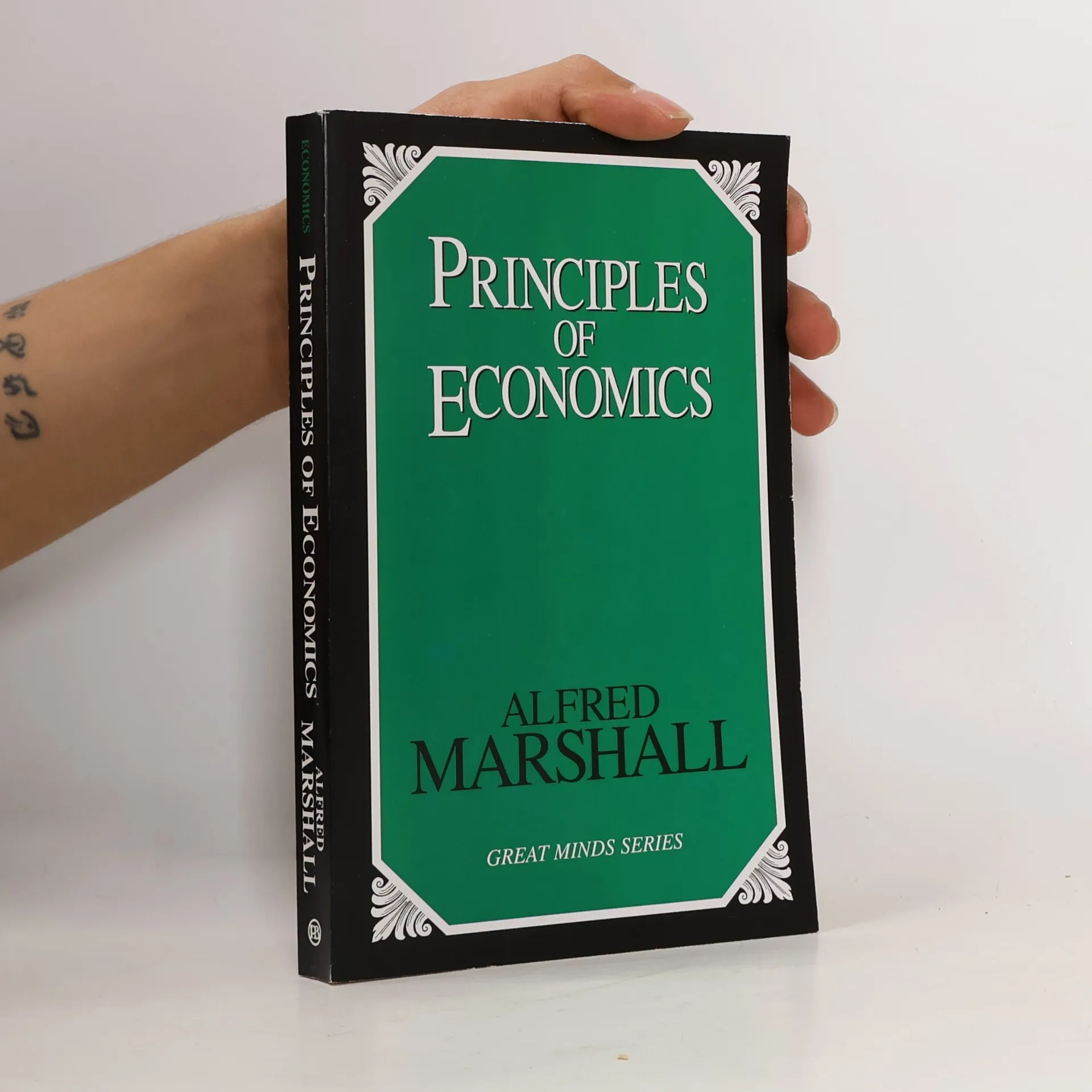
British economist Alfred Marshall (1842-1924) was one of the founders of the "neoclassical" school in which economists studied both wealth and human behavior to understand why we make the choices we do. First published in 1890, Principles of Economics stands as Marshall's most influential work. This abridged edition offers a general introduction to the study of economics, dealing mainly with normal conditions of industry, employment, and wages. It begins by isolating the primary relations of supply, demand, and price in regard to a particular commodity. Following his study of science, history, and philosophy, Marshall argues that, while fragmentary statistical hypotheses are used as temporary aids to dynamic economic concepts, the central idea of economics must be that of a living force and movement, and its main concern must be with human beings who are impelled, for better or worse, to change and progress.



Nákup knihy
Principles Of Economics, Alfred Marshall
- Jazyk

- Rok vydání
- 1997
- Vazba
- (měkká),
- Stav knihy
- Velmi dobrá
- Cena
- 319 Kč
Tady nám chybí tvá recenze.
- Titul
- Principles Of Economics
- Jazyk
- anglicky
- Autoři
- Alfred Marshall
- Vydavatel
- Prometheus Books
- Rok vydání
- 1997
- Vazba
- měkká
- Počet stran
- 320
- ISBN10
- 1573921408
- ISBN13
- 9781573921404
- Série
- Kategorie
- Štítky
- Byznys, Filosofická tématika, Politika
- Hodnocení
- 3,9 z 5
- Anotace
- British economist Alfred Marshall (1842-1924) was one of the founders of the "neoclassical" school in which economists studied both wealth and human behavior to understand why we make the choices we do. First published in 1890, Principles of Economics stands as Marshall's most influential work. This abridged edition offers a general introduction to the study of economics, dealing mainly with normal conditions of industry, employment, and wages. It begins by isolating the primary relations of supply, demand, and price in regard to a particular commodity. Following his study of science, history, and philosophy, Marshall argues that, while fragmentary statistical hypotheses are used as temporary aids to dynamic economic concepts, the central idea of economics must be that of a living force and movement, and its main concern must be with human beings who are impelled, for better or worse, to change and progress.