Knihobot

Ulrich Teichler

    23. červenec 1942
    The Relevance of Academic Work in Comparative Perspective
    Forming, Recruiting and Managing the Academic Profession
    University Rankings
    The Work Situation of the Academic Profession in Europe
    Higher Education and the World of Work
    ERASMUS in the SOCRATES programme
    • Hochschulforschung, was sonst?

      Rückblick auf ein Wissenschaftlerleben. Gespräche mit Anna Kosmützky und Christiane Rittgerott

      • 206 stránek
      • 8 hodin čtení

      Der Begründer der Hochschulforschung in Deutschland, Ulrich Teichler, blickt auf mehr als fünf Jahrzehnte Hochschulforschung zurück. Wirtschaftswunder und Hochschulexpansion, studentische Bewegung, Experimente und Krisen der 1970er Jahre, Organisationsruhe, Wiedervereinigung, Internationalisierung, Ranking- und Management-Kult - all dies sind historische Stationen, die sich in Hochschule und Wissenschaft widerspiegeln. Ulrich Teichler berichtet als unmittelbar Beteiligter mit Offenheit und Humor und liefert zugleich kluge Analysen
      Hochschulforschung, was sonst?2020
    • This book focuses on the changes in academic careers and their implications for job attachment and the management of academic work. Against the background of an ageing profession, with different demands on academic staff, increasing insecurity, accountability and internationalisation, it discusses important, common themes in detail. This book examines such aspects as the nature of academic careers and recent changes in careers, changing biographies, rewards of academic work such as income and job satisfaction, internationalisation of the academy, and the organisation and management of academic work sites. This book is the second of two books highlighting findings from research on the academic profession, notably, the Changing Academic Profession Study and the European project supported by the European Science Foundation on changes in the academic profession in Europe (EUROAC).An adapted version of the CAP questionnaire has been used to carry out the survey in those countries that had not been involved before in the CAP survey. Altogether 19 countries are covered by the CAP project and an additional seven European countries are covered by EUROAC.

      Forming, Recruiting and Managing the Academic Profession2015
    • This book is the first of two volumes that look at the changed landscape of higher education and the academic profession. This volume focuses on academic work, examining the significant changes that have taken place in the backgrounds, specialisations, expectations and work roles of academic staff. The academic profession is ageing, and becoming increasingly insecure, more accountable, more internationalised and less likely to be organised along disciplinary lines. The private sector is more prominent, expectations from society are different and increasing, professional roles are evolving, and there is a new devotion to knowledge. This leads to questions about the attractiveness of an academic career and the quest for greater relevance of research. This book discusses in detail the themes that are common in this changed arena, such as the context for change, the relation of teaching to research, research productivity, applied and commercial research, and the relevance of teaching and research.

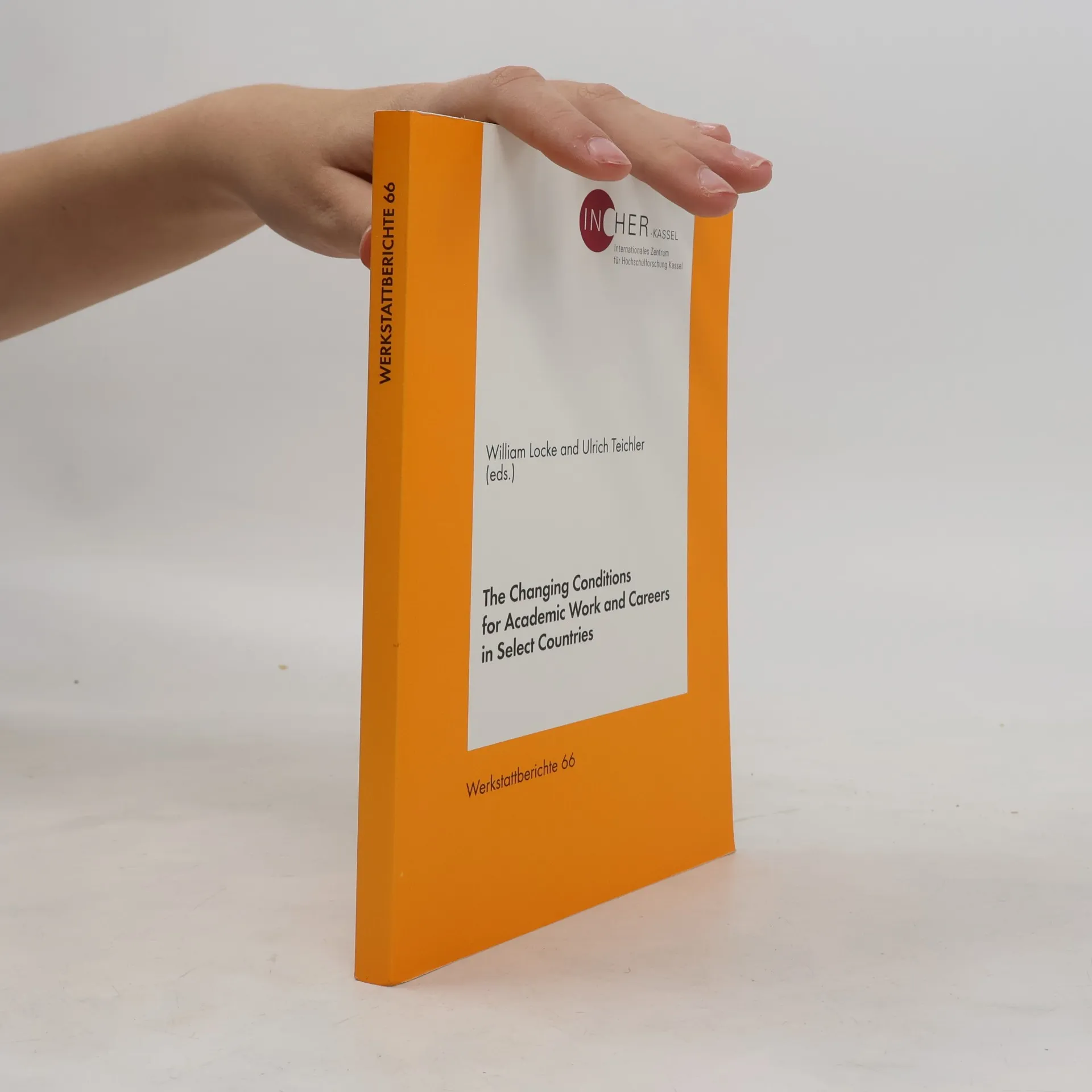
      The Relevance of Academic Work in Comparative Perspective2014
    • The Work Situation of the Academic Profession in Europe

      Findings of a Survey in Twelve Countries

      • 304 stránek
      • 11 hodin čtení

      This book presents the analysis of the representative survey about the academic profession in twelve European countries. Higher education in Europe has experienced a substantial change in recent years: Expansion progresses further, the expectation to deliver useful contributions of knowledge to the "knowledge society" is on the rise, and efforts to steer academic work through external forces and strong international management are more widespread than ever. Representative surveys of the academic profession in twelve European countries show how professors and junior staff at universities and other institutions of higher education view the role of higher education in society and their professional situation and how they actually shape their professional tasks. Academics differ across Europe substantially in their employment and working conditions, their views and their activities. Most of them favour the preservation of a close link between teaching and research and feel responsible for both theory and practice.Most consider efforts to enhance academic quality and social relevance as compatible. The overall satisfaction with their professional situation is rather high.

      The Work Situation of the Academic Profession in Europe2013
    • Teaching and Research in Contemporary Higher Education

      Systems, Activities and Rewards

      • 432 stránek
      • 16 hodin čtení

      This book discusses how teaching and research have been weighted differently in academia in 18 countries and one region, Hong Kong SAR, based on an international comparative study entitled the Changing Academic Profession (CAP). It addresses these issues using empirical evidence, the CAP data. Specifically, the focus is on how teaching and research are defined in each higher education system, how teaching and research are preferred and conducted by academics, and how academics are rewarded by their institution. Since the establishment of Berlin University in 1810, there has been controversy on teaching and research as the primary functions of universities and academics. The controversy increased when Johns Hopkins University was established in 1876 with only graduate programs, and more recently with the release of the Carnegie Foundation report Scholarship Reconsidered by Ernest L. Boyer in 1990. Since the publication of Scholarship Reconsidered in 1990, higher education scholars and policymakers began to pay attention to the details of teaching and research activities, a kind of 'black box' because only individual academics know how they conduct teaching and research in their own contexts.

      Teaching and Research in Contemporary Higher Education2013
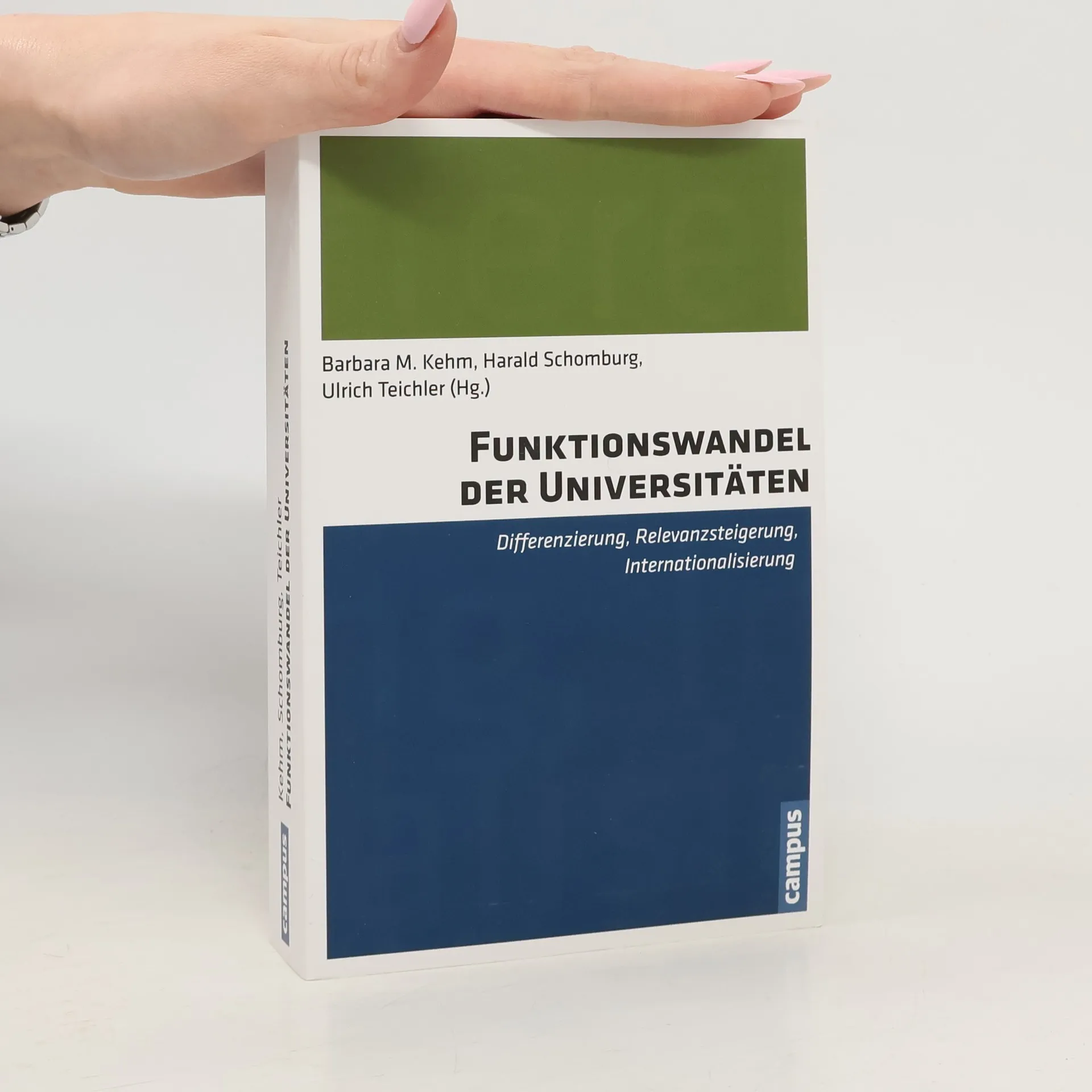
    • Funktionswandel der Universitäten

      • 565 stránek
      • 20 hodin čtení

      Hochschulen stehen national und international unter einem enormen Effizienzdruck. Der Band beleuchtet den damit einhergehenden Funktionswandel: den Umbau von Studiengängen, internationale Kooperationen und Mobilität, neue Formen der Steuerung des Hochschulsystems unter dem wachsenden Einfluss des Managements, die veränderte Rolle des Hochschullehrers sowie die Beziehung von Studium und Beruf.

      Funktionswandel der Universitäten2012
    • University Rankings

      Theoretical Basis, Methodology and Impacts on Global Higher Education

      • 288 stránek
      • 11 hodin čtení

      This ground-breaking and exhaustive analysis of university ranking surveys scrutinizes their theoretical bases, methodological issues, societal impact, and policy implications, providing readers with a deep understanding of these controversial comparators. The authors propose that university rankings are misused by policymakers and institutional leaders alike. They assert that these interested parties overlook the highly problematic internal logic of ranking methodologies even as they obsess over the surveys assessment of their status. The result is that institutions suffer from short-termism, realigning their resources to maximize their relative rankings. While rankings are widely used in policy and academic discussions, this is the first book to explore the theoretical and methodological issues of ranking itself. It is a welcome contribution to an often highly charged debate. Far from showing how to manipulate the system, this collection of work by key researchers aims to enlighten interested parties."

      University Rankings2011
    • Higher Education and the World of Work

      Conceptual Frameworks, Comparative Perspectives, Empirical Findings

      • 340 stránek
      • 12 hodin čtení

      What does higher education provide to equip students as competent participants in the workforce and other life aspects? This question has sparked intense debate in economically advanced nations for about four decades, especially as higher education began to extend beyond a select few to a broader range of the occupational pyramid. The author examines various issues throughout his academic career, utilizing employer and graduate surveys, secondary analyses of education and employment data, and insights from policy and academic discussions. He argues that neither reliance on employer expectations nor income and status as indicators of successful education, nor the pursuit of academic knowledge for its own sake, adequately explains the complex relationship between higher education and the job market. A "match" between graduates and job positions or between acquired competencies and job requirements is unrealistic. Students often aspire to goals that exceed potential rewards. Graduates must be highly skilled experts while also questioning conventional wisdom, ready for uncertain tasks. Key themes explored include the causes and effects of the imperfect alignment between education and employment, the tensions between employment and work orientation in higher education, and varying perceptions of professional relevance in policy debates across economically advanced countries.

      Higher Education and the World of Work2008
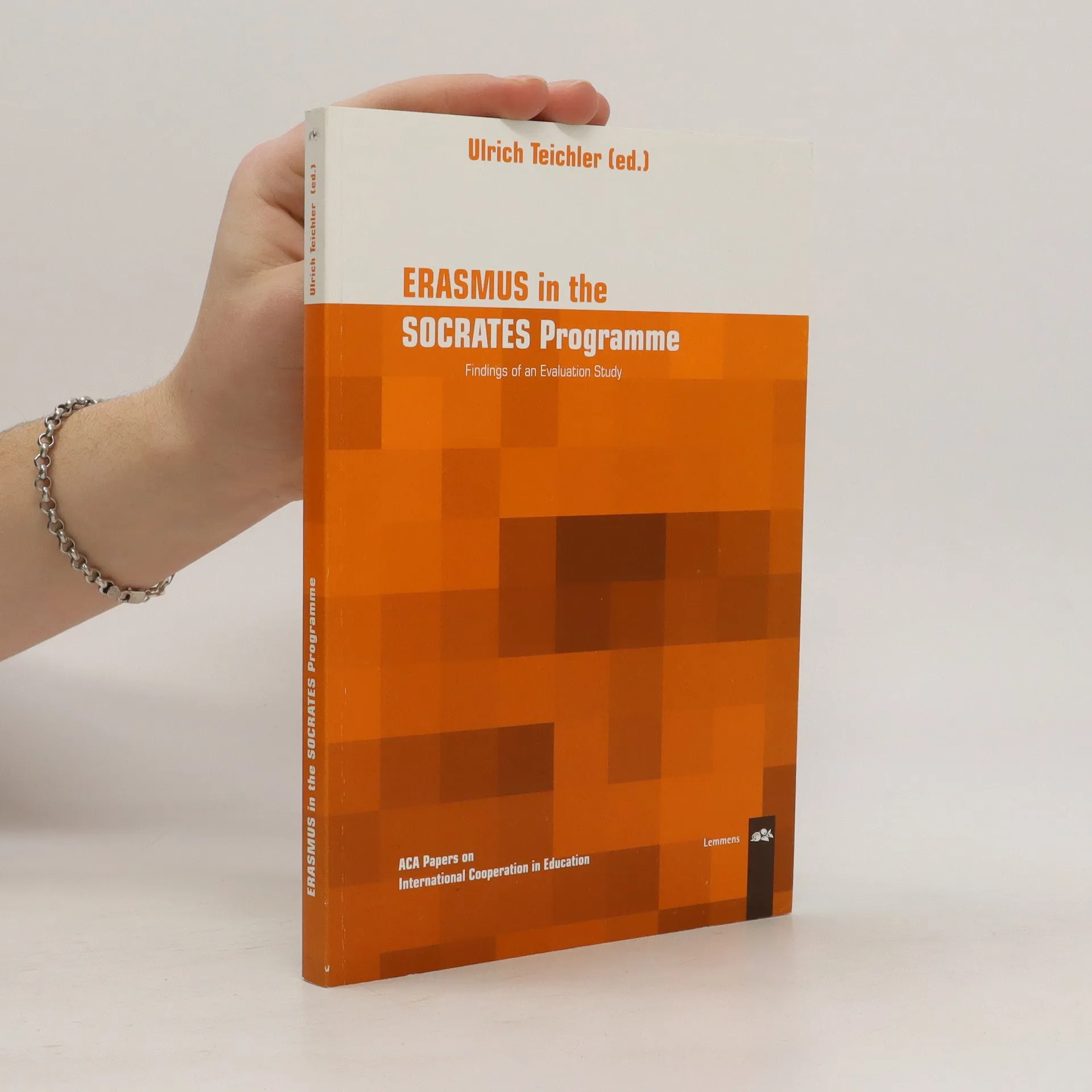
    • ERASMUS in the SOCRATES programme

      • 239 stránek
      • 9 hodin čtení

      ERASMUS, the “flagship” among the educational programmes of the European Union, underwent substantial programmatic and structural changes when it became a sub-programme under the umbrella of the SOCRATES programme in the mid-1990s. The role of the centre of the university was strengthened at the expenses of the networks of departments, and more emphasis was placed on curricular innovation, teaching staff mobility and on involvement of the non-mobile students. This study, being part of the SOCRATES 2000 Evaluation Study, aims to examine the changes occurred in ERASMUS in the late 1990s. It draws from available documents and statistics, and comprises surveys of students, graduates and academics as well as interviews with those involved in curricular innovation and “thematic networks”. The authors call for efforts to keep academics involved, to establish administrative procedures based on trust and to ensure a stronger role of curricular innovation.

      ERASMUS in the SOCRATES programme2002