Tento autor se primárně zabývá historickými pojednáními. Jeho práce se soustředí na antické dějiny a klasickou filologii. Zkoumá klíčové momenty a osobnosti starověkého světa s hlubokým vhledem do dobových souvislostí. Jeho odborné znalosti dodávají jeho textům autoritu a přesnost.
This fascinating volume brings together leading specialists, who have analyzed the thoughts and records documenting the worldviews of a wide range of pre-modern societies.
This volume is a unique, multi-authored social history of war from the third millennium B.C.E. to the tenth century C.E. in the Mediterranean, the Near East, and Europe (Egypt, Achaemenid Persia, Greece, the Hellenistic World, the Roman Republic and Empire, the Byzantine Empire, the early Islamic World, and early Medieval Europe), with parallel studies of Mesoamerica (the Maya and Aztecs) and East Asia (ancient China, medieval Japan). The product of a colloquium at Harvard’s Center for Hellenic Studies, this volume offers a broadly based, comparative examination of war and military organization in their complex interactions with social, economic, and political structures as well as cultural practices.
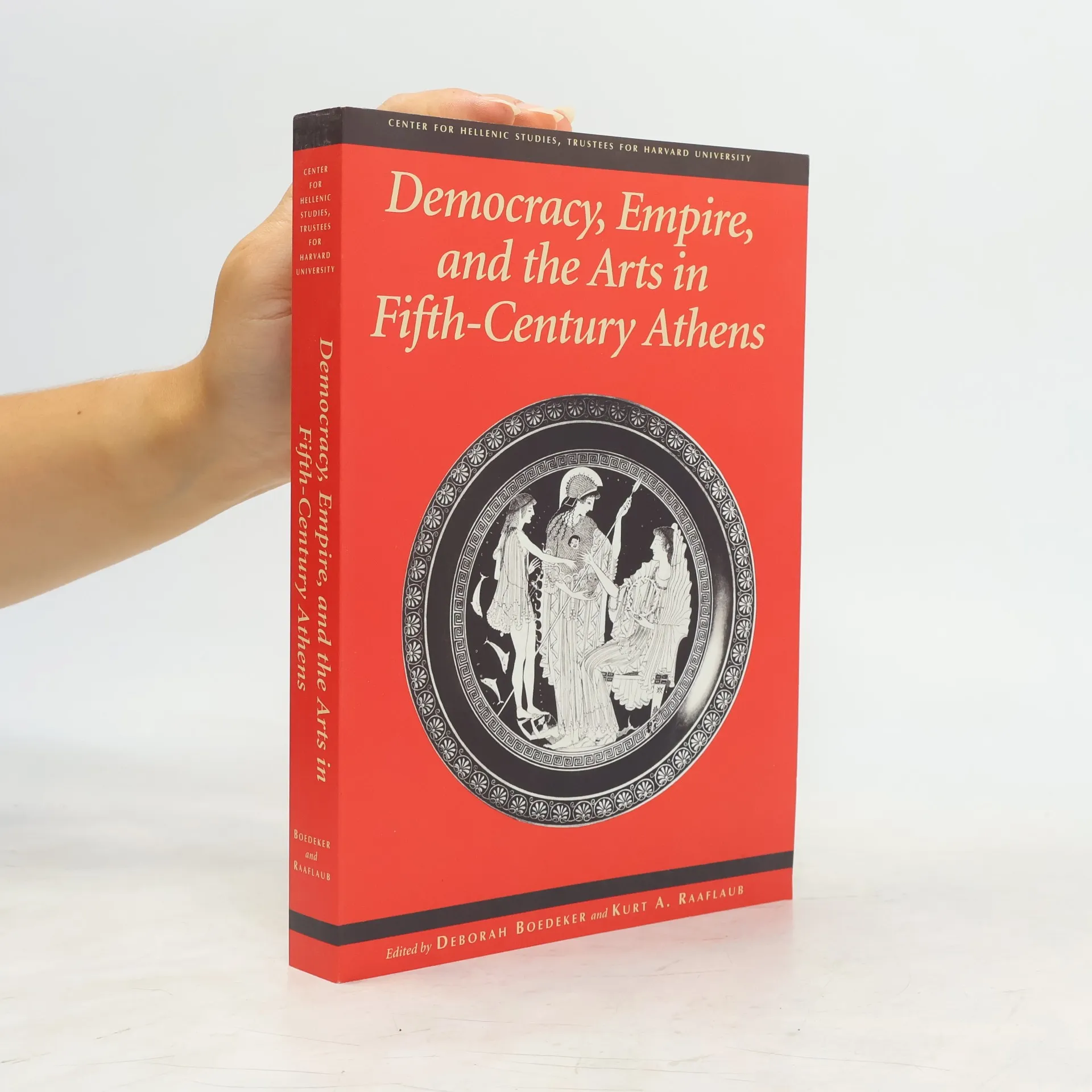
Athens in the fifth century B.C. offers a striking the first democracy in history; the first empire created and ruled by a Greek city; and a flourishing of learning, philosophical thought, and visual and performing arts so rich as to leave a remarkable heritage for Western civilization. To what extent were these three parallel developments interrelated? An international group of fourteen scholars expert in different fields explores here the ways in which the fifth-century "cultural revolution" depended on Athenian democracy and the ways it was influenced by the fact that Athens was an imperial city. The authors bring to this analysis their individual areas of expertise--in the visual arts, poetry and drama, philosophy, archaeology, religion, and social, economic, and political history--and a variety of theoretical approaches. The product of a colloquium at Harvard's Center for Hellenic Studies in Washington, D.C., Democracy, Empire, and the Arts in Fifth-Century Athens sheds new light on a much debated question that has wide implications. The book is illustrated and enriched by a comprehensive bibliography on the subject.
Aus dem Inhalt: N. Demand: Poleis on Cyprus and Oriental DespotismH. Bowden: The Greek Settlement and Sanctuaries at NaukratisT. H. Nielsen: Was There an Arkadian Confederacy in the Fifth Century B. C.? T. H. Nielsen: A Survey of Dependent Poleis in Classical ArkadiaJ. Roy: Polis and Tribe in Classical ArkadiaA. G. Keen: Were the Boiotian Poleis Autonomoi? M. H. Hansen: Were the Boiotian Poleis Deprived of Their Autonomia During the First and Second Boiotian Federations? A ReplyP. Flensted-Jensen/M. H. Hansen: Pseudo-Skylax’ Use of the Term PolisM. H. Hansen: City-Ethnics as Evidence for Polis Identity
Contents: F. de Polignac: Repenser la „cité“? Rituels et société en Grèce archaïque — M. H. Hansen: The „Autonomous City-State“. Ancient Fact or Modern Fiction? — M. H. Hansen: Kome. A Study in How the Greeks Designated and Classified Settlements which were not Poleis — T. H. Nielsen: Was Eutaia a Polis? A Note on Xenophon’s Use of the Term Polis in the Hellenika — P. Flensted-Jensen: The Bottiaians and their Poleis — S. G. Miller: Old Metroon and Old Bouleuterion in the Classical Agora of Athens — T. L. Shear, Jr.: Bouleuterion, Metroon and the Archives at Athens — A. Avram: Poleis und Nicht-Poleis im Ersten und Zweiten Attischen Seebund — W. Burkert: Greek Poleis and Civic Cults. Some Further Thoughts — L. Rubinstein: Pausanias as a Source for the Classical Greek Polis