

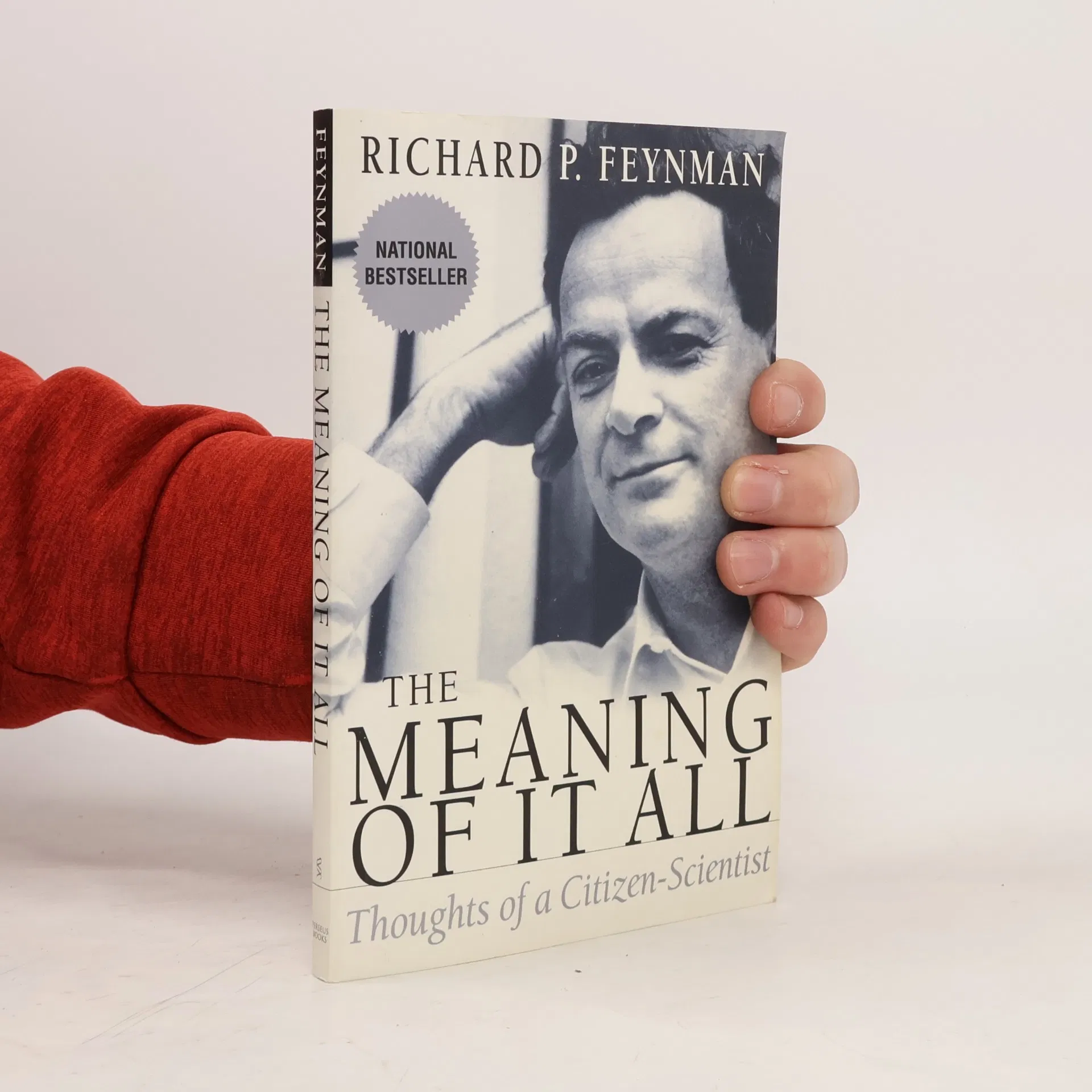
The Meaning of It All
Thoughts of a Citizen-Scientist
Autoři
Více o knize
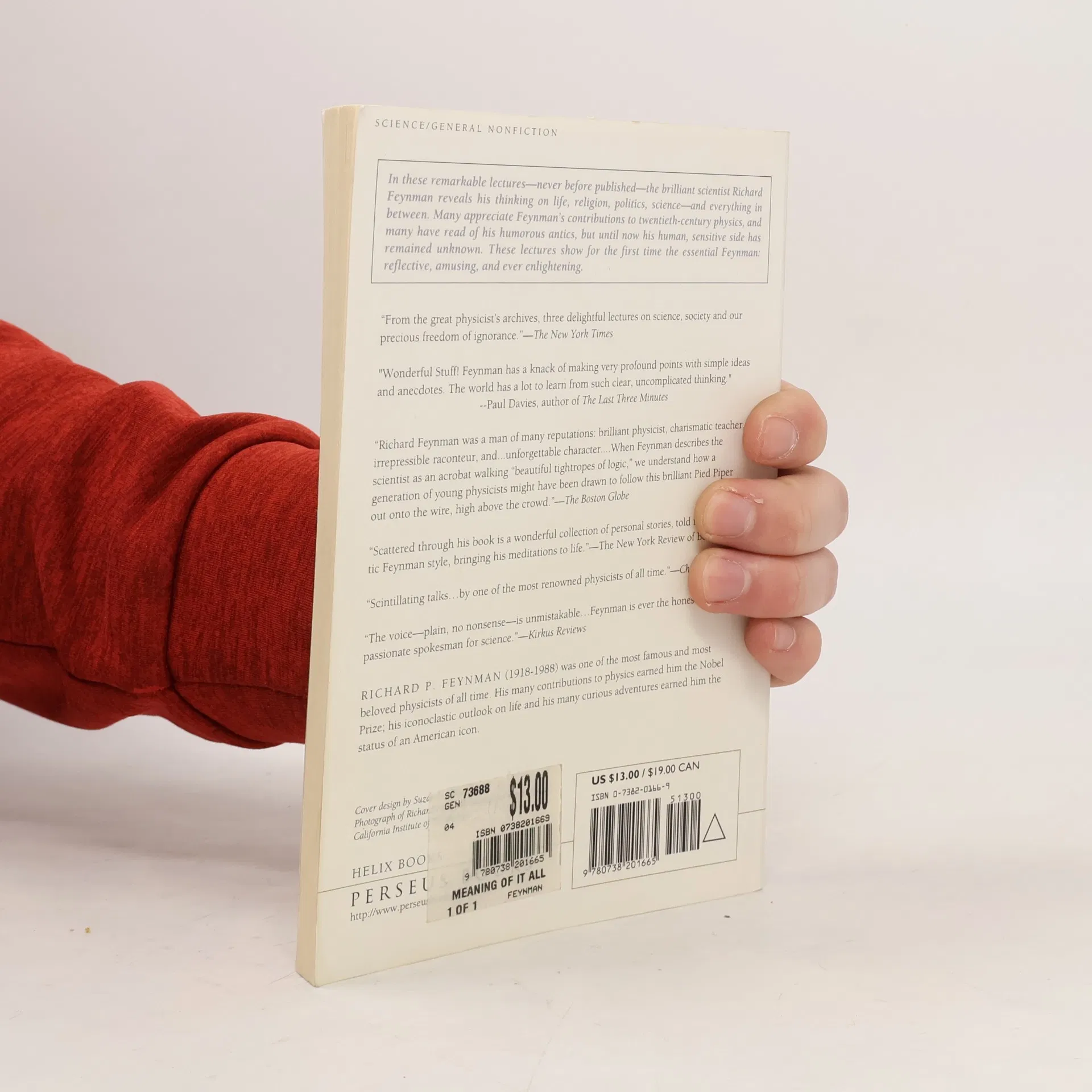
In this series of lectures originally given in 1963, which remained unpublished during Richard Feynman's lifetime, the Nobel-winning physicist thinks aloud on several "meta"-questions of science. What is the nature of the tension between science and religious faith? Why does uncertainty play such a crucial role in the scientific imagination? Is this <i>really</i> a scientific age? Marked by Feynman's characteristic combination of rationality and humor, these lectures provide an intimate glimpse at the man behind the legend. "In case you are beginning to believe," he says at the start of his final lecture, "that some of the things I said before are true because I am a scientist and according to the brochure that you get I won some awards and so forth, instead of your looking at the ideas themselves and judging them directly ... I will get rid of that tonight. I dedicate this lecture to showing what ridiculous conclusions and rare statements such a man as myself can make." Rare, perhaps. Irreverent, sure. But ridiculous? Not even close.
Nákup knihy
The Meaning of It All, Richard Feynman
- Jazyk

- Rok vydání
- 1999
- Vazba
- (měkká),
- Stav knihy
- Dobrá
- Cena
- 129 Kč
Doručení
Platební metody
Nikdo zatím neohodnotil.
- Titul
- The Meaning of It All
- Podtitul
- Thoughts of a Citizen-Scientist
- Jazyk
- anglicky
- Autoři
- Richard Feynman
- Vydavatel
- Perseus Books Group
- Rok vydání
- 1999
- Vazba
- měkká
- Počet stran
- 133
- ISBN10
- 0738201669
- ISBN13
- 9780738201665
- Série
- Kategorie
- Štítky
- Věda, Filozofie vědy
- Anotace
- In this series of lectures originally given in 1963, which remained unpublished during Richard Feynman's lifetime, the Nobel-winning physicist thinks aloud on several "meta"-questions of science. What is the nature of the tension between science and religious faith? Why does uncertainty play such a crucial role in the scientific imagination? Is this <i>really</i> a scientific age? Marked by Feynman's characteristic combination of rationality and humor, these lectures provide an intimate glimpse at the man behind the legend. "In case you are beginning to believe," he says at the start of his final lecture, "that some of the things I said before are true because I am a scientist and according to the brochure that you get I won some awards and so forth, instead of your looking at the ideas themselves and judging them directly ... I will get rid of that tonight. I dedicate this lecture to showing what ridiculous conclusions and rare statements such a man as myself can make." Rare, perhaps. Irreverent, sure. But ridiculous? Not even close.