

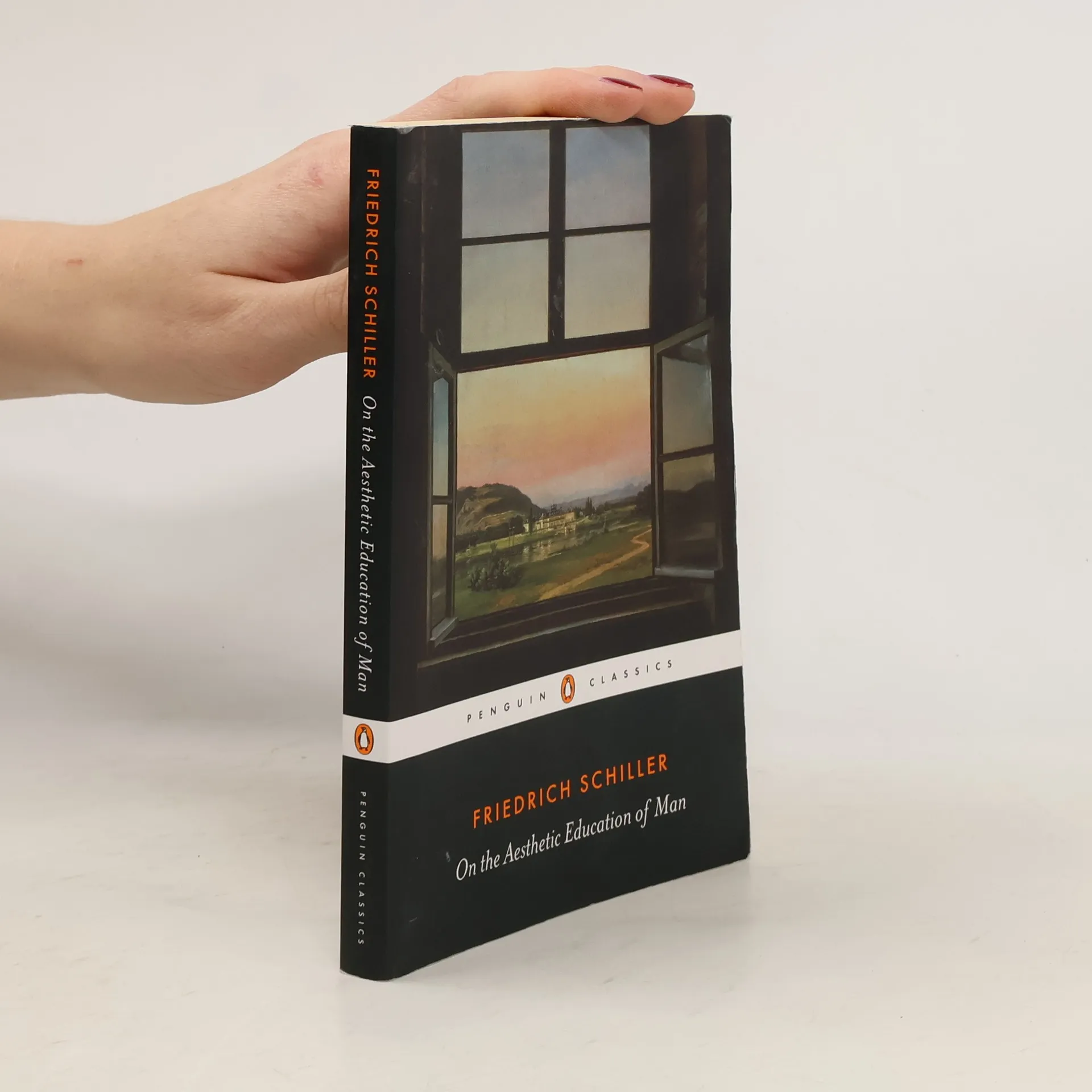
On the Aesthetic Education of Man
Hodnocení knihy
Parametry
- 224 stránek
- 8 hodin čtení
Více o knize
German poet and philosopher Friedrich Schiller’s famous text on art, politics, and society “The artist is certainly the child of his age, but all the worse for him if he is at the same time its pupil, even worse its minion.” One of the most profound works of German philosophy, Friedrich Schiller’s On the Aesthetic Education of Man examines politics, revolution, and the history of ideas in order argue that art should have a greater role in shaping society. Deeply disillusioned with the course of the French Revolution, Schiller expressed his complaints in a series of letters to a patron, an impassioned attempt to drag mankind upward from failure to greatness by placing ideas of aesthetic education at the heart of the human experience: “Our era has actually taken both wrong turnings, and has fallen prey to coarseness on the one path, lethargy and perversity on the other. Having strayed along both paths, it is beauty that can lead [us] back.” One of Germany’s greatest political statements from a time of revolutionary change, Schiller’s arguments are as arresting, challenging, and inspiring today as when they were first written.



Nákup knihy
On the Aesthetic Education of Man, Friedrich Schiller, Alexander Schmidt, Keith Tribe
- Jazyk

- Rok vydání
- 2016
- Vazba
- (měkká)
Doručení
Platební metody
Tady nám chybí tvá recenze.
- Titul
- On the Aesthetic Education of Man
- Jazyk
- anglicky
- Vydavatel
- Penguin Books
- Rok vydání
- 2016
- Vazba
- měkká
- Počet stran
- 224
- ISBN10
- 0141396962
- ISBN13
- 9780141396965
- Série
- Štítky
- Filosofická tématika, Umění, Německá literatura, Divadlo, Vzdělávání & školství, Etika, 18. století, Dopisy, Svoboda, Morálka, Estetika, Krása, Básníci a básnířky, Politická filozofie, Stát, Filozofie kultury, Filozofie výchovy, Estetická výchova
- První vydání
- 1794
- Původní název
- Über die ästhetische Erziehung des Menschen in einer Reihe von Briefen
- Hodnocení
- 3,9 z 5
- Anotace
- German poet and philosopher Friedrich Schiller’s famous text on art, politics, and society “The artist is certainly the child of his age, but all the worse for him if he is at the same time its pupil, even worse its minion.” One of the most profound works of German philosophy, Friedrich Schiller’s On the Aesthetic Education of Man examines politics, revolution, and the history of ideas in order argue that art should have a greater role in shaping society. Deeply disillusioned with the course of the French Revolution, Schiller expressed his complaints in a series of letters to a patron, an impassioned attempt to drag mankind upward from failure to greatness by placing ideas of aesthetic education at the heart of the human experience: “Our era has actually taken both wrong turnings, and has fallen prey to coarseness on the one path, lethargy and perversity on the other. Having strayed along both paths, it is beauty that can lead [us] back.” One of Germany’s greatest political statements from a time of revolutionary change, Schiller’s arguments are as arresting, challenging, and inspiring today as when they were first written.