

Parametry
Více o knize
In recent times, the perception of safety in public spaces has shifted, particularly in urban areas. City dwellers now feel compelled to quickly interpret gestural cues from those nearby to assess their relationships and identify potential threats. This ability to read unspoken signals in public interactions has become as crucial as understanding the spoken and written language. In his exploration, Erving Goffman presents a framework for the unspoken language of public interactions. He illustrates how strangers navigate their relationships in public settings, revealing a structured approach that friends and acquaintances use to manage their connections in the presence of others. This analysis contributes to a broader understanding of the rules governing public order and social coexistence. Most individuals overlook the intricacies of their everyday public behavior. We instinctively follow pedestrian traffic rules, adapt our actions in crowded spaces, and interpret subtle conversational cues and body language. Our behavior varies significantly depending on the context—whether at weddings, meals, in crowds, or alone. Although often subconscious, these behaviors reflect complex, unspoken social codes essential for maintaining societal order.


Nákup knihy
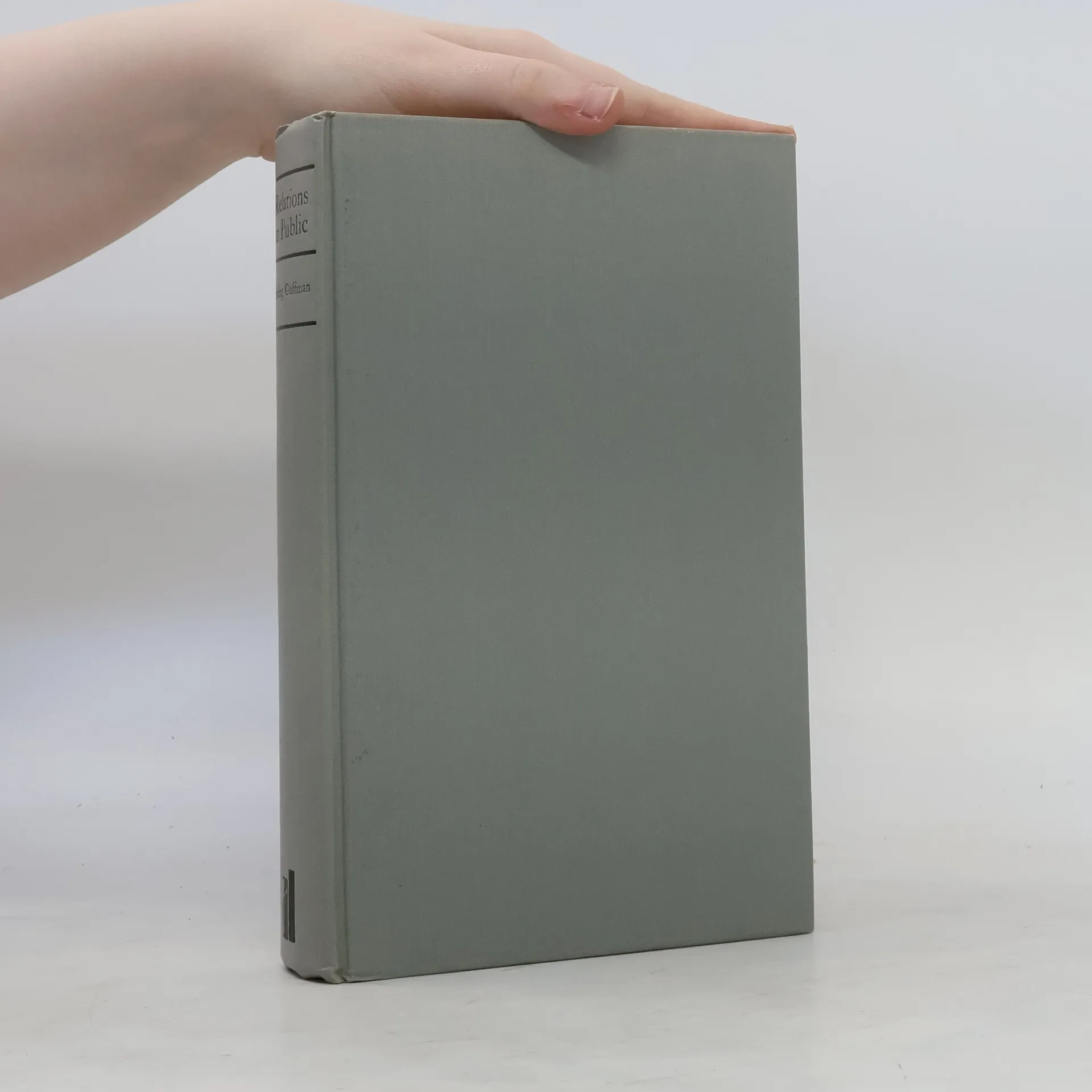
Relations in Public, Erving Goffman
- Jazyk

- Rok vydání
- 1971
- Vazba
- (pevná)
Doručení
Platební metody
Tady nám chybí tvá recenze.
- Titul
- Relations in Public
- Podtitul
- Microstudies of the Public Order
- Jazyk
- anglicky
- Autoři
- Erving Goffman
- Vydavatel
- Lane, Allen
- Rok vydání
- 1971
- Vazba
- pevná
- ISBN10
- 0713902647
- ISBN13
- 9780713902648
- Série
- Kategorie
- Štítky
- Psychologická tématika
- Hodnocení
- 4 z 5
- Anotace
- In recent times, the perception of safety in public spaces has shifted, particularly in urban areas. City dwellers now feel compelled to quickly interpret gestural cues from those nearby to assess their relationships and identify potential threats. This ability to read unspoken signals in public interactions has become as crucial as understanding the spoken and written language. In his exploration, Erving Goffman presents a framework for the unspoken language of public interactions. He illustrates how strangers navigate their relationships in public settings, revealing a structured approach that friends and acquaintances use to manage their connections in the presence of others. This analysis contributes to a broader understanding of the rules governing public order and social coexistence. Most individuals overlook the intricacies of their everyday public behavior. We instinctively follow pedestrian traffic rules, adapt our actions in crowded spaces, and interpret subtle conversational cues and body language. Our behavior varies significantly depending on the context—whether at weddings, meals, in crowds, or alone. Although often subconscious, these behaviors reflect complex, unspoken social codes essential for maintaining societal order.