

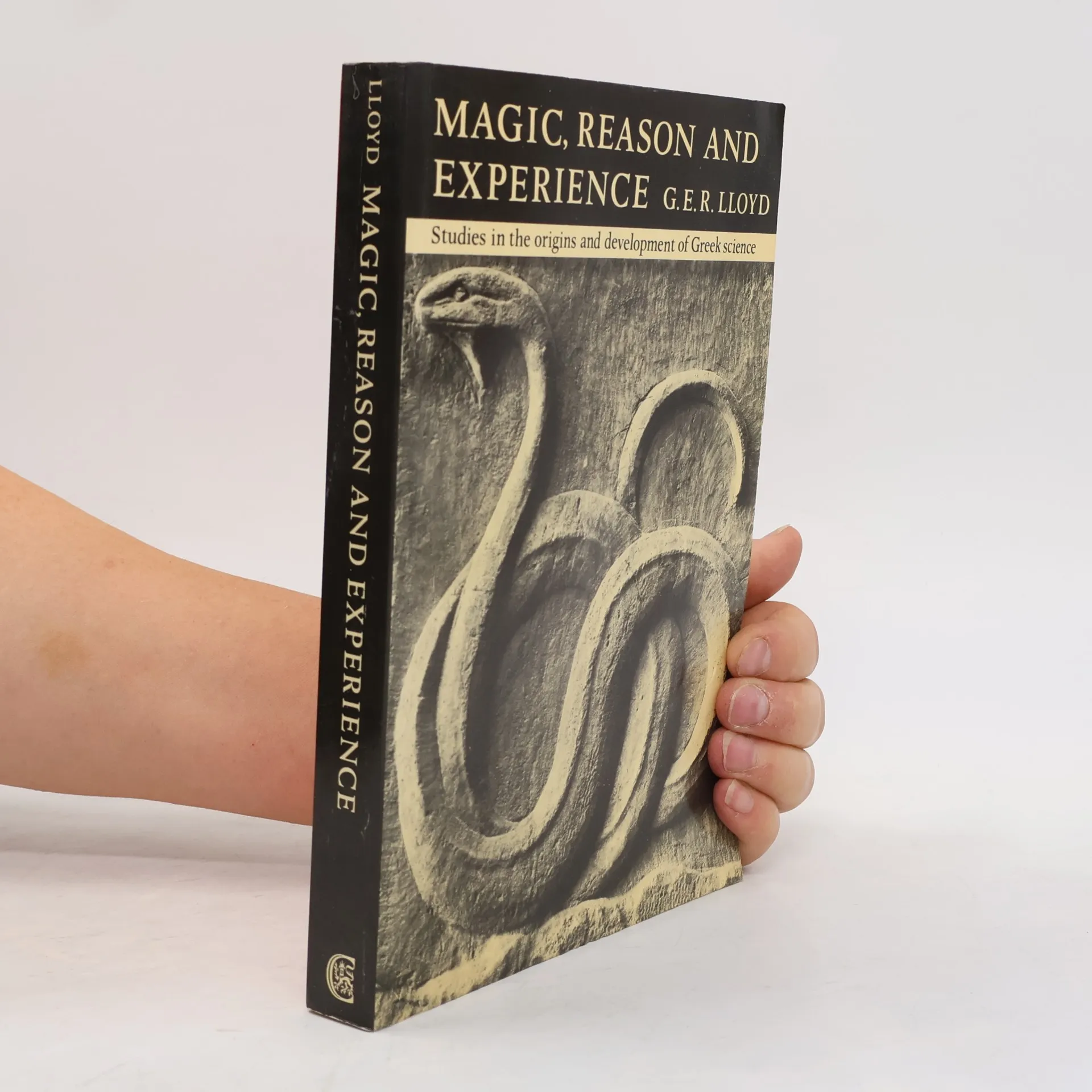


Magic, Reason and Experience
Studies in the Origin and Development of Greek Science
Autoři
Více o knize
This book is a study of the origins and development of Greek science, focusing especially on the interactions of scientific and traditional patterns of thought from the sixth to the fourth centuries BC. The starting point is an examination of how certain Greek authors deployed the category of 'magic' and attacked magical beliefs and practices, and these attacks are related to their complex background in Greek medicine and speculative thought. In his second chapter Dr Lloyd outlines the development, and assesses the significance, of the theory and practice of argument in early Greek science, and he follows this with a study of the development of empirical research. Finally the author confronts the question of why the Greeks invented science: what precisely was their contribution to science, and what social, economic, ideological and political factors had a bearing on the growth of science in Greece.
Vydání

Nákup knihy
Magic, Reason and Experience, G.E.R. Lloyd
- Jazyk

- Rok vydání
- 1979
- Vazba
- (pevná)
Doručení
Platební metody
Nikdo zatím neohodnotil.
- Titul
- Magic, Reason and Experience
- Podtitul
- Studies in the Origin and Development of Greek Science
- Jazyk
- anglicky
- Autoři
- G.E.R. Lloyd
- Vydavatel
- Cambridge University Press
- Rok vydání
- 1979
- Vazba
- pevná
- Počet stran
- 348
- ISBN10
- 0521223733
- ISBN13
- 9780521223737
- Série
- Kategorie
- Štítky
- Historické téma, Filosofická tématika, Věda, Řecko
- Anotace
- This book is a study of the origins and development of Greek science, focusing especially on the interactions of scientific and traditional patterns of thought from the sixth to the fourth centuries BC. The starting point is an examination of how certain Greek authors deployed the category of 'magic' and attacked magical beliefs and practices, and these attacks are related to their complex background in Greek medicine and speculative thought. In his second chapter Dr Lloyd outlines the development, and assesses the significance, of the theory and practice of argument in early Greek science, and he follows this with a study of the development of empirical research. Finally the author confronts the question of why the Greeks invented science: what precisely was their contribution to science, and what social, economic, ideological and political factors had a bearing on the growth of science in Greece.