



Více o knize
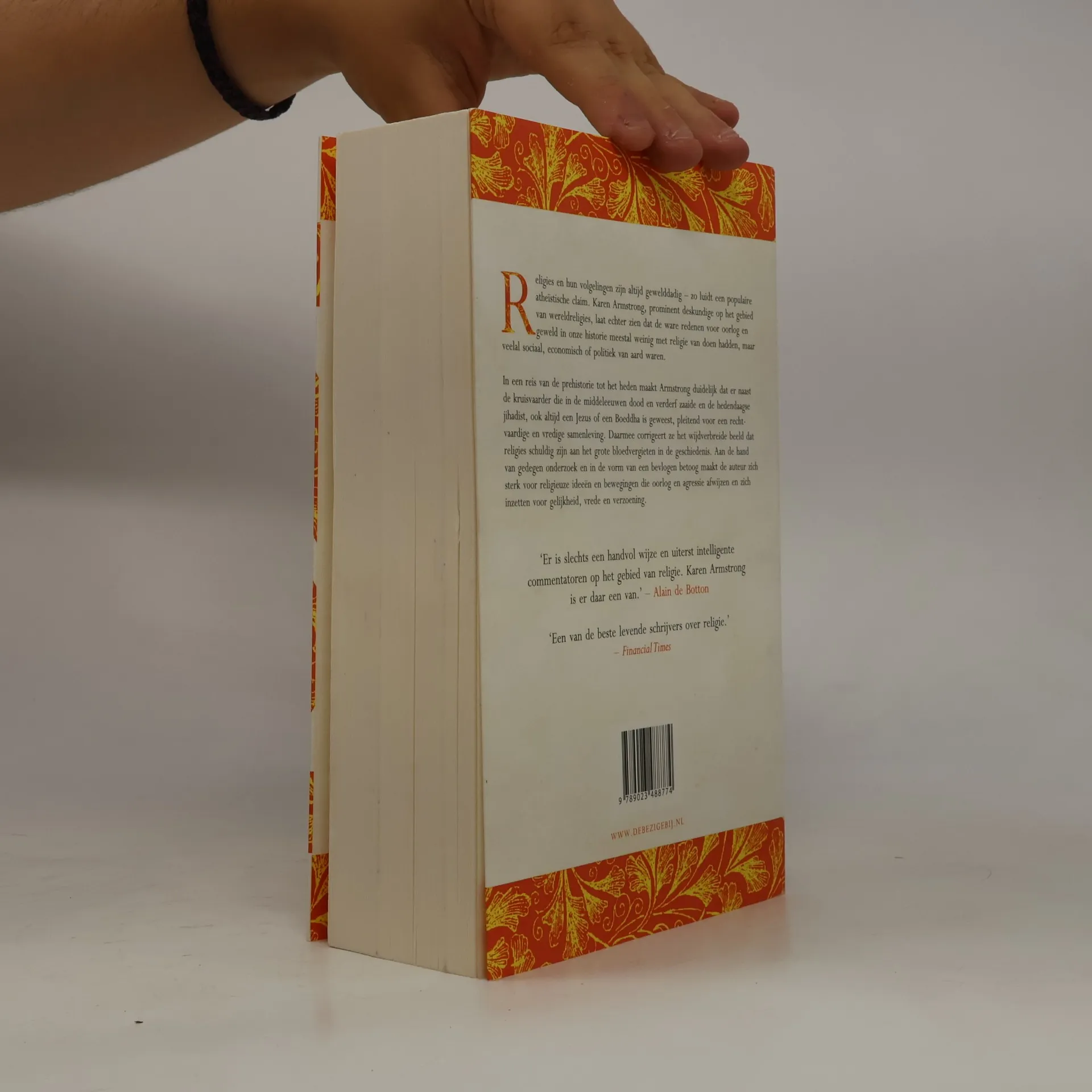
From the best-selling author of A History of God comes a sweeping exploration of religion's connection to violence. For the first time in American history, religious self-identification is declining, with some attributing this shift to the perception that faith breeds aggression and intolerance, particularly following September 11, 2001. This raises questions about the accuracy of such views and their applicability across different faiths. In a time of uncertainty, it is crucial to avoid making decisions based on misconceptions about the religions around us, both locally and globally. With deep learning and empathy, Karen Armstrong examines the impulse toward violence in the world's major religions. Taking a comparative approach, she juxtaposes the Christian and Islamic traditions of warfare with those of Buddhism, Hinduism, Confucianism, Daoism, and Judaism. Each faith emerged in agrarian societies where violence was often necessary for land acquisition, leading to a martial ethos intertwined with the sacred. Yet, within each tradition, there also arose communities of sages, prophets, and mystics that protested against societal injustice and violence. Armstrong explores the interplay between these conflicting impulses and their evolution as religions matured. She also addresses modernity's violence and how religions have absorbed contemporary belligerence, ultimately seeking pathways for peace among believers today.


Nákup knihy
In naam van God, Karen Armstrong, Albert Witteveen
- Jazyk

- Rok vydání
- 2014
- Vazba
- (měkká)
Doručení
Platební metody
Tady nám chybí tvá recenze.
- Titul
- In naam van God
- Podtitul
- Religie en geweld - druk 1
- Jazyk
- nizozemsky
- Autoři
- Karen Armstrong, Albert Witteveen
- Vydavatel
- De Bezige Bij
- Rok vydání
- 2014
- Vazba
- měkká
- Počet stran
- 548
- ISBN10
- 9023488776
- ISBN13
- 9789023488774
- Série
- Původní název
- Fields of blood
- Hodnocení
- 4 z 5
- Anotace
- From the best-selling author of A History of God comes a sweeping exploration of religion's connection to violence. For the first time in American history, religious self-identification is declining, with some attributing this shift to the perception that faith breeds aggression and intolerance, particularly following September 11, 2001. This raises questions about the accuracy of such views and their applicability across different faiths. In a time of uncertainty, it is crucial to avoid making decisions based on misconceptions about the religions around us, both locally and globally. With deep learning and empathy, Karen Armstrong examines the impulse toward violence in the world's major religions. Taking a comparative approach, she juxtaposes the Christian and Islamic traditions of warfare with those of Buddhism, Hinduism, Confucianism, Daoism, and Judaism. Each faith emerged in agrarian societies where violence was often necessary for land acquisition, leading to a martial ethos intertwined with the sacred. Yet, within each tradition, there also arose communities of sages, prophets, and mystics that protested against societal injustice and violence. Armstrong explores the interplay between these conflicting impulses and their evolution as religions matured. She also addresses modernity's violence and how religions have absorbed contemporary belligerence, ultimately seeking pathways for peace among believers today.