




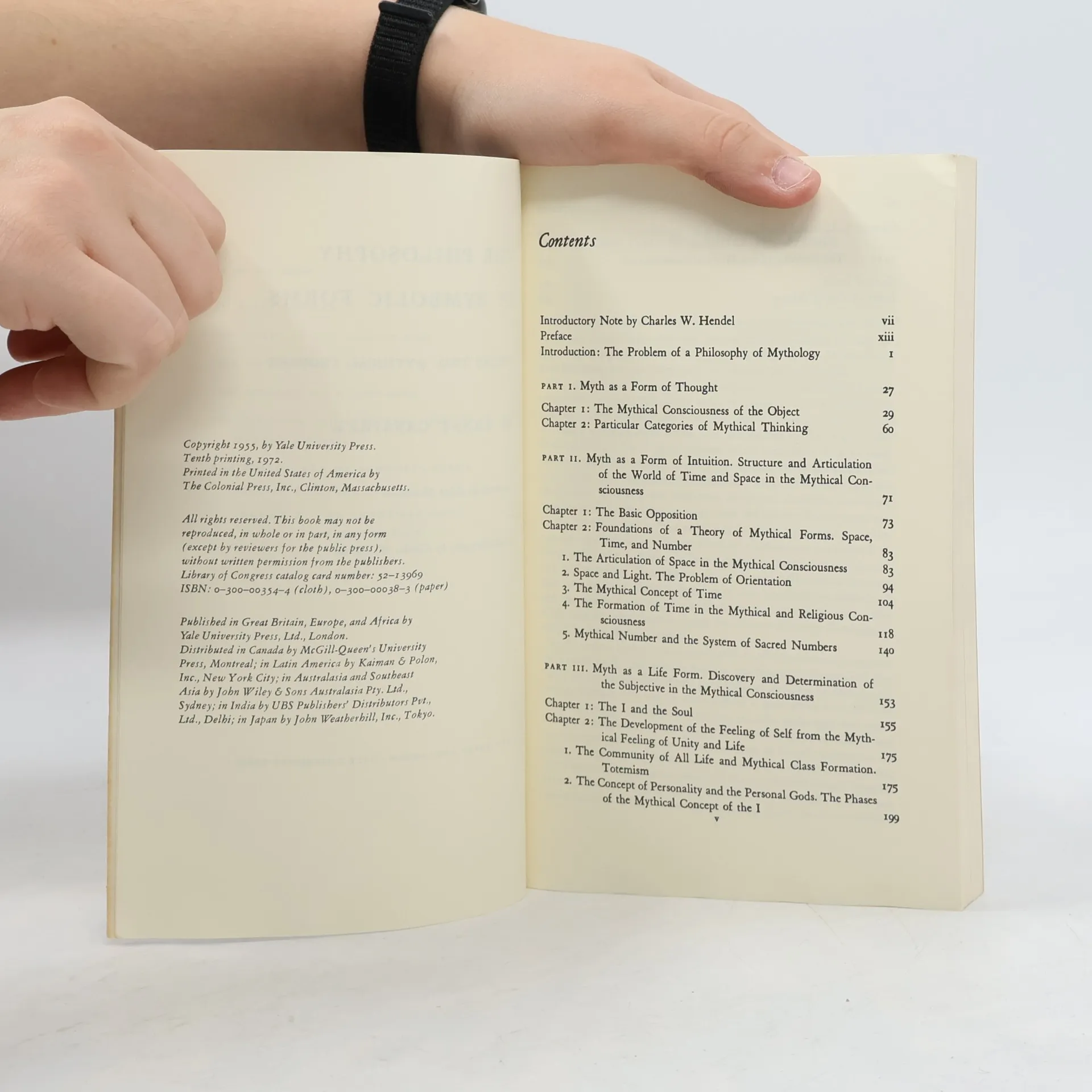
The Philosophy of Symbolic Forms - 2: Mythical Thought
Hodnocení knihy
Více o knize
The Symbolic Forms has long been considered the greatest of Cassirer’s works. Into it he poured all the resources of his vast learning about language and myth, religion, art, and science—the various creative symbolizing activities and constructions through which man has expressed himself and given intelligible objective form to this experience.“These three volumes alone (apart from Cassirer’s other papers and books) make an outstanding contribution to epistemology and to the human power of abstraction. It is rather as if ‘The Golden Bough’ had been written in philosophical rather than in historical terms.”—F.I.G. Rawlins, Nature

Nákup knihy
The Philosophy of Symbolic Forms - 2: Mythical Thought, Ernst Cassirer, Ralph Manheim, Charles W. Hendel
- Jazyk

- Rok vydání
- 1972
- Vazba
- (měkká)
Doručení
Platební metody
Tady nám chybí tvá recenze.
- Titul
- The Philosophy of Symbolic Forms - 2: Mythical Thought
- Jazyk
- anglicky
- Vydavatel
- Yale University Press
- Rok vydání
- 1972
- Vazba
- měkká
- Počet stran
- 388
- ISBN10
- 0300000383
- ISBN13
- 9780300000382
- Série
- Štítky
- Hodnocení
- 5 z 5
- Anotace
- The Symbolic Forms has long been considered the greatest of Cassirer’s works. Into it he poured all the resources of his vast learning about language and myth, religion, art, and science—the various creative symbolizing activities and constructions through which man has expressed himself and given intelligible objective form to this experience.“These three volumes alone (apart from Cassirer’s other papers and books) make an outstanding contribution to epistemology and to the human power of abstraction. It is rather as if ‘The Golden Bough’ had been written in philosophical rather than in historical terms.”—F.I.G. Rawlins, Nature