



Více o knize
Collaborating with the Enemy How to Work with People You Don't Agree with or Like or Trust We're trying to get something done that really matters to us. To do this we need to work with others. But these others include people we don't agree with or like or trust, so working with them seems impossible--like collaborating with the enemy. What can we do? International consultant Adam Kahane, whose work has been praised by Nobel Peace Prize winners Nelson Mandela and Juan Manuel Santos, has faced this challenge many times in working both on big issues, like economic restructuring, climate change, and civil war, and on ordinary issues within organizations and families. He has come to understand that everything we think we know about collaboration--that it requires a harmonious team that agrees on where it's going and how it's going to get there--is wrong. On the contrary, the only way to get things done with diverse others is to abandon harmony, agreement, and control and to learn to work with discord, experimentation, and genuine cocreation. Kahane proposes a new approach to collaboration--stretch collaboration--that is built on this insight. He offers examples of how he's helped people apply it in all kinds of tough situations throughout the world. This approach requires stepping forward with openness and commitment, as in the words of poet Antonio Machado, "Walker, there is no path. The path is made by walking." As our societies have become more polarized and globalized and our organizations have become less hierarchical, more of us need to collaborate across more heterogeneous groups than ever before. This means that increasingly often we face situations where conventional collaboration does not work. Kahane's book offers a proven and practical approach to getting things done in such complex and conflictual contexts. It could not be more timely.
Nákup knihy
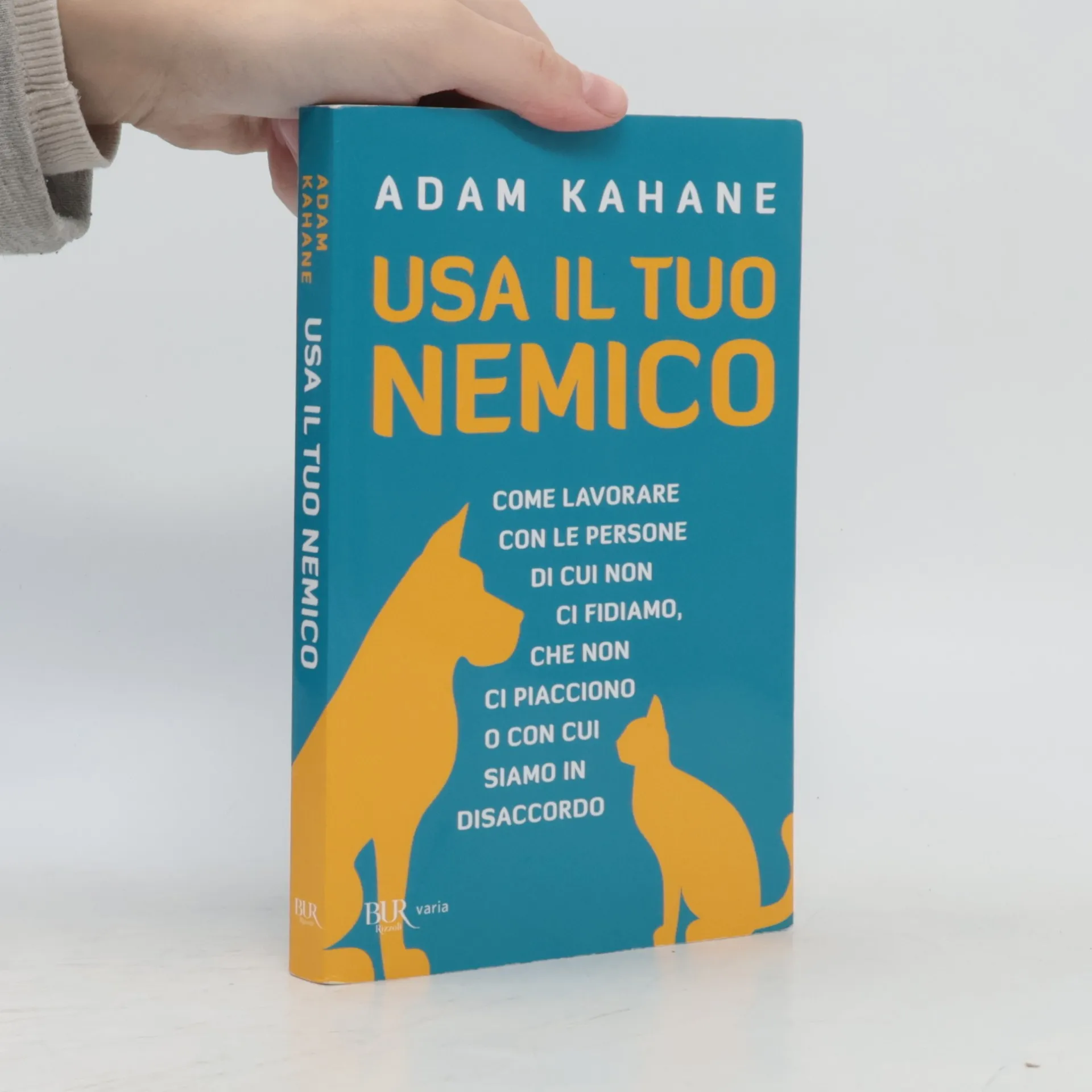
Usa il tuo nemico. Come lavorare con le persone di cui non ci fidiamo, che non ci piacciono o con cui siamo in disaccordo, Adam Kahane
- Jazyk

- Rok vydání
- 2019
- Vazba
- (měkká),
- Stav knihy
- Dobrá
- Cena
- 279 Kč
Nikdo zatím neohodnotil.
- Titul
- Usa il tuo nemico. Come lavorare con le persone di cui non ci fidiamo, che non ci piacciono o con cui siamo in disaccordo
- Jazyk
- italsky
- Autoři
- Adam Kahane
- Vydavatel
- BUR Biblioteca Univ. Rizzoli
- Rok vydání
- 2019
- Vazba
- měkká
- Počet stran
- 190
- ISBN10
- 8817109347
- ISBN13
- 9788817109345
- Série
- Štítky
- Byznys, Vůdcovství, Komunikace
- Anotace
- Collaborating with the Enemy How to Work with People You Don't Agree with or Like or Trust We're trying to get something done that really matters to us. To do this we need to work with others. But these others include people we don't agree with or like or trust, so working with them seems impossible--like collaborating with the enemy. What can we do? International consultant Adam Kahane, whose work has been praised by Nobel Peace Prize winners Nelson Mandela and Juan Manuel Santos, has faced this challenge many times in working both on big issues, like economic restructuring, climate change, and civil war, and on ordinary issues within organizations and families. He has come to understand that everything we think we know about collaboration--that it requires a harmonious team that agrees on where it's going and how it's going to get there--is wrong. On the contrary, the only way to get things done with diverse others is to abandon harmony, agreement, and control and to learn to work with discord, experimentation, and genuine cocreation. Kahane proposes a new approach to collaboration--stretch collaboration--that is built on this insight. He offers examples of how he's helped people apply it in all kinds of tough situations throughout the world. This approach requires stepping forward with openness and commitment, as in the words of poet Antonio Machado, "Walker, there is no path. The path is made by walking." As our societies have become more polarized and globalized and our organizations have become less hierarchical, more of us need to collaborate across more heterogeneous groups than ever before. This means that increasingly often we face situations where conventional collaboration does not work. Kahane's book offers a proven and practical approach to getting things done in such complex and conflictual contexts. It could not be more timely.