

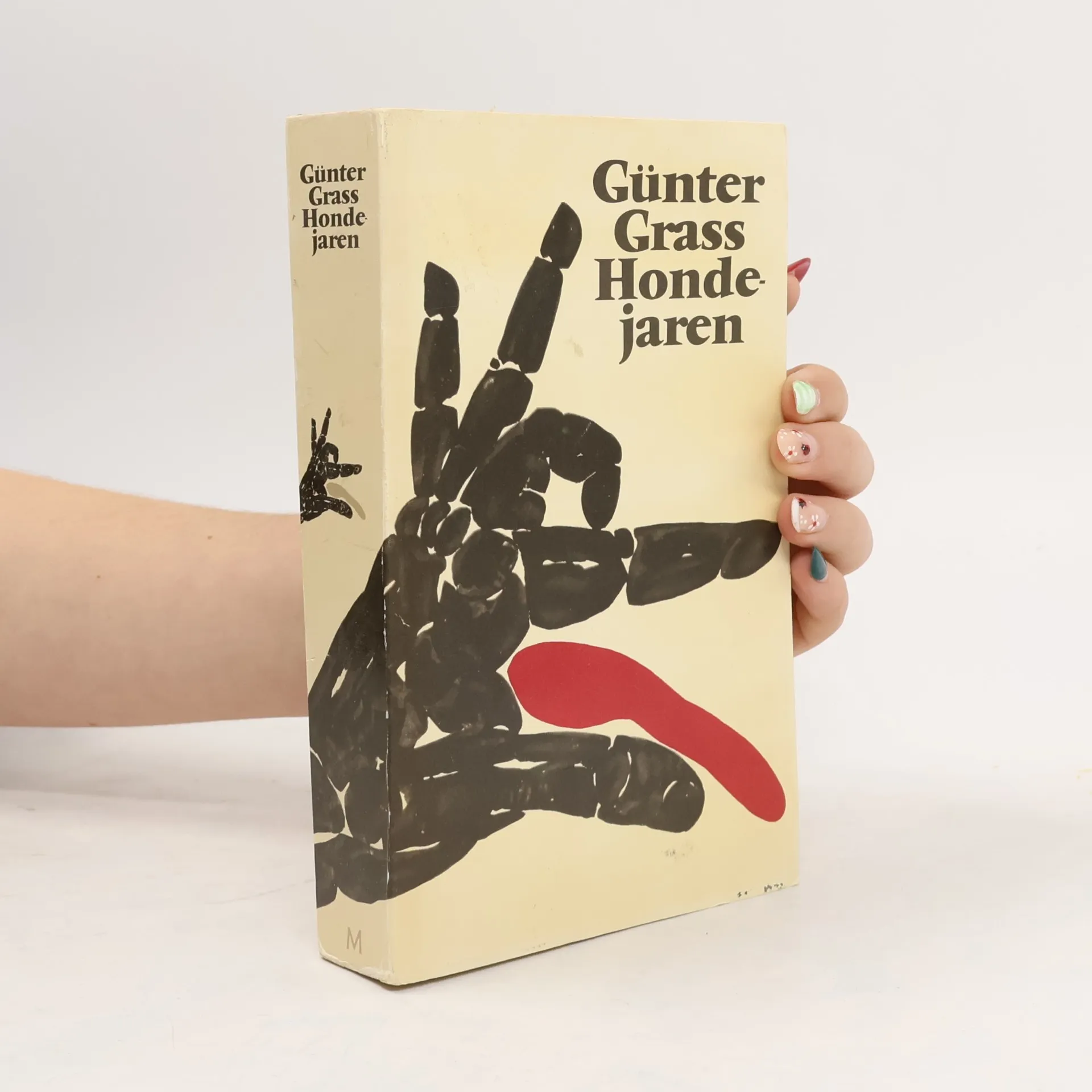


Hondejaren
Autoři
Více o knize
Dog Years is set in three parts. Herr Brauxel, the owner of a mine, tells the "Morning Shifts, " an account of the early years of the two main figures, the half-Jew, Eduard Amsel, and his friend and blood brother, Waltern Matern. The river Vistula, with its cargo of history, runs through their exploits. So does the dog Senta, who will whelp Harras, who in turn will sire the black shepherd, Prinz, the Fuhrer's favorite dog.<p>The second narrator, Harry Liebenau, tells part two, "Love Letters, " addressed to his cousin Tulla. From the vantage point of Danzig, he takes the reader into the prewar years and beyond. Amsel, a gifted and precocious creator of scarecrows made in the image of man, starts to build lifelike, mechanically marching SA-men, and it is Matern, his blood brother, himself an SA-man, who calls him sheeny and knocks out his teeth. The Dog Years are now in full swing; they lead right into the war, up to the moment when Prinz finally deserts his master, because even a dog can have enough.</p><p>The threads of the first two narrators axe taken up by Waltern Matern in the "Materniads." Matern records the progress of his tour of revenge through postwar Germany. Accompanied by Prinz, he searches for the perpetrators of Nazi misdeeds and his lost blood brother, Amsel. Matern is innocent, an antifascist; it is the others who are guilty, even if the rising tide of prosperity seems to wash all of them clean. Fitfully administering a highly original -- if for him somewhat debilitating -- revenge, Matern ends up as a visitor in Herr Brauxel's mine, to find it peopled by an underground host of mechanical scarecrows in riotous preparation for their release aboveground.</p><p>This is thefirstmajor novel that followed Grass's celebrated Tin Drum, exhibiting all the brilliance, inventiveness, and narrative daring of its predecessor. Beginning in the nineteen twenties and ending in the fifties, it is a splendid evocation of an apocalyptic period and its startling aftermath.</p>
Nákup knihy
Hondejaren, Günter Grass
- Jazyk

- Rok vydání
- 1984
- Vazba
- (měkká),
- Stav knihy
- Poškozená
- Cena
- 489 Kč
Doručení
Platební metody
Nikdo zatím neohodnotil.
- Titul
- Hondejaren
- Jazyk
- nizozemsky
- Autoři
- Günter Grass
- Vydavatel
- Meulenhoff
- Rok vydání
- 1984
- Vazba
- měkká
- Počet stran
- 508
- ISBN10
- 9029031050
- ISBN13
- 9789029031059
- Série
- Štítky
- Německá literatura, Německo, Nobelova cena
- Anotace
- Dog Years is set in three parts. Herr Brauxel, the owner of a mine, tells the "Morning Shifts, " an account of the early years of the two main figures, the half-Jew, Eduard Amsel, and his friend and blood brother, Waltern Matern. The river Vistula, with its cargo of history, runs through their exploits. So does the dog Senta, who will whelp Harras, who in turn will sire the black shepherd, Prinz, the Fuhrer's favorite dog.<p>The second narrator, Harry Liebenau, tells part two, "Love Letters, " addressed to his cousin Tulla. From the vantage point of Danzig, he takes the reader into the prewar years and beyond. Amsel, a gifted and precocious creator of scarecrows made in the image of man, starts to build lifelike, mechanically marching SA-men, and it is Matern, his blood brother, himself an SA-man, who calls him sheeny and knocks out his teeth. The Dog Years are now in full swing; they lead right into the war, up to the moment when Prinz finally deserts his master, because even a dog can have enough.</p><p>The threads of the first two narrators axe taken up by Waltern Matern in the "Materniads." Matern records the progress of his tour of revenge through postwar Germany. Accompanied by Prinz, he searches for the perpetrators of Nazi misdeeds and his lost blood brother, Amsel. Matern is innocent, an antifascist; it is the others who are guilty, even if the rising tide of prosperity seems to wash all of them clean. Fitfully administering a highly original -- if for him somewhat debilitating -- revenge, Matern ends up as a visitor in Herr Brauxel's mine, to find it peopled by an underground host of mechanical scarecrows in riotous preparation for their release aboveground.</p><p>This is thefirstmajor novel that followed Grass's celebrated Tin Drum, exhibiting all the brilliance, inventiveness, and narrative daring of its predecessor. Beginning in the nineteen twenties and ending in the fifties, it is a splendid evocation of an apocalyptic period and its startling aftermath.</p>