

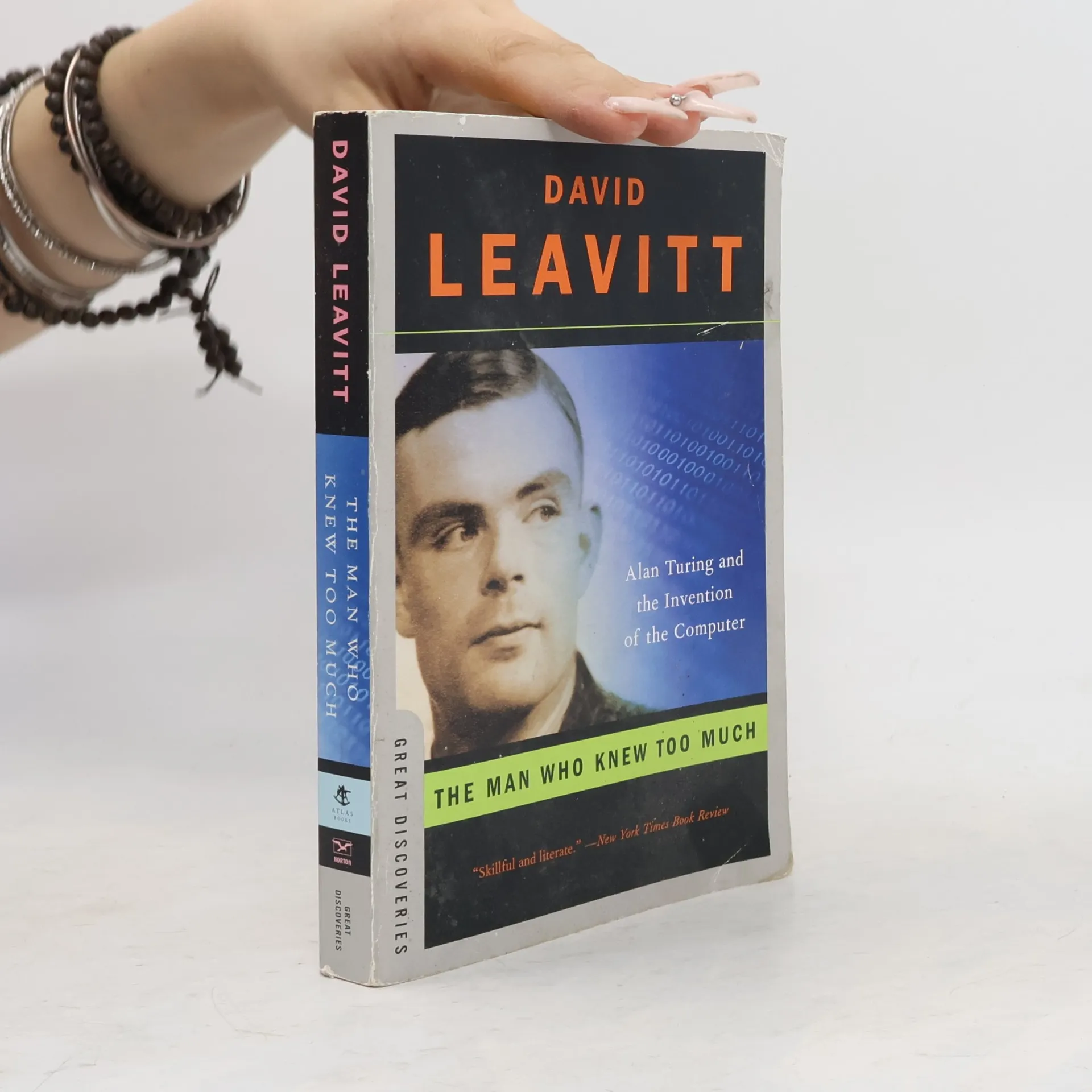


Great Discoveries: The Man Who Knew Too Much
Alan Turing and the Invention of the Computer
Autoři
Hodnocení knihy
Série
Parametry
- 336 stránek
- 12 hodin čtení
Více o knize
A "skillful and literate" ( New York Times Book Review ) biography of the persecuted genius who helped create the modern computer. To solve one of the great mathematical problems of his day, Alan Turing proposed an imaginary computer. Then, attempting to break a Nazi code during World War II, he successfully designed and built one, thus ensuring the Allied victory. Turing became a champion of artificial intelligence, but his work was cut short. As an openly gay man at a time when homosexuality was illegal in England, he was convicted and forced to undergo a humiliating "treatment" that may have led to his suicide.With a novelist's sensitivity, David Leavitt portrays Turing in all his humanity―his eccentricities, his brilliance, his fatal candor―and elegantly explains his work and its implications.


Nákup knihy
Great Discoveries: The Man Who Knew Too Much, David Leavitt
- Jazyk

- Rok vydání
- 2006
- Vazba
- (měkká)
Doručení
Platební metody
Tady nám chybí tvá recenze.
- Titul
- Great Discoveries: The Man Who Knew Too Much
- Podtitul
- Alan Turing and the Invention of the Computer
- Jazyk
- anglicky
- Autoři
- David Leavitt
- Vydavatel
- W. W. Norton & Company
- Rok vydání
- 2006
- Vazba
- měkká
- Počet stran
- 336
- ISBN10
- 0393329097
- ISBN13
- 9780393329094
- Série
- Velké objevy
- Kategorie
- První vydání
- 2006
- Původní název
- Man Who Knew Too Much
- Hodnocení
- 3,4 z 5
- Anotace
- A "skillful and literate" ( New York Times Book Review ) biography of the persecuted genius who helped create the modern computer. To solve one of the great mathematical problems of his day, Alan Turing proposed an imaginary computer. Then, attempting to break a Nazi code during World War II, he successfully designed and built one, thus ensuring the Allied victory. Turing became a champion of artificial intelligence, but his work was cut short. As an openly gay man at a time when homosexuality was illegal in England, he was convicted and forced to undergo a humiliating "treatment" that may have led to his suicide.With a novelist's sensitivity, David Leavitt portrays Turing in all his humanity―his eccentricities, his brilliance, his fatal candor―and elegantly explains his work and its implications.