



Parametry
- 305 stránek
- 11 hodin čtení
Více o knize
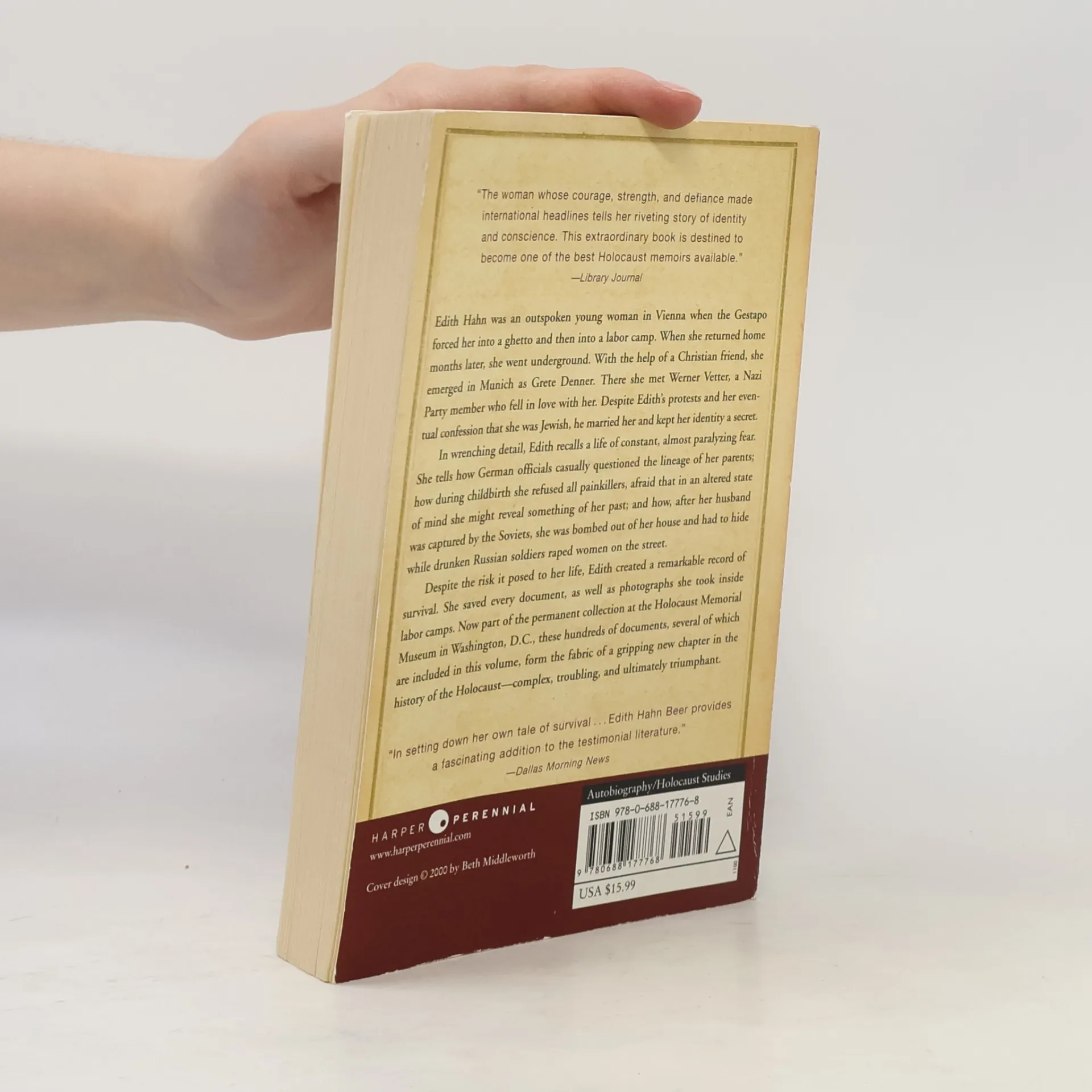
Edith Hahn, a law student in Vienna, faced the horrors of the Nazi regime when the Gestapo forced her and her mother into a ghetto, marking their papers with a "J." After being taken to a labor camp, she managed to convince officials to spare her mother, but upon returning home, she found her mother had been deported. Realizing she was now a hunted woman, Edith removed her yellow star and went underground, struggling for food and safety each night. Her boyfriend, Pepi, was too frightened to assist her, but a Christian friend provided identity papers, allowing her to escape to Munich. There, she met Werner Vetter, a Nazi party member who fell in love with her. Despite her protests and eventual confession of her Jewish identity, he married her and kept her secret. Edith recounts her life filled with fear, detailing encounters with German officials questioning her lineage, her refusal of painkillers during childbirth to protect her secret, and the harrowing experience of hiding with her daughter while Russian soldiers ravaged the streets. Throughout her ordeal, Edith meticulously preserved her survival records, including real and falsified papers, letters from Pepi, and photographs from labor camps. These documents, now exhibited at the Holocaust Museum in Washington, D.C., weave a complex and ultimately triumphant narrative of resilience.


Nákup knihy
The Nazi Officer's Wife, Edith Hahn-Beer, Susan Dworkin
- Jazyk

- Rok vydání
- 2000
- Vazba
- (měkká)
Doručení
Platební metody
Tady nám chybí tvá recenze.
- Titul
- The Nazi Officer's Wife
- Podtitul
- How One Jewish Woman Survived the Holocaust
- Jazyk
- anglicky
- Autoři
- Edith Hahn-Beer, Susan Dworkin
- Vydavatel
- William Morrow Paperbacks
- Rok vydání
- 2000
- Vazba
- měkká
- Počet stran
- 305
- ISBN10
- 068817776X
- ISBN13
- 9780688177768
- Série
- Kategorie
- Štítky
- Historické téma, Láska, Německo, Válečná próza, Války, Druhá světová válka, Židé, Manželství, Holokaust, Nacismus, Přežití, Třetí říše (nacistické Německo), 1933-1945, Podle skutečných událostí, Pomoc, Pronásledování, perzekuce, Perzekuce Židů
- Původní název
- The nazi officer’s wife
- Hodnocení
- 4,25 z 5
- Anotace
- Edith Hahn, a law student in Vienna, faced the horrors of the Nazi regime when the Gestapo forced her and her mother into a ghetto, marking their papers with a "J." After being taken to a labor camp, she managed to convince officials to spare her mother, but upon returning home, she found her mother had been deported. Realizing she was now a hunted woman, Edith removed her yellow star and went underground, struggling for food and safety each night. Her boyfriend, Pepi, was too frightened to assist her, but a Christian friend provided identity papers, allowing her to escape to Munich. There, she met Werner Vetter, a Nazi party member who fell in love with her. Despite her protests and eventual confession of her Jewish identity, he married her and kept her secret. Edith recounts her life filled with fear, detailing encounters with German officials questioning her lineage, her refusal of painkillers during childbirth to protect her secret, and the harrowing experience of hiding with her daughter while Russian soldiers ravaged the streets. Throughout her ordeal, Edith meticulously preserved her survival records, including real and falsified papers, letters from Pepi, and photographs from labor camps. These documents, now exhibited at the Holocaust Museum in Washington, D.C., weave a complex and ultimately triumphant narrative of resilience.