

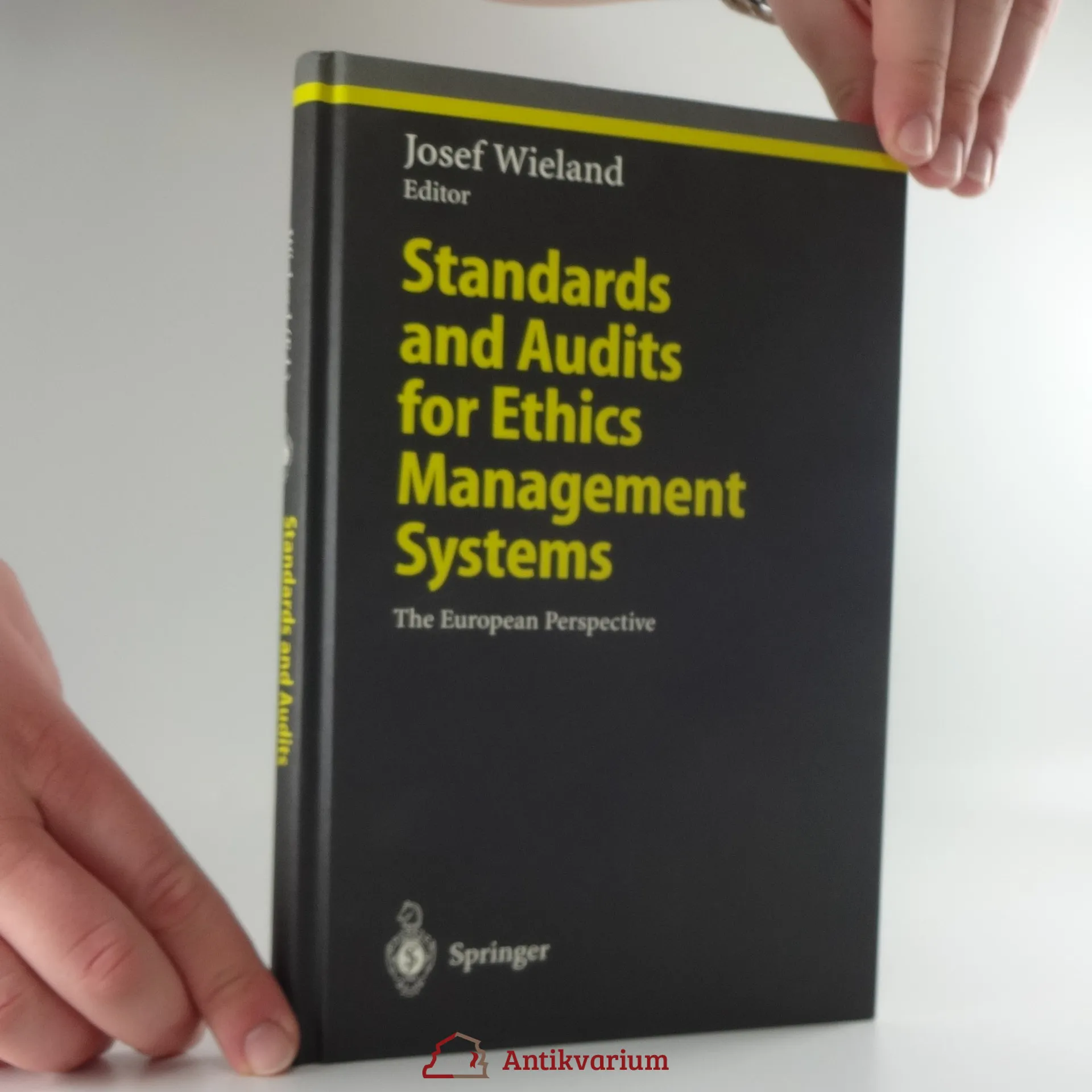
Standarts for Audits for Ethics Management Systems
Autoři
Parametry
Více o knize
The articles in this volume explore how moral values and ethical demands can be integrated into economic and corporate decisions in a credible and comprehensible way for society. Best practices and minimum requirements for codes of conduct are essential, as they codify values such as integrity, fairness, openness, honesty, truthfulness, solidarity, and justice, which must be reflected in daily business operations. There is a pressing need to establish criteria for seriousness and credibility to evaluate and control standards of conduct and the managerial systems designed for this purpose. In the international context, terms like Ethics management system, Ethics program, Values program, Ethics audit, and Social audit are employed to describe these systems. The European perspective emphasizes a values-driven integration of corporate governance (including risk management and compliance), quality management (focusing on human capital and supply chain), and corporate citizenship (addressing human rights, ecology, social responsibility, and community) into a cohesive management decision framework. The core value uniting these areas is sustainability, distinguishing it from compliance programs that are primarily law-driven, a distinction highlighted by Lynn S. Paine.
Nákup knihy
Standarts for Audits for Ethics Management Systems, Josef Wieland
- Jazyk

- Rok vydání
- 2003
- Vazba
- (pevná)
Doručení
Platební metody
Nikdo zatím neohodnotil.
- Titul
- Standarts for Audits for Ethics Management Systems
- Jazyk
- anglicky
- Autoři
- Josef Wieland
- Vydavatel
- Springer
- Rok vydání
- 2003
- Vazba
- pevná
- ISBN10
- 3540402063
- ISBN13
- 9783540402060
- Série
- Kategorie
- Štítky
- Byznys
- Anotace
- The articles in this volume explore how moral values and ethical demands can be integrated into economic and corporate decisions in a credible and comprehensible way for society. Best practices and minimum requirements for codes of conduct are essential, as they codify values such as integrity, fairness, openness, honesty, truthfulness, solidarity, and justice, which must be reflected in daily business operations. There is a pressing need to establish criteria for seriousness and credibility to evaluate and control standards of conduct and the managerial systems designed for this purpose. In the international context, terms like Ethics management system, Ethics program, Values program, Ethics audit, and Social audit are employed to describe these systems. The European perspective emphasizes a values-driven integration of corporate governance (including risk management and compliance), quality management (focusing on human capital and supply chain), and corporate citizenship (addressing human rights, ecology, social responsibility, and community) into a cohesive management decision framework. The core value uniting these areas is sustainability, distinguishing it from compliance programs that are primarily law-driven, a distinction highlighted by Lynn S. Paine.