The authors address concerns about the influence of unaccountable bureaucrats, referred to as the deep state, by advocating for a moral framework that promotes transparency and accountability in government. They argue that while the administrative state can appear daunting, it has the potential to operate on principled grounds, ensuring that rulemakers act ethically and do not misuse their power.
Cass Sunstein Pořadí knih (chronologicky)
21. září 1954
Cass R. Sunstein je americký právní vědec, který se zaměřuje na ústavní právo, správní právo, environmentální právo a právo a behaviorální ekonomii. Jeho práce se ponořuje do komplexních právních oblastí a zkoumá, jak lidské chování ovlivňuje právní systémy. Sunsteinův přístup často propojuje právní teorii s psychologickými poznatky a vytváří tak jedinečný pohled na fungování společnosti a její regulace. Jeho analýzy nabízejí hluboké pochopení mechanismů, které formují naši legislativu a společenské normy.



Sludge
- 166 stránek
- 6 hodin čtení
"A short manifesto on sludge, the goo that gums up the works of people working through various public and private systems, and why/how it should be reduced"-- Provided by publisher
Kahneman s kolegy analyzoval stovky studií týkajících se rozhodování a ve svém společném díle vás přesvědčí, že i když máme tendenci své mentální schopnosti přeceňovat, jsme jako lidé velmi omylní. I model nás samých činí přesnější úsudky než my! Což není naší chybou, spíše přirozeností kauzálního myšlení a složitostí světa, chybou by však bylo ignorovat protiopatření. V knize vám hvězdný tým autorů vysvětlí příčiny vzniku šumu, jeho kategorie, odliší jej od zkreslení, naučí měřit jeho vliv, ale především ukáže, jak s těmito zjištěními naložit v praxi. Tedy jaké kroky po auditu šumu v rámci šesti pravidel rozhodovací hygieny podniknout. Pro lepší, spravedlivější, méně zašuměný svět.
Many Americans fear the power of unelected, unaccountable bureaucrats-the deep state. Cass Sunstein and Adrian Vermeule seek to calm those fears by proposing a moral regime to ensure that government rulemakers behave transparently and don't abuse their authority. The administrative state may be a Leviathan, but it can be a principled one.
Conformity
- 192 stránek
- 7 hodin čtení
"We live in an era of tribalism, polarization, and intense social division--separating people along lines of religion, political conviction, race, ethnicity, and sometimes gender. How did this happen? In Conformity, Cass R. Sunstein argues that the key to making sense of living in this fractured world lies in understanding the idea of conformity--what it is and how it works--as well as the countervailing force of dissent."--Publisher
How Change Happens
- 344 stránek
- 13 hodin čtení
The New York Times–bestselling co-author of Nudge explores how more information can make us happy or miserable—and why we sometimes avoid it but sometimes seek it out. How much information is too much? Do we need to know how many calories are in the giant vat of popcorn that we bought on our way into the movie theater? Do we want to know if we are genetically predisposed to a certain disease? Can we do anything useful with next week's weather forecast for Paris if we are not in Paris? In Too Much Information, Cass Sunstein examines the effects of information on our lives. Policymakers emphasize “the right to know,” but Sunstein takes a different perspective, arguing that the focus should be on human well-being and what information contributes to it. Government should require companies, employers, hospitals, and others to disclose information not because of a general “right to know” but when the information in question would significantly improve people's lives. Of course, says Sunstein, we are better off with stop signs, warnings on prescription drugs, and reminders about payment due dates. But sometimes less is more. What we need is more clarity about what information is actually doing or achieving.
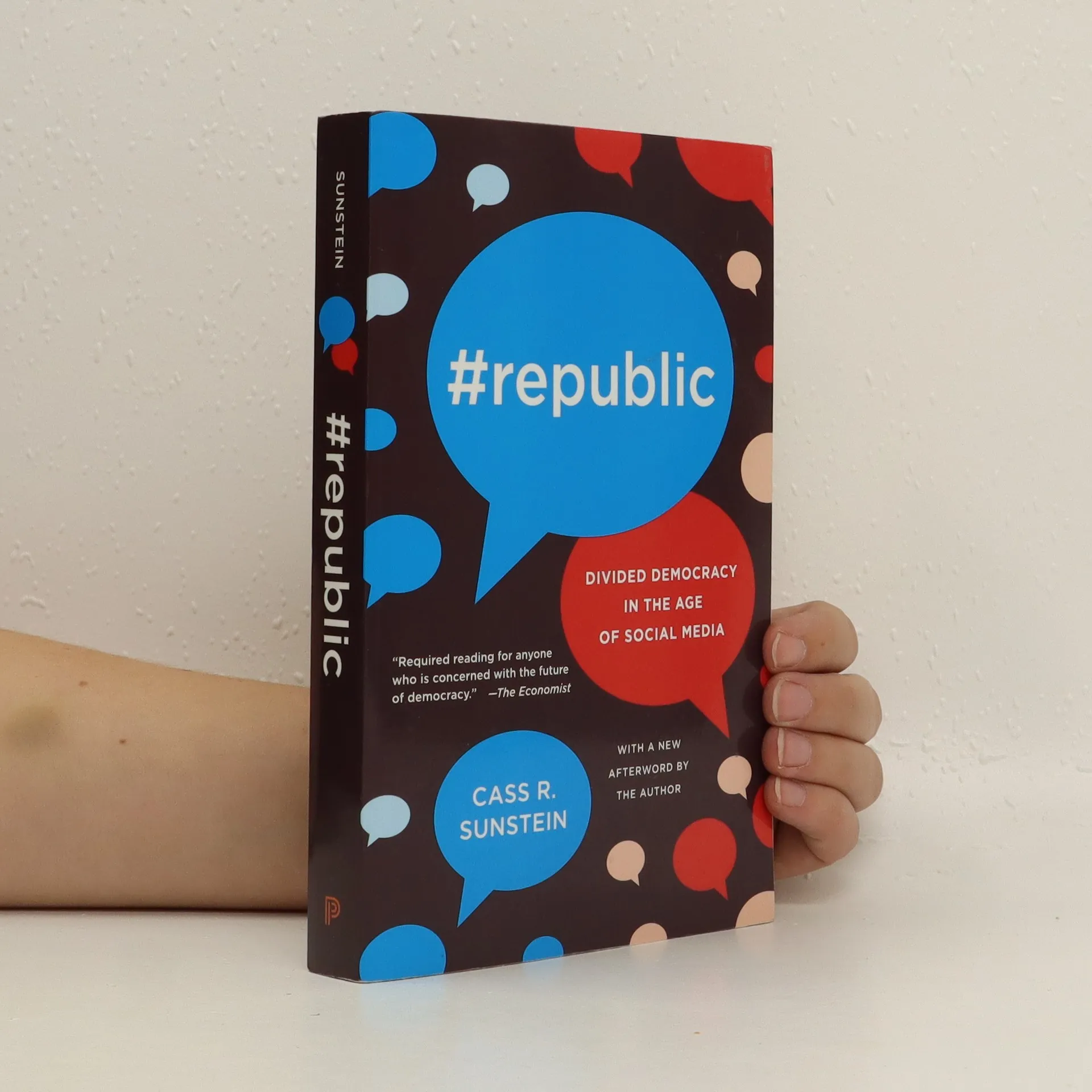
#Republic : divided democracy in the age of social media
- 328 stránek
- 12 hodin čtení
From the New York Times bestselling author of Nudge and The World According to Star Wars, a revealing account of how today's Internet threatens democracy—and what can be done about it As the Internet grows more sophisticated, it is creating new threats to democracy. Social media companies such as Facebook can sort us ever more efficiently into groups of the like-minded, creating echo chambers that amplify our views. It's no accident that on some occasions, people of different political views cannot even understand one another. It's also no surprise that terrorist groups have been able to exploit social media to deadly effect. Welcome to the age of #Republic. In this revealing book, New York Times bestselling author Cass Sunstein shows how today’s Internet is driving political fragmentation, polarization, and even extremism--and what can be done about it. He proposes practical and legal changes to make the Internet friendlier to democratic deliberation, showing that #Republic need not be an ironic term. Rather, it can be a rallying cry for the kind of democracy that citizens of diverse societies need most.
The World According to Star Wars
- 223 stránek
- 8 hodin čtení
NEW YORK TIMES BESTSELLER #1 Washington Post Bestseller There’s Santa Claus, Shakespeare, Mickey Mouse, the Bible, and then there’s Star Wars. Nothing quite compares to sitting down with a young child and hearing the sound of John Williams’s score as those beloved golden letters fill the screen. In this fun, erudite, and often moving book, Cass R. Sunstein explores the lessons of Star Wars as they relate to childhood, fathers, the Dark Side, rebellion, and redemption. As it turns out, Star Wars also has a lot to teach us about constitutional law, economics, and political uprisings. In rich detail, Sunstein tells the story of the films’ wildly unanticipated success and explores why some things succeed while others fail. Ultimately, Sunstein argues, Star Wars is about freedom of choice and our never-ending ability to make the right decision when the chips are down. Written with buoyant prose and considerable heart, The World According to Star Wars shines a bright new light on the most beloved story of our time.
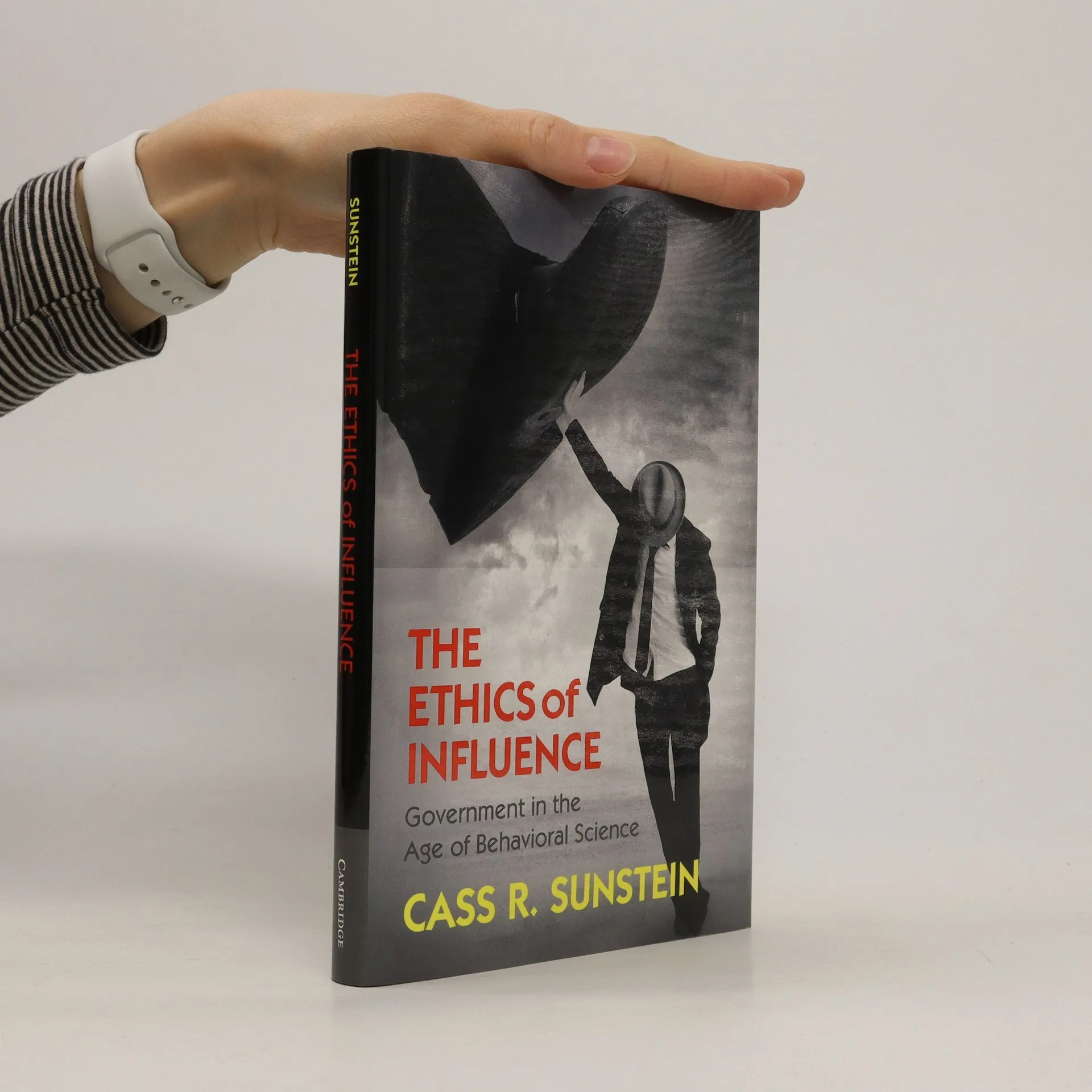
The Ethics of Influence
- 234 stránek
- 9 hodin čtení
In The Ethics of Influence, Cass R. Sunstein investigates the ethical issues surrounding government nudges, choice architecture, and mandates.
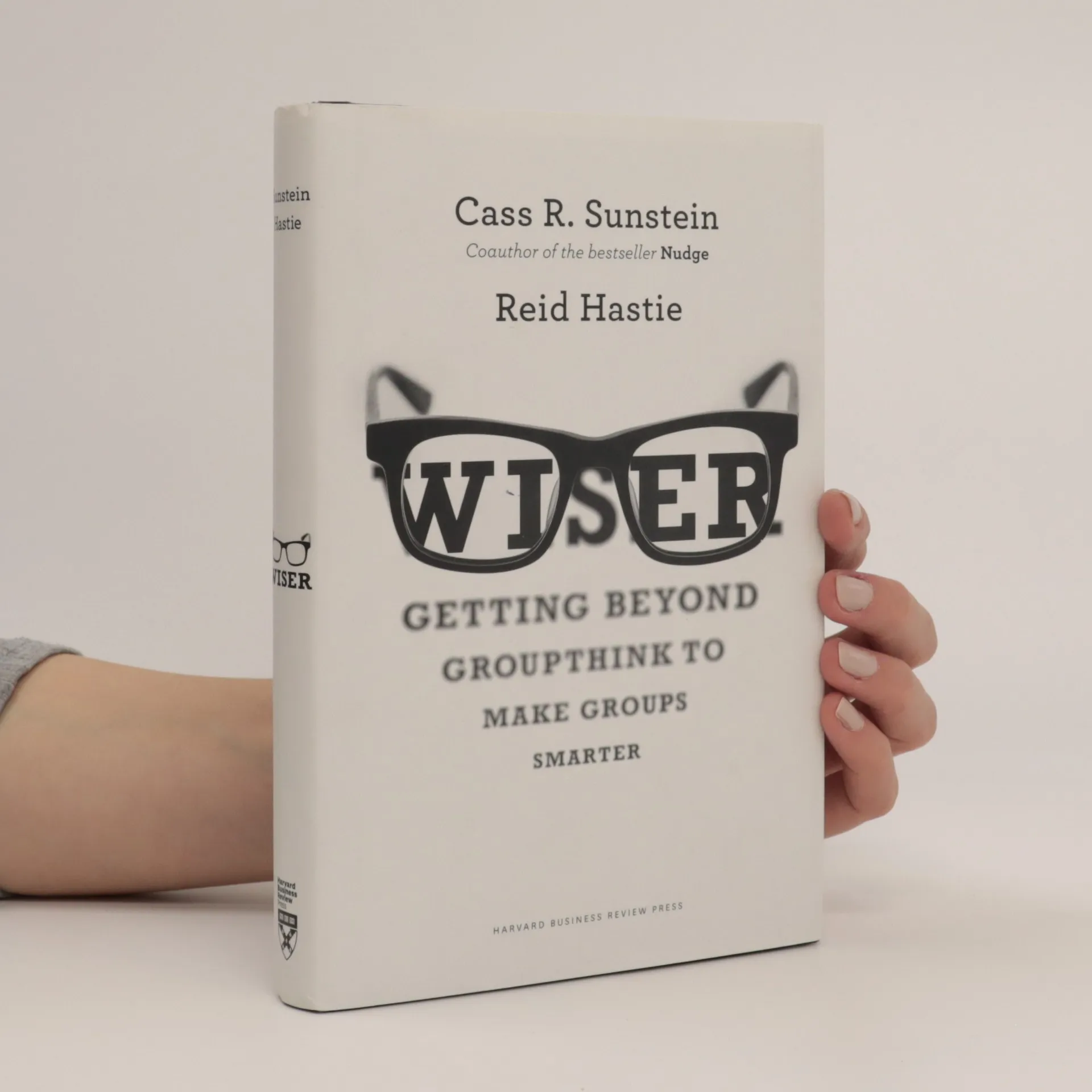
Wiser: Getting Beyond Grouphink To Make Groups Smarter
- 252 stránek
- 9 hodin čtení
"We've all been involved in group decisions--and they're hard. And they often turn out badly. Why? Many blame bad decisions on 'groupthink' without a clear idea of what that term really means. Now, Nudge coauthor Cass Sunstein and leading decision-making scholar Reid Hastie shed light on the specifics of why and how group decisions go wrong--and offer tactics and lessons to help leaders avoid the pitfalls and reach better outcomes"--Dust jacket flap.
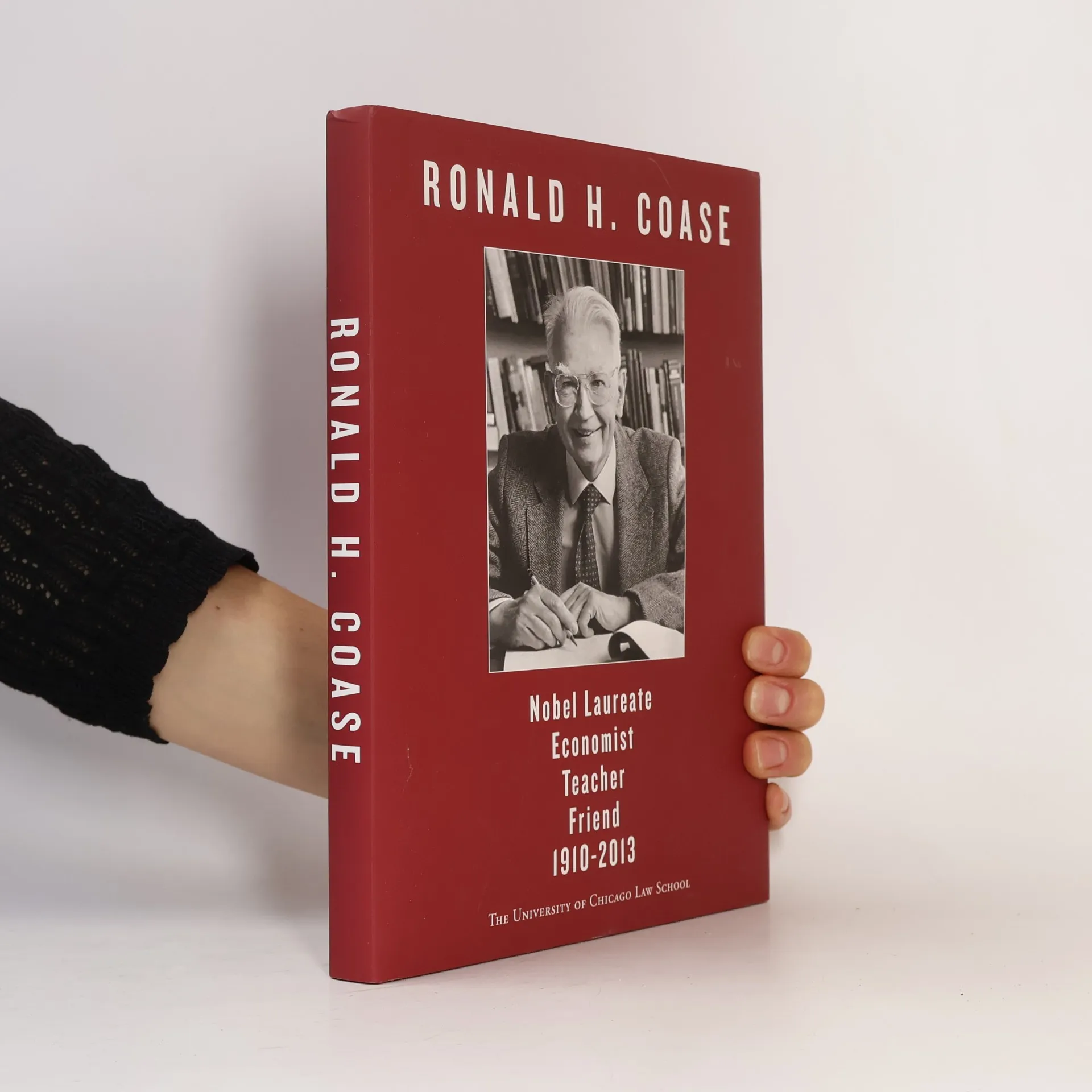
A tribute to Ronald Coase including essays by friends and admirers, text of "The Nature of the Firm" and "The Problem of Social Cost," Nobel materials and the 17th Annual Coase Lecture.
'팔꿈치로 쿡쿡 찌르다'라는 뜻의 '넛지Nudge'는 일종의 자유주의적인 개입, 혹은 간섭이다. 즉, 사람들을 바람직한 방향으로 부드럽게 유도하되, 선택의 자유는 여전히 개인에게 열려있는 상태를 말한다. 이 책은 편견 때문에 실수를 반복하는 인간들을 부드럽게 '넛지'함으로써 현명한 선택을 이끌어낼 수 있다고 주장한다. 저자들은 학교 급식을 하며 몸에 좋은 과일을 눈에 잘 띄는 위치에 놓는 것은 넛지지만, 정크푸드를 금지하는 것은 넛지가 아니라고 말한다. 넛지는 사람들의 선택에 부드럽게 간섭하지만 여전히 개인에게 선택의 자유가 열려 있는, '자유주의적 개입주의'를 뜻한다고 이야기한다. 단지 '내일 투표할 거냐?'고 묻는 것만으로도 실제 투표율을 높일 수 있다는 일상적인 이야기로부터, 디폴트 옵션(지정하지 않았을 때 자동으로 선택되는 옵션)의 설계까지, 똑똑한 선택을 유도하는 넛지의 생생한 사례들을 소개한다. <넛지>는 현재 미국 오바마 정권이 넛지 정책을 수용하면서 유명세를 치르고 있다.
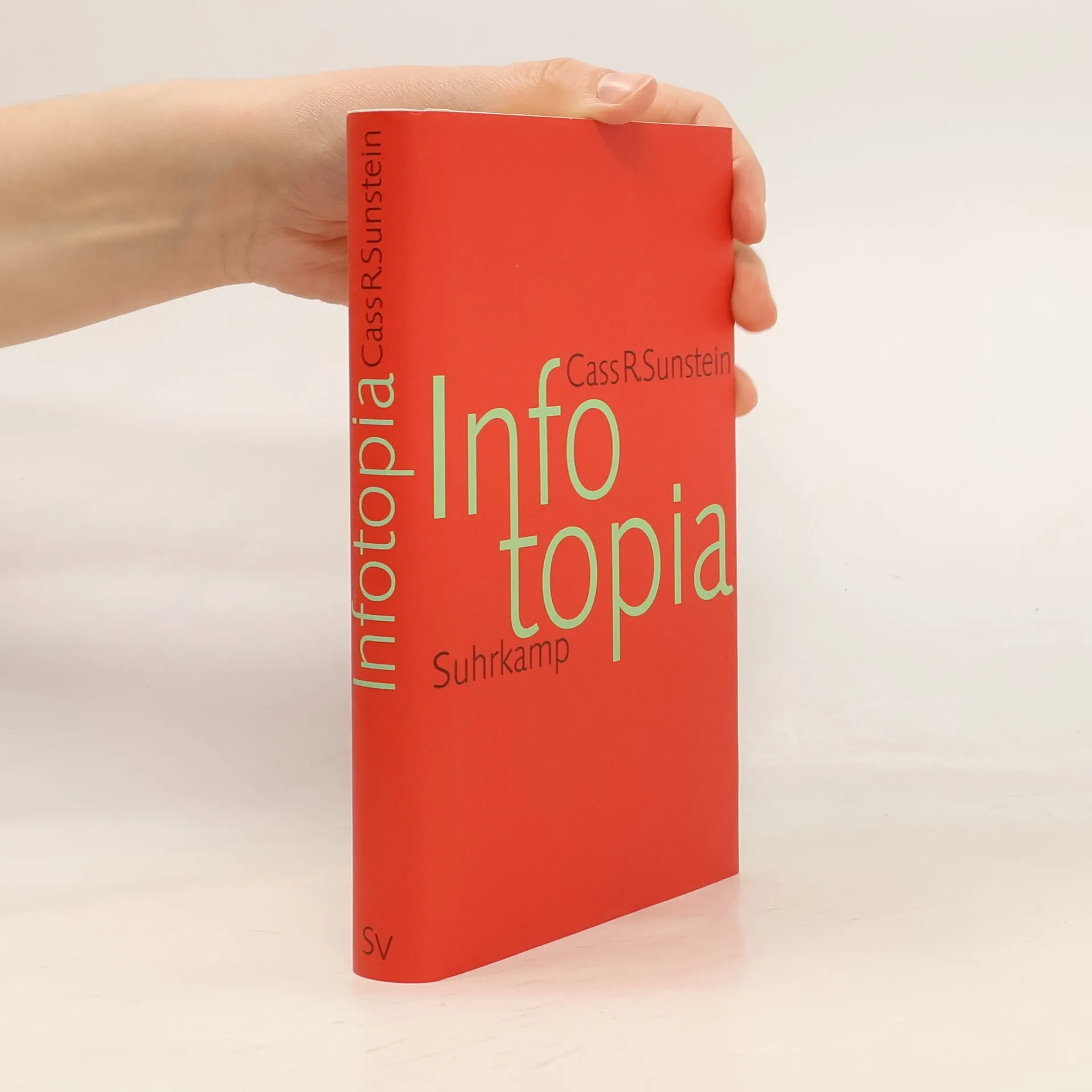
Die Produktion und Verbreitung von Informationen und Wissen ist heute ein kollektives Unternehmen, an dem Experten und Laien weltweit über Wikis, Blogs und Open-Source-Projekte teilnehmen. Diese Entwicklung wirft die Frage auf, ob die Flut an ungesicherten Informationen uns zu einer digitalen Herde macht, die das glaubt, was viele für richtig halten, oder ob sie eine Utopie verwirklicht, in der wir Zugang zu gemeinsamem Wissen haben. Cass R. Sunstein präsentiert sich als entschiedener Infotopist und kritisiert traditionelle Expertenzirkel, die oft zu „Informationskokons“ werden, aus denen Entscheidungen mit fatalen Folgen resultieren – Beispiele sind der Irak-Krieg, der Enron-Skandal und der Absturz des Space Shuttle Columbia. Im Gegensatz dazu bietet der kollektive Wissenserwerb einen Prozess, in dem Informationen ständig öffentlich ausgetauscht, aktualisiert und kritisiert werden. Sunstein illustriert dies mit zahlreichen Beispielen und entwickelt theoretische Ansätze, um Kommunikationsprozesse im offenen Wissensnetzwerk so zu gestalten, dass sie zu präziserem Wissen führen. Im idealen Fall können alle an diesem Wissen partizipieren und profitieren.
Worst-Case Scenarios
- 352 stránek
- 13 hodin čtení
The world today faces many problems, foremost among them climate change and the ozone hole. Efforts are being made to confront these issues, and all countries must act quickly before it is too late. In recent years, people have witnessed climate fluctuations and environmental disasters unlike any they have experienced before. In this context, "Worst-Case Scenarios" attempts to address the problem and find solutions, while also presenting the views of countries, theorists, and legislators on the matter. The book also discusses what is referred to as "terrorism," which is seen as one of the most significant problems harming the world today, highlighting others' positions on it and how to approach it from a different perspective, attempting to present it as a problem that may differ from others in terms of response. The book introduces new terminology for dealing with the topics it addresses, employing a fresh and profound style.
Many of us are being misled. Claiming to know the “pals” of presidential aspirants, dark secrets about public officials, and hidden causes of the current economic crisis, those who spread rumors know precisely what they are doing. They are sometimes able to derail political candidates, injure companies and reputations, even damage democratic governance. And in the era of the Internet, they know more about manipulating the mechanics of false rumors—social cascades, group polarization, and biased assimilation—than you do. They also know that the presumed correctives—publishing balanced information, issuing corrections, and trusting to the marketplace of ideas—do not always work. A pioneer in the effort “to design regulation around the ways people behave” ("The Wall Street Journal"), Cass R. Sunstein uses examples from the real world and from behavioral studies to explain why certain rumors spread like wildfire and what we can do to avoid being misled.
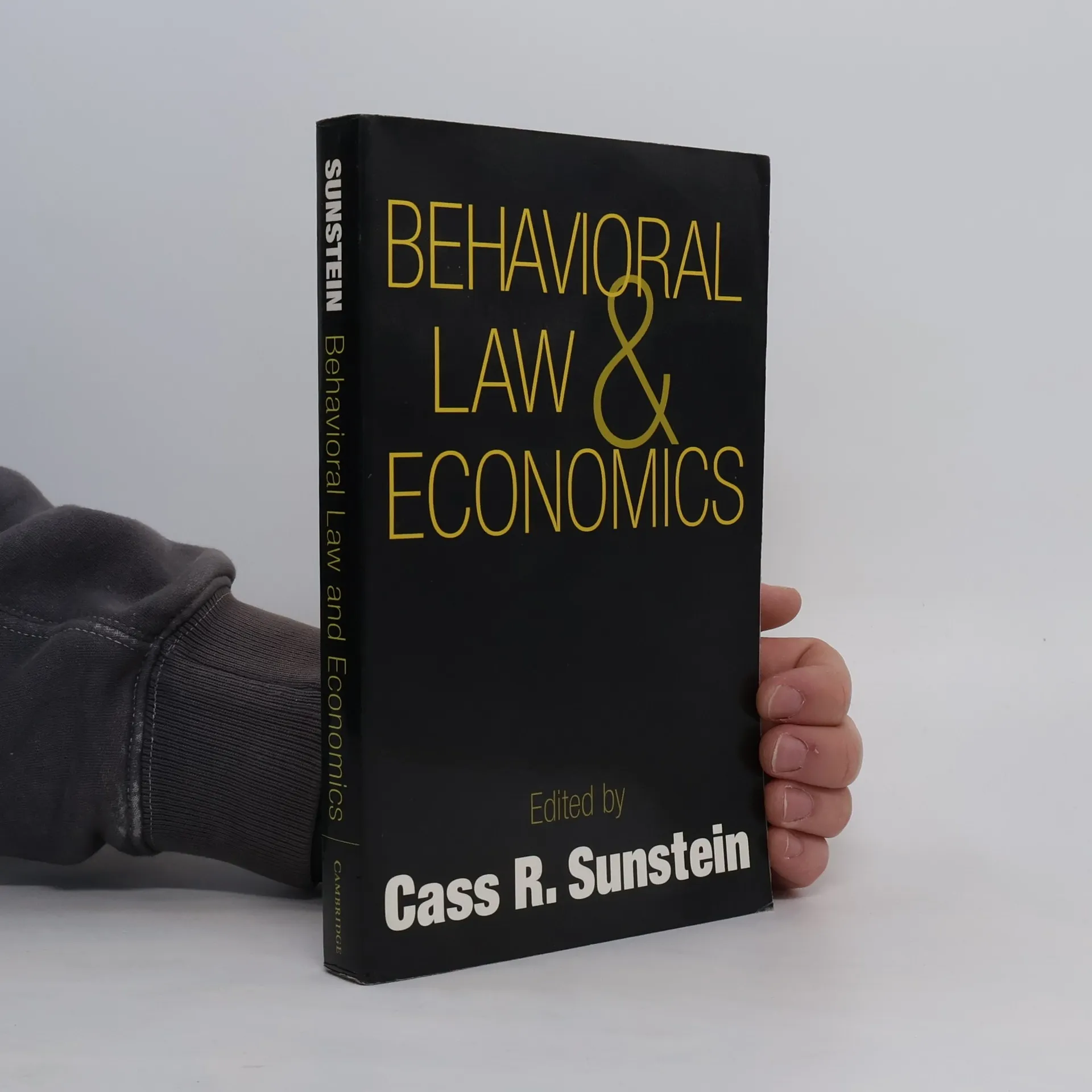
Behavioral Law and Economics
- 448 stránek
- 16 hodin čtení
This book explores the intersection of law, cognitive psychology, and behavioral economics, providing insights into how human behavior influences legal decision-making. It examines recent discoveries in these fields to shed light on the psychological factors that affect legal outcomes and the effectiveness of laws. By integrating these disciplines, the author offers a fresh perspective on legal theory and practice, highlighting the implications for policymakers and legal professionals.
Infotopia
- 288 stránek
- 11 hodin čtení
The rise of the "information society" brings both peril and promise. In a world inundated with media, how can we ensure that accurate information prevails? Cass R. Sunstein presents an optimistic view of human potential to gather and utilize knowledge for improvement. Amid information overload, it's easy to cling to biases and comforting opinions. Historical events like the Iraq war justification and the Enron collapse illustrate the dangers of "information cocoons," where leaders and groups ignore conflicting data. The challenge lies in overcoming insular decision-making to access collective knowledge. Innovative methods for sharing and aggregating information, particularly through the Internet, are empowering individuals, companies, and governments to create accurate knowledge bases. Self-correcting exchanges, wikis, and open-source software enable widespread participation in knowledge development. Prediction markets allow organizations to make informed decisions by efficiently aggregating information. Sunstein emphasizes how individuals can leverage this aggregated knowledge without falling prey to herd mentality, highlighting the accuracy of these new techniques. In a landscape where opinion often competes with evidence, the collaborative efforts of many may pave the way to a more informed society.
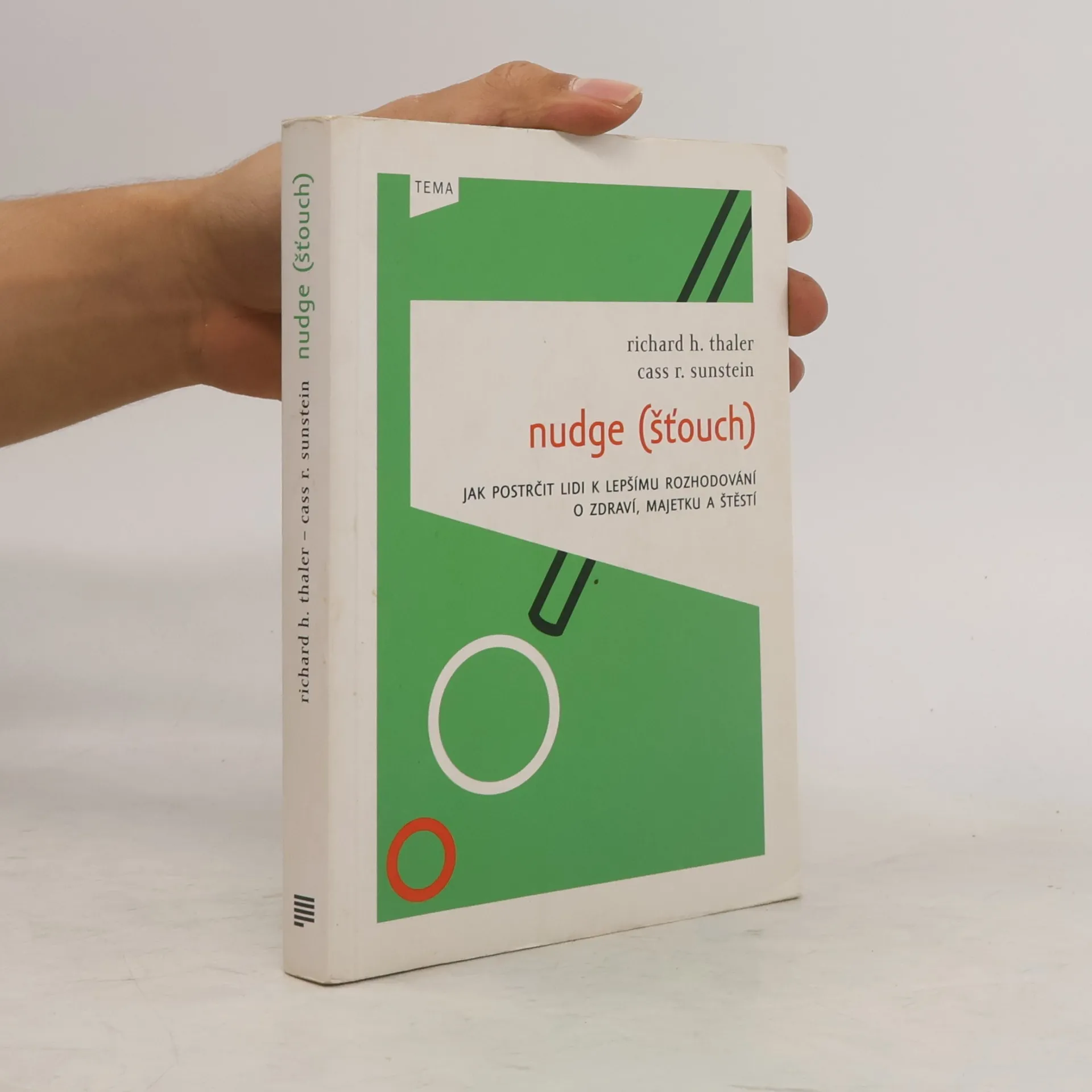
Kniha, kterou časopis The Economist označil za jednu z nejlepších v roce 2009, se stala bestsellerem v USA. Lidský mozek, ač úžasný, byl stvořen pro specifické účely, jako je hledání potravy a vyhýbání se predátorům. Avšak pro složité úkoly, jako je výběr penzijního spoření nebo plánování do budoucna, není optimální. Každý den čelíme mnoha rozhodnutím, často se však rozhodujeme špatně, což má negativní dopad na naše finance, zdraví a planetu. Autoři ukazují, že porozuměním lidskému myšlení můžeme vytvořit prostředí, které usnadní výběr nejlepší alternativy pro jednotlivce i společnost. Pomocí různých příkladů dokládají, že dobře navržená "architektura výběru" může vést k lepším rozhodnutím, aniž by omezovala naši svobodu volby. Ekonom Richard Thaler a právník Cass Sunstein nabízejí recepty na zlepšení rozhodování v oblastech zdraví, bohatství a štěstí. Kniha se stala populární a Sunstein byl jmenován šéfem úřadu pro regulace prezidentem Obamou. Thaler se specializuje na behaviorální ekonomii a Sunstein na ústavním a správním právu. Oba jsou renomovaní autoři a odborníci ve svých oborech.
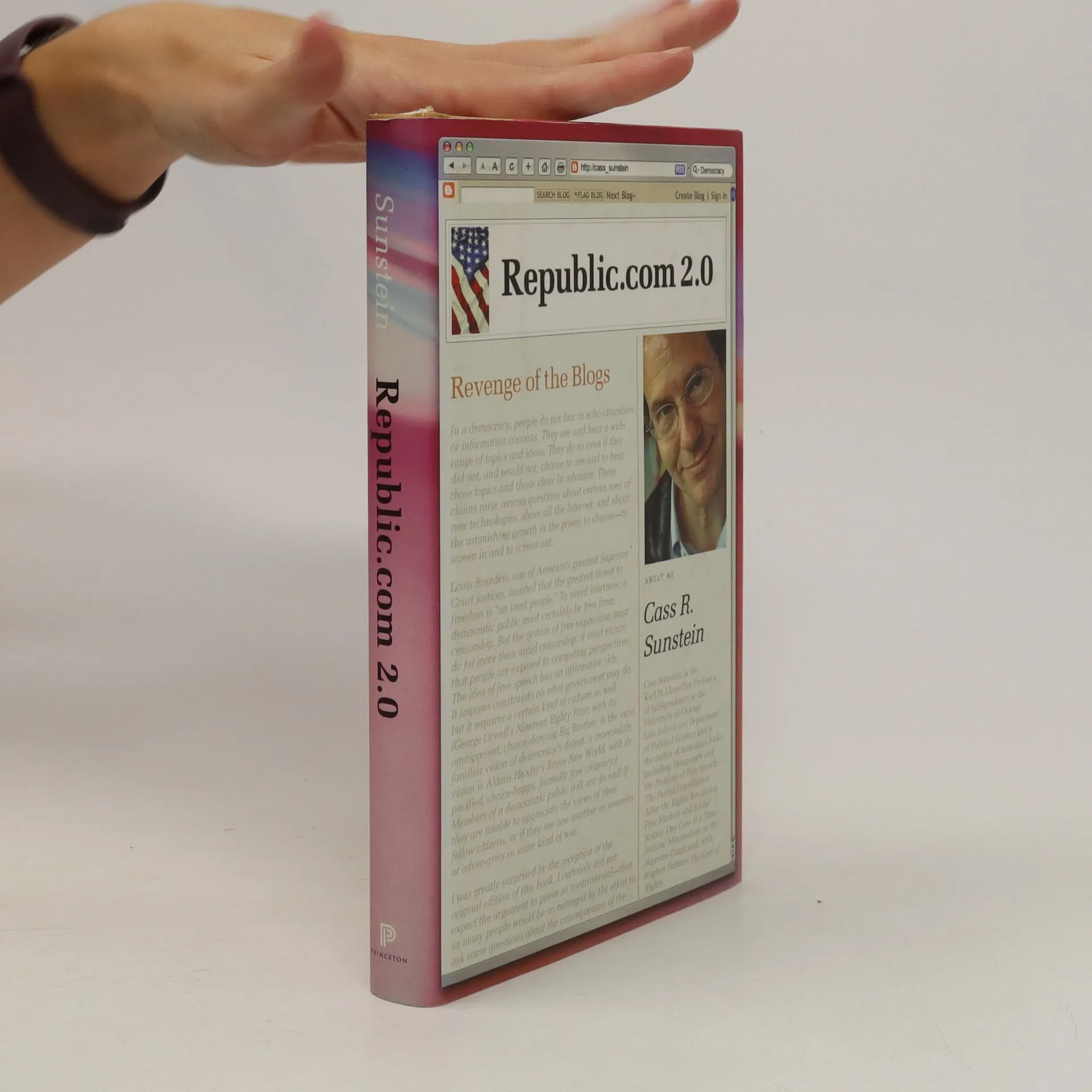
Emphasizing the value of unplanned, unchosen encounters, the original "Republic.com" provoked a strong reaction from cyber-optimists. In this follow-up book, Sunstein answers the critics and expands his argument to take account of new developments about how people are using the Internet.
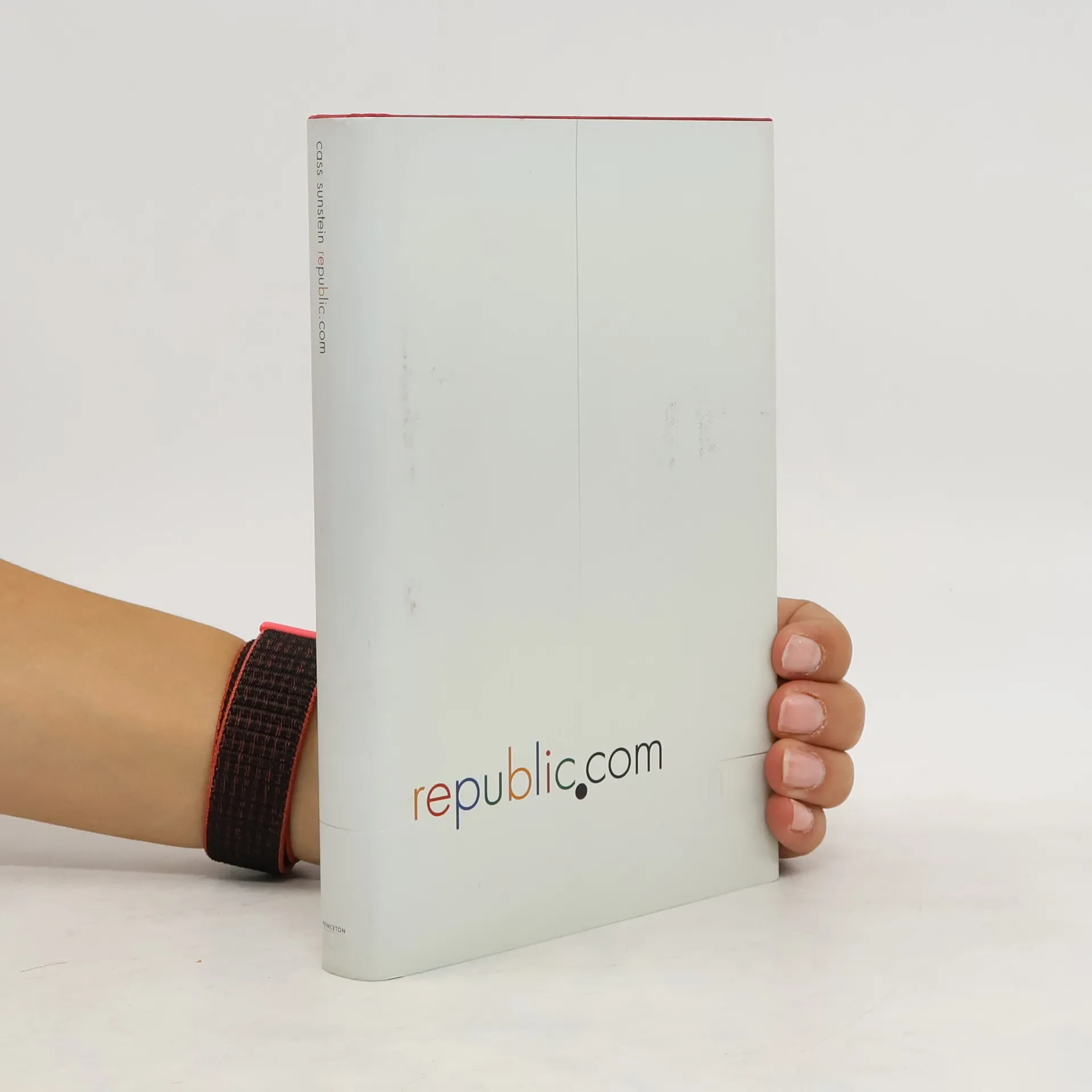
Republic.com
- 240 stránek
- 9 hodin čtení
Exposing the drawbacks of egocentric Internet use, this text shows us how to approach the Internet as responsible citizens. Democracy, it maintains, depends on shared experiences and requires citizens to be exposed to topics and ideas that they would not have chosen in advance.
Transit - 17: Kultur, Politik, Globalisierung
- 214 stránek
- 8 hodin čtení
Clones and Clones
Facts and Fantasies About Human Cloning
Ranging from psychoanalyst Adam Phillips's case study of a child whose confusion of "cloning" and "clothing" expresses our mixed desire and terror of sameness, to Cass Sunstein's projections of utterly plausible Supreme Court decisions both for and against human cloning; from William Miller's analysis of the queasiness and nervous laughter the subject elicits in many of us to Richard Epstein's libertarian argument against a research ban; from Andrea Dworkin's denunciation of another masculine effort to control reproduction to Martha Nussbaum's witty and elegiac fantasy of the cloning of a lost lover - this collection limns our beliefs and concerns about what it means to be human.
Help your students master the principles of administrative law in an era of change with this renowned casebook, "Administrative Law and Regulatory Policy": Problems, Text, and Cases, Fourth Edition. The book correlates issues of regulatory policy with doctrinal problems to explore the relationship between administrative government and democratic goals. Their extensively revised casebook now offers more explanatory materials, more concise text, many new cases, and reorganized material for greater accessibility. New co-authors Cass Sunstein and Matthew Spitzer join administrative law authorities Stephen Breyer and Richard Stewart to offer a matchless view of administrative law, including: -- how agencies promote -- or compromise -- political legitimacy -- how different understandings of democracy bear on evaluation of administrative government -- the multiple purposes of administrative agencies
We see the stories in the newspaper nearly every a drug hailed as a breakthrough treatment turns out to cause harmful side effects; controls implemented to reduce air pollution are shown to generate hazardous solid waste; bans on dangerous chemicals result in the introduction of even more risky substitutes. Could our efforts to protect our health and the environment actually be making things worse? In Risk versus Risk , John D. Graham, Jonathan Baert Wiener, and their colleagues at the Harvard Center for Risk Analysis marshal an impressive set of case studies which demonstrate that all too often our nation's campaign to reduce risks to our health and the environment is at war with itself.