

Knihobot

François Chollet

    20. říjen 1989
    Deep learning mit R und Keras
    Deep Learning with TensorFlow and Keras - Third Edition
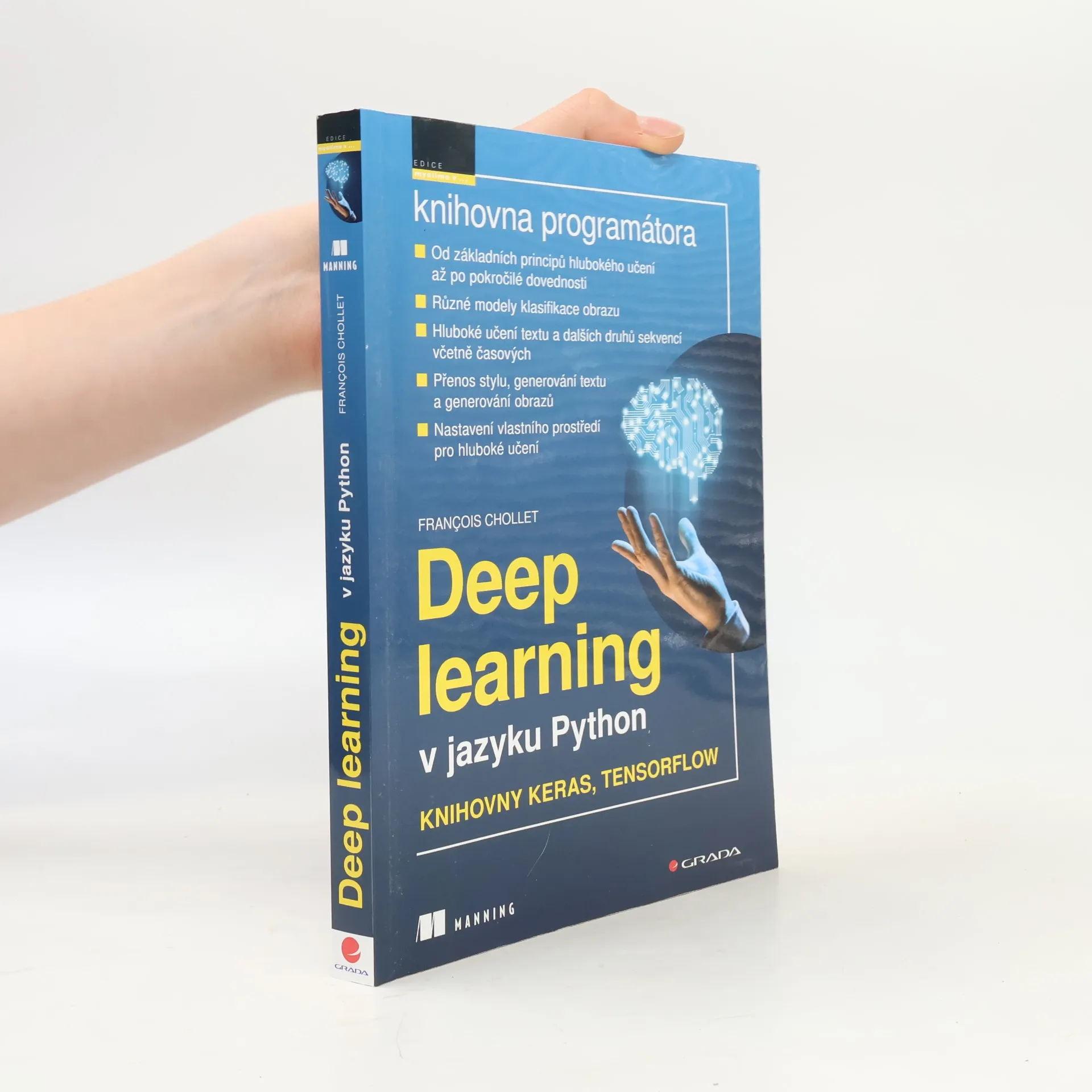
    Deep learning v jazyku Python
    • Deep learning v jazyku Python

      • 328 stránek
      • 12 hodin čtení

      Strojové učení zaznamenalo v posledních letech pozoruhodný pokrok od téměř nepoužitelného rozpoznávání řeči a obrazu k nadlidské přesnosti. Od programů, které nedokázaly porazit jen trochu zkušenějšího hráče go, jsme dospěli k přemožiteli mistra světa. Za pokrokem ve vývoji učících se programů stojí tzv. hluboké učení (deep learning) – kombinace technických vylepšení, osvědčených postupů a teorií, které umožnily vyvinout množství dříve nerealizovatelných inteligentních aplikací. S jejich pomocí pak můžeme například analyzovat text či mluvené slovo, překládat z jazyka do jazyka, rozpoznávat osoby na sociálních sítích nebo používat samořídící automobily. Tato kniha naučí čtenáře navrhovat hluboce se učící systémy v jazyku Python, který je v současnosti nejpoužívanějším programovacím jazykem pro vývoj těchto systémů, a knihovny Keras a TensorFlow používané většinou vítězů soutěží systémů pro hluboké učení. Po prostudování knihy získáte znalosti a praktické dovednosti, díky nimž budete moci aplikovat hluboké učení ve svých vlastních projektech. Čtenáři této publikace potřebují jen středně pokročilé dovednosti tohoto jazyka a nemusí mít předchozí zkušenosti se strojovým učením ani s knihovnami Keras nebo TensorFlow. Autorem knihy je François Chollet, výzkumník Google na poli umělé inteligence a tvůrce knihovny Keras.

      Deep learning v jazyku Python
      4,6
    • Deep Learning with TensorFlow and Keras - Third Edition

      Build and deploy supervised, unsupervised, deep, and reinforcement learning models

      • 698 stránek
      • 25 hodin čtení

      Learn to build advanced machine and deep learning systems for various environments with this comprehensive guide. It covers neural networks and deep learning techniques using TensorFlow and Keras, focusing on writing applications within the powerful and scalable machine learning framework. The latest version, TensorFlow 2.x, emphasizes simplicity and user-friendliness, featuring updates like eager execution, intuitive APIs based on Keras, and flexible model building across platforms. The content provides an overview of supervised and unsupervised machine learning models, along with an in-depth analysis of deep learning and reinforcement learning through practical examples applicable to cloud, mobile, and large-scale production settings. The book details the creation of neural networks with TensorFlow and explores popular algorithms, including regression, convolutional neural networks (CNNs), transformers, generative adversarial networks (GANs), recurrent neural networks (RNNs), natural language processing (NLP), and graph neural networks (GNNs). Additionally, it includes working example applications and discusses TensorFlow in production, mobile, and AutoML contexts. Aimed at Python developers and data scientists, this hands-on resource equips readers with both the theoretical knowledge and practical skills necessary to develop machine learning systems using Keras, TensorFlow, and AutoML, with some prior machine learning k

      Deep Learning with TensorFlow and Keras - Third Edition
    • Deep learning mit R und Keras

      Das Praxis-Handbuch von den Entwicklern von Keras und RStudio

      • 384 stránek
      • 14 hodin čtení

      Dieses Buch bietet eine praxisorientierte Einführung in die grundlegenden Konzepte von Machine Learning und Deep Learning. Es behandelt zahlreiche Anwendungsbeispiele zur Lösung konkreter Aufgaben wie maschinelles Sehen, Sprachverarbeitung, Bildklassifizierung, Zeitreihenprognose und Stimmungsanalyse. Der Autor konzentriert sich auf die praktische Anwendung und verzichtet weitgehend auf mathematische Formeln. Anhand von Beispielen lernen die Leser, wie sie Deep Learning effektiv einsetzen können, wobei die Programmiersprache R und die Deep-Learning-Bibliothek Keras verwendet werden, die sich ideal für den Einstieg eignen. Das Buch gliedert sich in zwei Teile: Teil I bietet eine allgemeine Einführung in Deep Learning, erklärt grundlegende Begriffe und Konzepte, die für den Einstieg in neuronale Netze wichtig sind. Teil II widmet sich ausführlich den praktischen Anwendungen in Computer Vision und der Verarbeitung natürlicher Sprache. Viele Beispiele dienen als Vorlage zur Lösung von Problemen, die in der Praxis des Deep Learnings auftreten können. Es richtet sich an Leser mit Programmiererfahrung in R, die in das Machine Learning und Deep Learning einsteigen möchten. Grundkenntnisse in R sind für die Nutzung von Keras erforderlich.

      Deep learning mit R und Keras