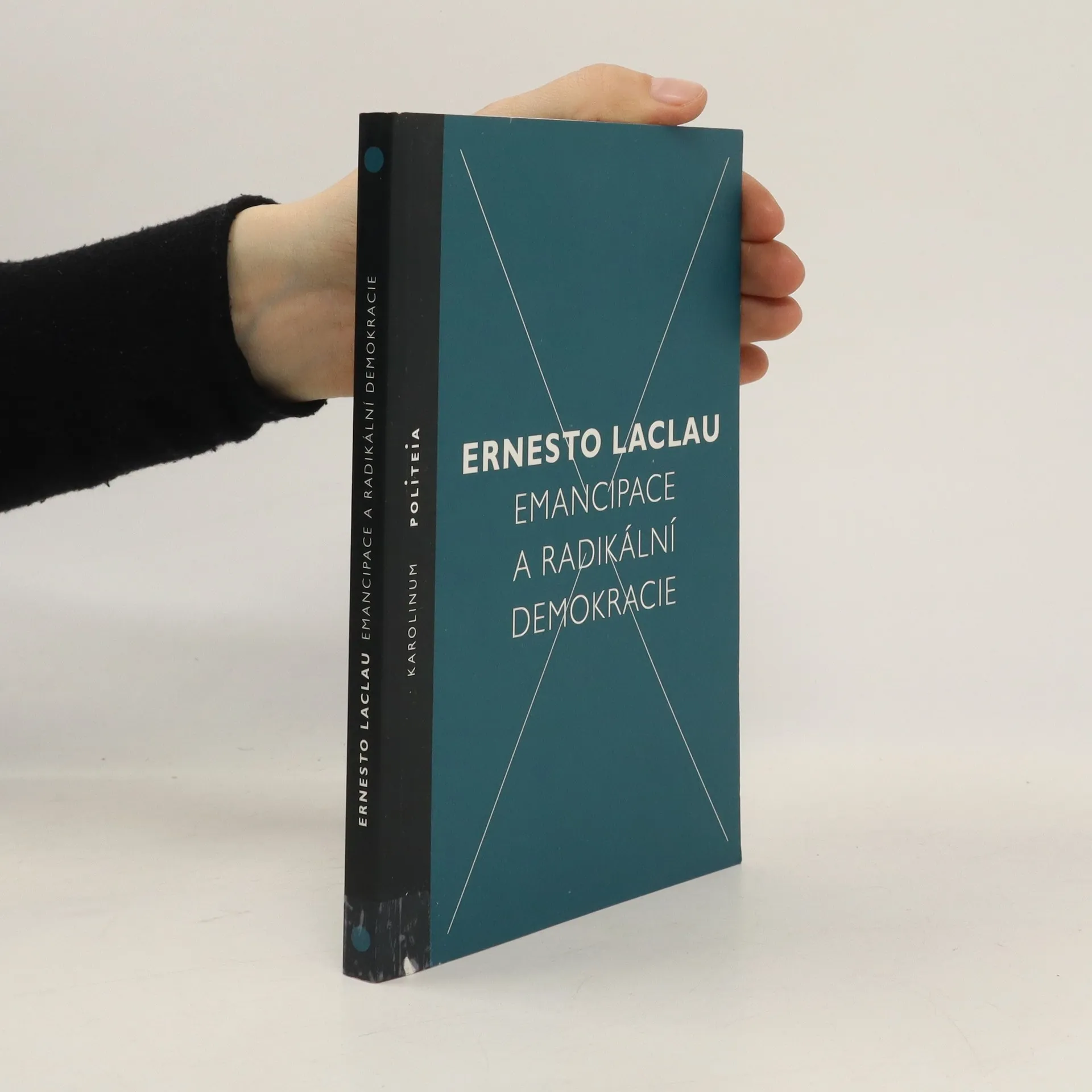
Kniha Emancipace a radikální demokracie je kolekcí esejů významného postmarxistického politického teoretika Ernesta Laclaua. Ústředním tématem všech těchto esejů je otázka platnosti pojmu emancipace, který je klíčovým momentem našeho politického imaginárna již od dob osvícenství. Laclau analyzuje, jak nedávné události (konec studené války, fragmentace sociálních identit, multikulturalismus a bujení etnických a národních identit či postmoderní kritika osvícenských jistot na poli filozofie) proměnily platnost pojmu emancipace, ale také celého politického myšlení. Kromě pojmu emancipace se tak tyto eseje věnují dalším ústředním pojmům a problémům politického myšlení, jako jsou vztah univerzalismu a partikularismu, pojmy moci a reprezentace, radikální demokracie či populismu. Laclau zároveň dále rozvíjí a vymezuje svoji teorii hegemonie vůči dekonstrukci Jacquesa Derridy a antifundacionalismu Richarda Rortyho. To vše činí tuto knihu naprosto nepostradatelnou pro každého, kdo touží porozumět současnému radikálnímu politickému myšlení.
Ernesto Laclau Knihy
Ernesto Laclau byl argentinský politický teoretik, často popisovaný jako postmarxistický myslitel. Jeho práce se zabývala ideologií a analýzou diskurzu, zkoumal způsoby, jakými jsou politické identity a společenské řády konstruovány prostřednictvím jazyka a symbolických bojů. Laclauův vliv spočívá v jeho rozsáhlém zkoumání hegemonie a povahy politického, které inspirovalo mnoho dalších teoretiků v humanitních a společenských vědách.


Kniha Hegemonie a socialistická strategie se dostává do rukou českým čtenářům téměř třicet let po svém prvním vydání v roce 1985. Autoři tvrdí, že levicové myšlení tehdy stálo na křižovatce a vyžadovalo přehodnocení klíčových pojmů, jako jsou ekonomický determinismus, proletariát jako privilegovaný aktér dějin, revoluce a antagonismus. Postmarxismus Ernesta Laclaua a Chantal Mouffe, po obsáhlém výkladu historických proměn pojmu hegemonie, nabízí antiesencialistickou koncepci sociální logiky a politiky vycházející zejména z díla Antonia Gramsciho. Hodnocení „globalizovaného světa“ skrze kategorii hegemonie ukazuje, že současný stav není jediným možným společenským řádem, ale výsledkem specifických mocenských vztahů. Tyto vztahy jsou projevem hegemonických tahů konkrétních sociálních sil, které transformovaly vztahy mezi kapitalistickými korporacemi a národními státy. Hegemonii lze zpochybnit a levice by měla usilovat o věrohodnou alternativu neoliberálního řádu, místo aby se snažila o jeho humánnější řízení. To vyžaduje vytyčení nových politických hranic a uznání, že radikální politika nemůže existovat bez definování protivníka, což zahrnuje přijetí nevykořenitelnosti antagonismu.
Deconstruction and Pragmatism
- 100 stránek
- 4 hodiny čtení
The book explores the tension between Derridean deconstruction and Rortian pragmatism, addressing criticisms that they threaten concepts of truth and reason. It argues that, despite these accusations, both philosophies contribute to the democratic project by challenging the traditional connections between universalism, rationalism, and modern democracy. The authors aim to clarify the intellectual and political implications of these ideas, suggesting that they can foster a more nuanced understanding of democracy rather than leading to chaos.
Emancipation(s)
- 126 stránek
- 5 hodin čtení
In Emancipation(s) , Ernesto Laclau addresses a central how have the changes of the last decade, together with the transformation in contemporary thought, altered the classical notion of “emancipation” as formulated since the Enlightenment? Our visions of the future and our expectations of emancipation, have been deeply affected by the changes of recent the end of the Cold War, the explosion of new ethnic and national identities, the social fragmentation under late capitalism, and the collapse of universal certainties in philosophy and social and historical thought. Laclau here begins to explore precisely how our visions of emancipation have been recast under these new conditions.Laclau examines the internal contradictions of the notion of “emancipation” as it emerged from the mainstream of modernity, as well as the relation between universalism and particularism which is inherent in it. He explores the making of political identities and the status of central notions in political theory such as “representation” and “power,” focusing particularly on the work of Derrida and Rorty. Emancipation(s) is a significant contribution to the reshaping of radical political thought.
Ernesto Laclau kratzt am Selbstverständnis der liberalen Demokratie: Der Populismus, so die grundlegende These, ist nicht ein Exzess der Politik - das Andere der Demokratie -, sondern ihr notwendiger Bestandteil. Laclaus zentraler Gegenstand ist die Konstruktion popularer Identitäten und die Entstehung des 'Volkes' als kollektiven Akteurs. Durch eine kritische Lektüre der bestehenden Theorien zum Populismus zeigt er, dass jede politische Theorie, die glaubt, den Populismus als verächtliches Randphänomen ignorieren zu dürfen, ihren Gegenstand - die Politik und das Politische - als solchen verfehlt. Zahlreiche Konzepte (Logik der Äquivalenz, leerer Signifikant, Hegemonie etc.), die in anderen Arbeiten grundgelegt sind, werden hier in Anwendung gebracht. Indem Laclau die theoretische Analyse mit einer Vielzahl empirischer Verweise aus einem breiten historischen und geografischen Spektrum verknüpft, weist er die empirische Brauchbarkeit seiner Begriffe nach und verleiht ihnen im selben Zuge ein schärferes Profil. Laclaus in Kürze zu einem modernen Klassiker avanciertes Buch ist unverzichtbar für jeden Versuch, die Politik und das Politische zu denken und die Besonderheiten unserer politischen Gegenwart zu verstehen. Quelle: Verlag
Politik und Ideologie im Marxismus
Kapitalismus, Faschismus, Populismus : mit einem Anhang "Populistischer Bruch und Diskurs" (1979)
- 208 stránek
- 8 hodin čtení