

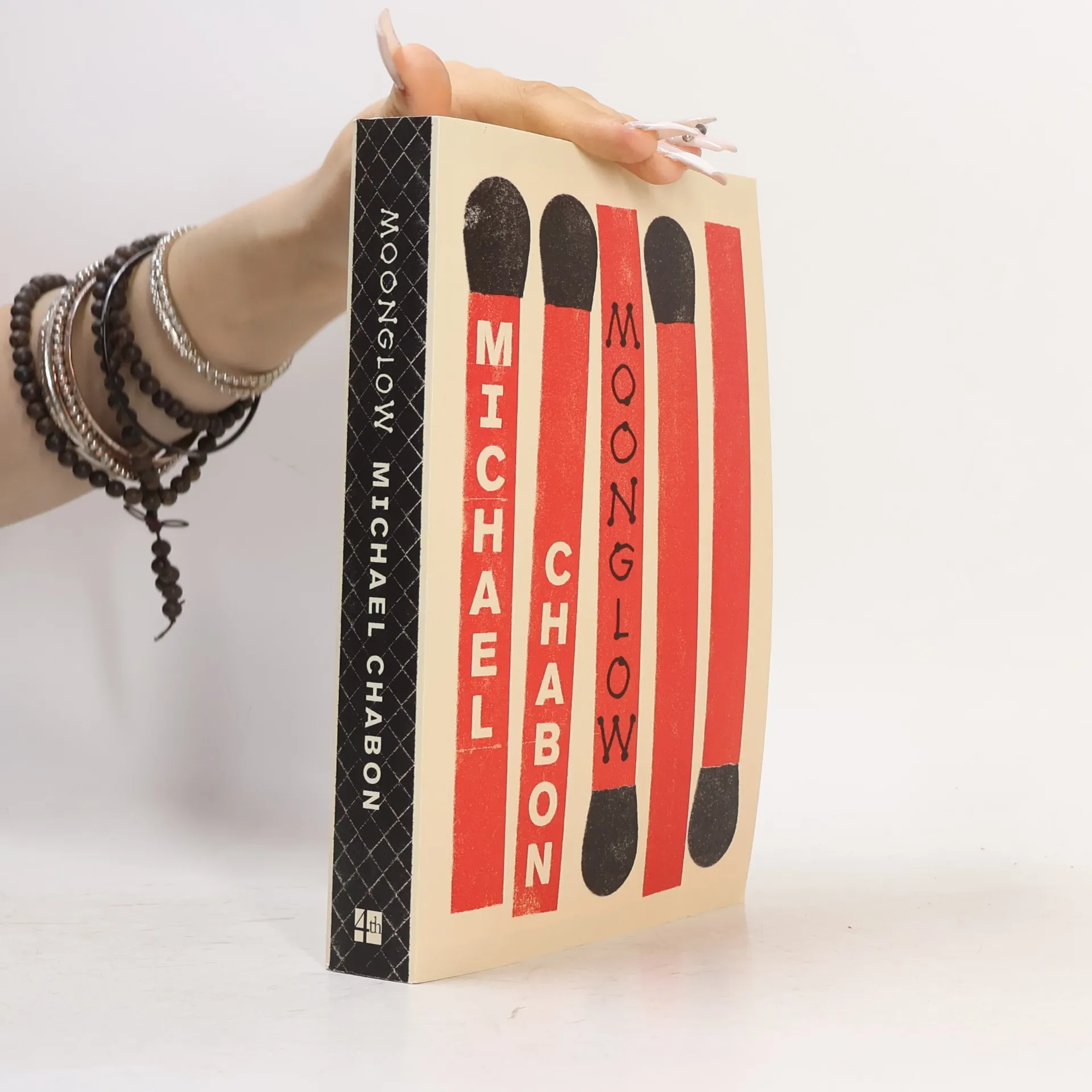
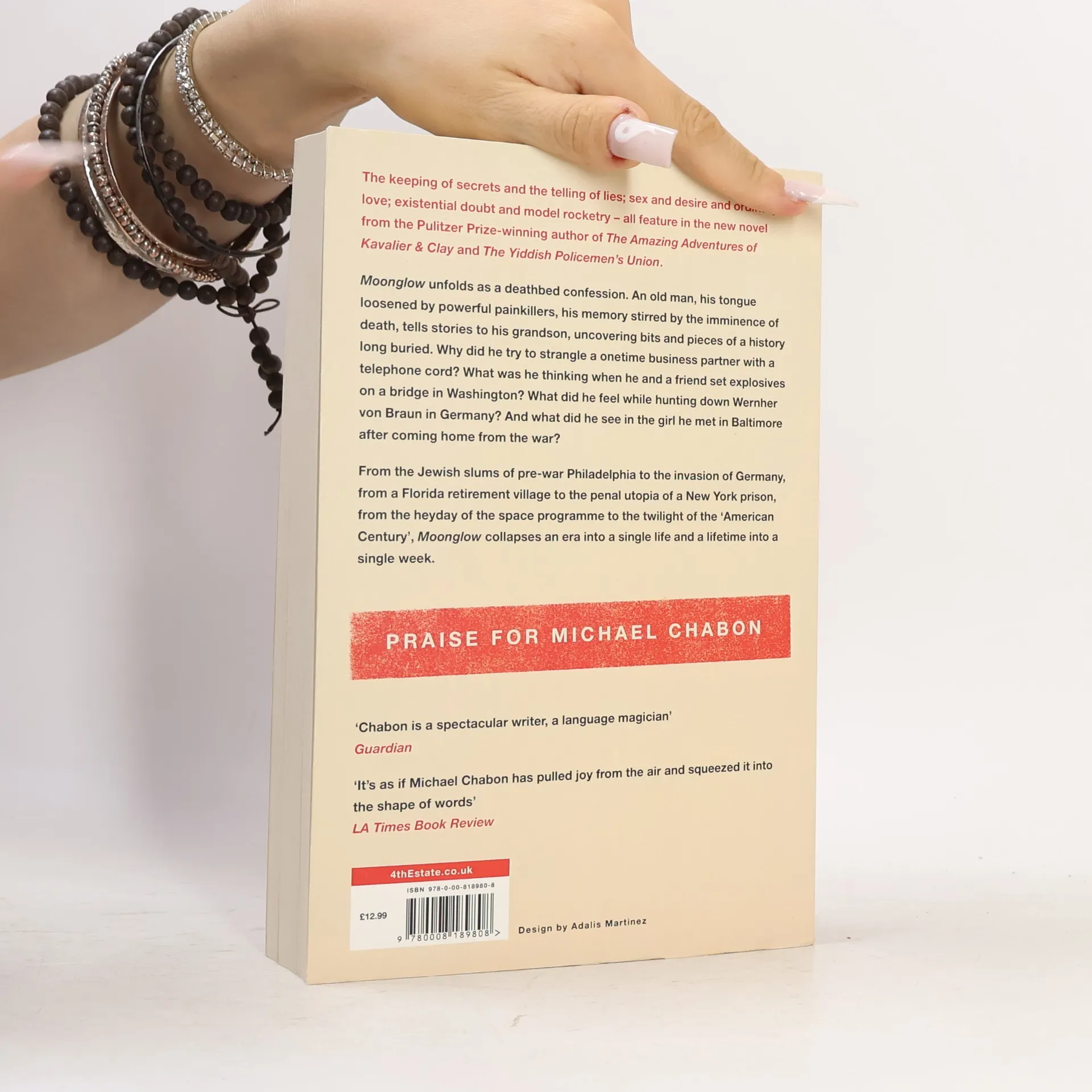
Kupuješ přesně tu knihu, která je na fotce

Více o knize
Moonglow unfolds as the deathbed confession, made to his grandson, of a man the narrator refers to only as my grandfather. It is a tale of madness, of war and adventure, of sex and desire and ordinary love, of existential doubt and model rocketry, of the shining aspirations and demonic underpinnings of American technological accomplishment at mid-century and, above all, of the destructive impact, and the creative power, of the keeping of secrets and the telling of lies.





Skladem máme celkem knihy Moonglow (2016).
Nákup knihy
Moonglow, Michael Chabon
- Jazyk

- Rok vydání
- 2016
- Vazba
- (měkká),
- Stav knihy
- Dobrá
- Cena
- 139 Kč
Doručení
Platební metody
Tady nám chybí tvá recenze.
- Titul
- Moonglow
- Jazyk
- anglicky
- Autoři
- Michael Chabon
- Vydavatel
- 4th Estate
- Rok vydání
- 2016
- Vazba
- měkká
- Počet stran
- 464
- ISBN10
- 0008189803
- ISBN13
- 9780008189808
- Série
- Štítky
- Historické téma, Rodina, Současná literatura, USA, Válečná próza, 20. století, Války, Druhá světová válka, Americká literatura, Úmrtí, Holokaust, Nacismus, Židovská literatura, Rodopis, genealogie, Černý humor, Postmoderní literatura, Prarodiče, Dědeček
- První vydání
- 2016
- Původní název
- Moonglow
- Hodnocení
- 3,9 z 5
- Anotace
- Moonglow unfolds as the deathbed confession, made to his grandson, of a man the narrator refers to only as my grandfather. It is a tale of madness, of war and adventure, of sex and desire and ordinary love, of existential doubt and model rocketry, of the shining aspirations and demonic underpinnings of American technological accomplishment at mid-century and, above all, of the destructive impact, and the creative power, of the keeping of secrets and the telling of lies.