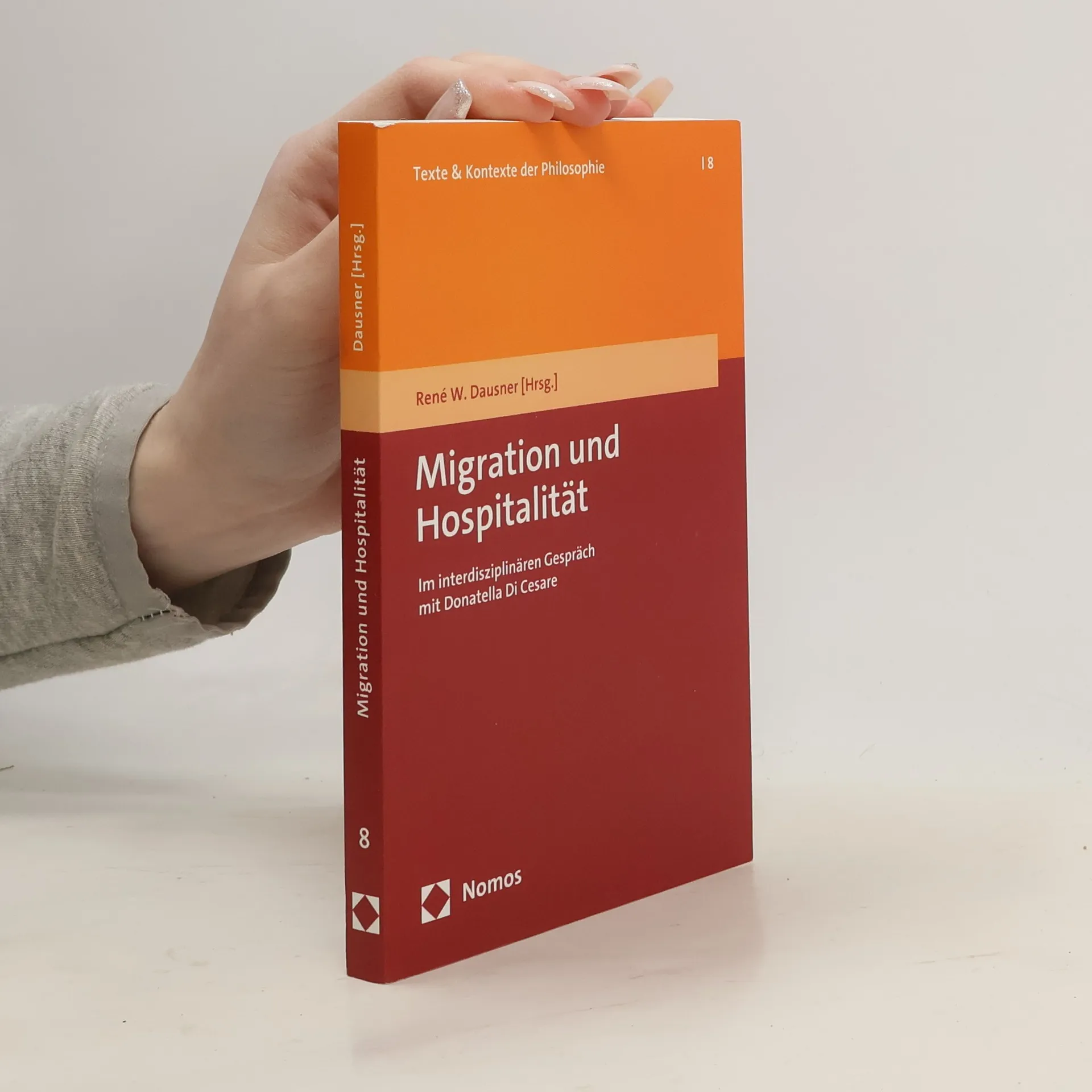
Texte & Kontexte der Philosophie - 8: Migration und Hospitalität
Im interdisziplinären Gespräch mit Donatella di Cesare


Donatella Di Cesare je italská filozofka, esejistka a publicistka, která vyučuje teoretickou filozofii na univerzitě "La Sapienza" v Římě. Její práce se zaměřují na klíčové otázky současného myšlení, často se zabývá tématy jako je svoboda, moc a hranice lidského poznání. Di Cesare přistupuje k filozofii s pronikavou analýzou a jasným stylem, čímž oživuje filozofickou tradici pro současného čtenáře. Její eseje a knihy jsou ceněny pro svou intelektuální hloubku a schopnost podnítit veřejnou debatu.

Im interdisziplinären Gespräch mit Donatella di Cesare
Das Buch thematisiert die Gefahren von Holocaustleugnung und deren Einfluss auf die Demokratie. Es kritisiert den Versuch, die dunkelsten Kapitel der Geschichte zu verdrängen, um eine vermeintlich "reine" nationale Identität zu schaffen. Durch die Manipulation historischer Fakten wird eine gefährliche Ideologie gefördert, die nicht nur die Erinnerungskultur bedroht, sondern auch die Grundlagen der demokratischen Werte. Der Autor beleuchtet die Notwendigkeit, sich mit der Vergangenheit auseinanderzusetzen, um eine gesunde und aufgeklärte Gesellschaft zu fördern.
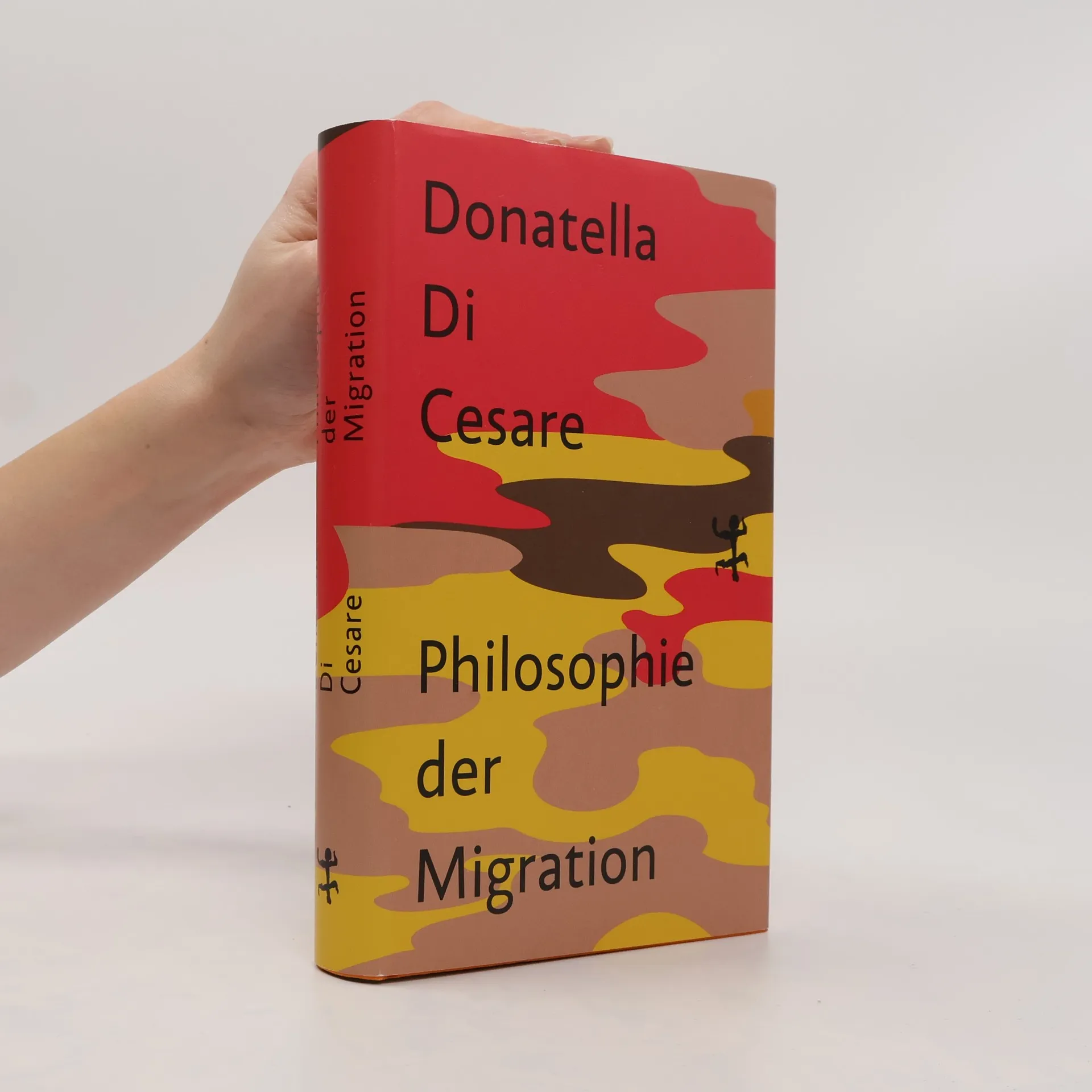
Im zeitgenössischen politischen Landschaft, in der der Nationalstaat dominiert, ist der Migrant der Unerwünschte, beschuldigt, fehl am Platz zu sein und den Platz anderer einzunehmen. Dennoch gibt es kein Recht auf das Territorium, das die souveränistische Politik der Abweisung rechtfertigen könnte. In einer Ethik, die auf globale Gerechtigkeit abzielt, reflektiert Donatella Di Cesare mit klarer Konzeptualität und einem teils narrativen Stil über die letztendliche Bedeutung des Wanderns und beweist, dass sie sofort zum Kern der Frage gelangt. Wohnen und Wandern stehen nicht im Widerspruch, wie es der gesunde Menschenverstand vermutet, der noch von den alten Gespenstern des jus sanguinis und des jus soli heimgesucht wird. In jedem Migranten muss vielmehr die Figur des „ansässigen Fremden“ erkannt werden, der wahre Protagonist des Buches. Athen, Rom und Jerusalem sind die Modelle von Städten, die in einem großartigen Fresko untersucht werden, um sich mit dem entscheidenden und aktuellen Thema der Staatsbürgerschaft auseinanderzusetzen. In der neuen Ära der Mauern, in einer Welt, die von Internierungslagern für Ausländer geprägt ist, die Europa an seinen Türen zu halten versucht, plädiert Di Cesare für eine Politik der Gastfreundschaft, die auf der Trennung vom Wohnort basiert, und schlägt einen neuen Sinn des Zusammenlebens vor.
It is time for philosophy to return to the city. In today's crisis-ridden world of globalised capitalism, increasingly closed in on itself, it may seem harder than ever to think of ways out. Philosophy runs the risk of becoming the handmaiden of science and of a hollowed-out democracy. Donatella Di Cesare calls on philosophy instead to return to the political fray and to the city, the global p�lis, from which it was banished after the death of Socrates.Suggesting a radical existentialism and a new anarchism, Di Cesare shows that Western philosophy has been characterised by a political vocation ever since its origins in ancient Greece, and argues that the separation of philosophy from its political roots robs it of its most valuable and enlightening potential. But critique and dissent are no longer enough. Mindful of a defeated exile and an inner emigration, philosophers should return to politics and forge an alliance with the poor and the downtrodden.This passionate defence of the political relevance of philosophy and its radical potential in our globalised world will be of great interest to students and scholars of philosophy and to a wide general readership.
As capitalism triumphs on the ruins of utopias and faith in progress fades, revolts are breaking out everywhere. From London to Hong Kong, Buenos Aires to Beirut, protests flare up, in some cases spreading like wildfire, in other cases petering out and re-igniting elsewhere. Not even the pandemic has been able to stop them: as many were reflecting on the loss of public space, the fuse of a fresh explosion was lit in Minneapolis with the brutal murder of George Floyd. We are living in an age of revolt. But what is revolt? It would be a mistake to think of revolt as simply an explosion of anger, a spontaneous and irrational outburst, as it is often portrayed in the media. Exploding anger is not a bolt from the blue but a symptom of a social order in which the sovereignty of the state has imposed itself as the sole condition of order. Revolt challenges the sovereignty of the state, whether it is democratic or despotic, exposing the violence that underpins it. Revolt upsets the agenda of power, interrupts time, throws history into disarray. The time of revolt, discontinuous and intermittent, is also a revolt of time, an anarchic transition to a space of time that disengages itself from the architecture of politics. This brilliant reflection on the nature and significance of revolt will be of interest to students of politics and philosophy and to anyone concerned with the key questions of politics today.
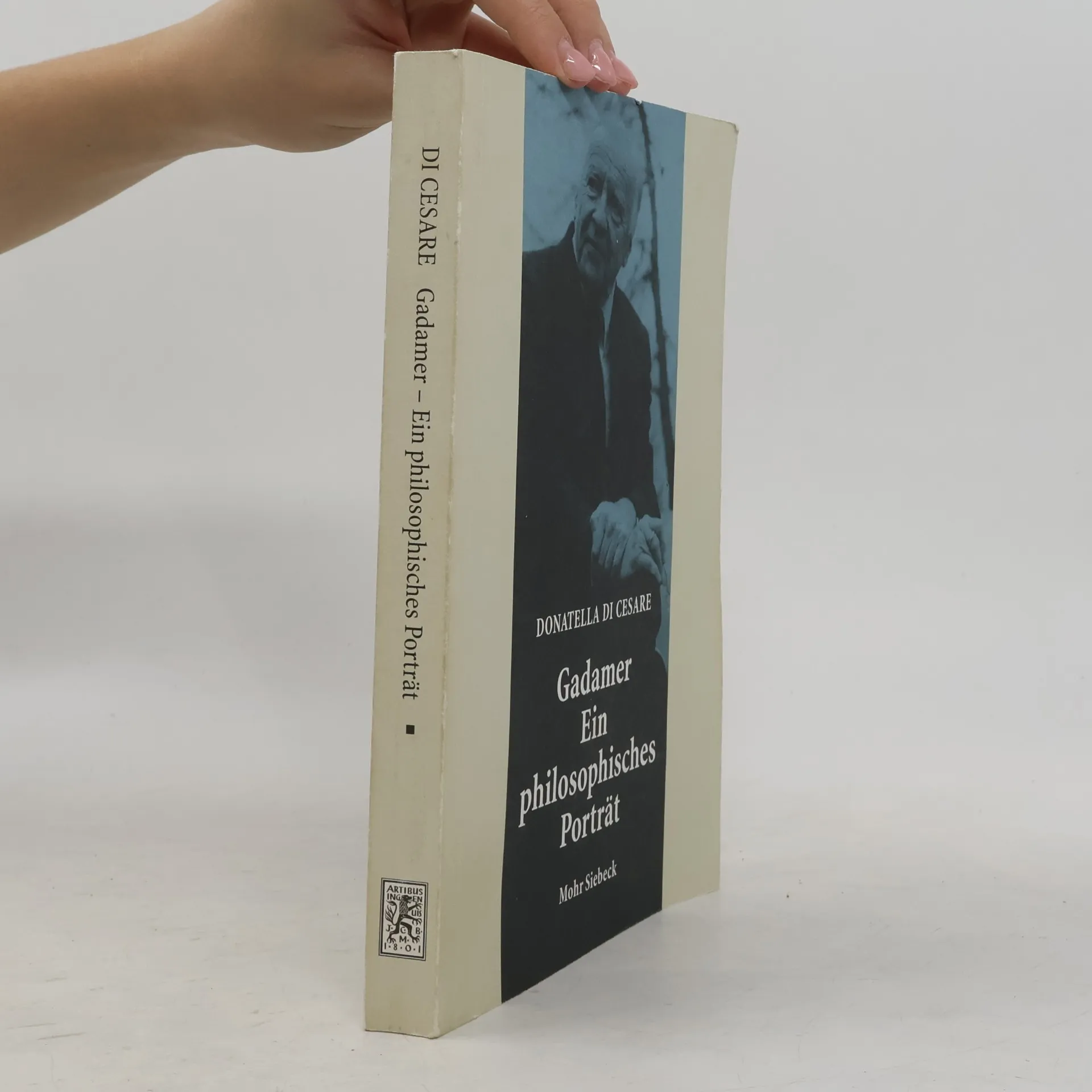
Die philosophische Hermeneutik von Hans-Georg Gadamer wird in dieser Biografie umfassend beleuchtet. Donatella Di Cesare verfolgt Gadamers Lebensweg und die evolutionären Phasen seines Denkens, das sich zunehmend von Heideggers Ansätzen entfernt. Zentral sind Themen wie das Spiel der Kunst, Wirkungsgeschichte, Ethik und die Frage des Verstehens. Gadamers Philosophie zeichnet sich durch eine kritische Auseinandersetzung mit zeitgenössischen Strömungen aus und betont den platonischen Dialog. Abschließend werden neue Perspektiven einer Hermeneutik des Anderen skizziert.