

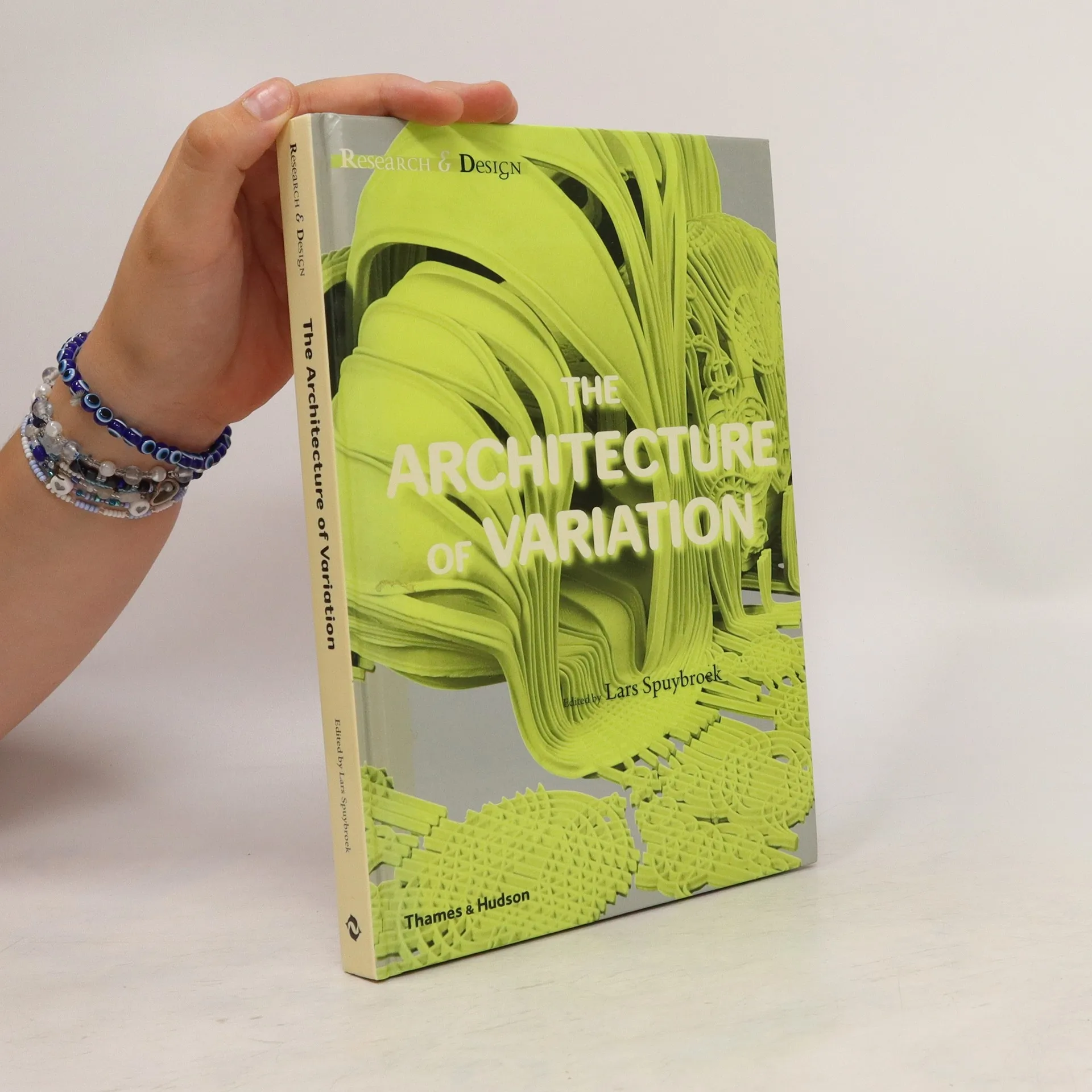
Examines popular elements of modern architectural design, offering insight into the extensive research that informs the latest innovations in design and construction, in an essay-complemented, lavishly illustrated account that places an emphasis on the trend in mass-customization.
Lars Spuybroek Pořadí knih (chronologicky)
16. září 1959

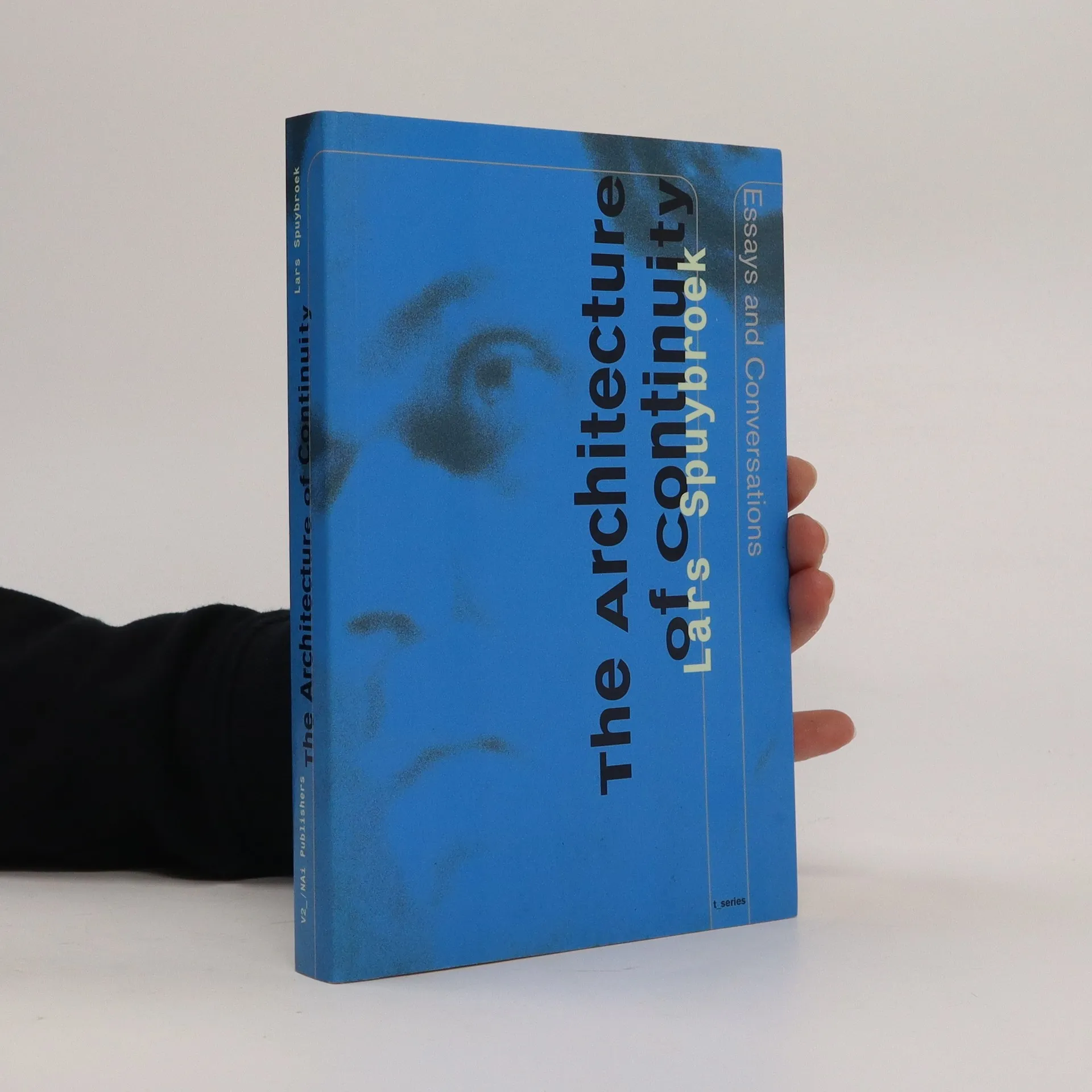
The Architecture of Continuity
- 291 stránek
- 11 hodin čtení
In the introduction to this first theoretical account of the Rotterdam architecture and art studio NOX, principle Lars Spuybroek writes, "That buildings are made of elements does not mean that architecture should be based on elementarism; we should rather strive for an architecture of continuity that fuses tectonics with experience, abstraction with empathy and matter with expressivity." Building on Gottfried Semper's materialist theory of architecture, Spuybroek takes us from a philosophy of technology to a surprisingly historical argument that recalls John Ruskin, William Hogarth and Wilhelm Worringer. The book includes several probing essays alongside in-depth conversations in which we can follow Spuybroek as he refines and sharpens his arguments. In addition to running NOX, Spuybroek is a professor at the Georgia Institute of Technology in Atlanta.
Nox
- 389 stránek
- 14 hodin čtení
Lars Spuybroeks experimentelle, mit Hilfe des Computers entwickelte und umgesetzte Architektur findet international Anerkennung. Mit seinem Büro NOX gehört der Architekt zu den wenigen Vertretern der neuen Generation, deren innovative Projekte auch gebaut werden. So ist das Buch zum einen das Porträt von NOX, von seinen Entwürfen und realisierten Bauten aus den letzten zehn Jahren. Zum anderen erläutert Lars Spuybroek seine spezielle Vorgehensweise bei der Entwicklung und Umsetzung völlig neuer Raumgebilde, er bietet Anregungen, Erläuterungen und Tips zur Arbeit mit CAD und CAM. Hinzu kommen Essays bekannter Autoren wie Brian Massumi, Detlef Mertins, Arjen Mulder, Andrew Benjamin und Manuel de Landa.
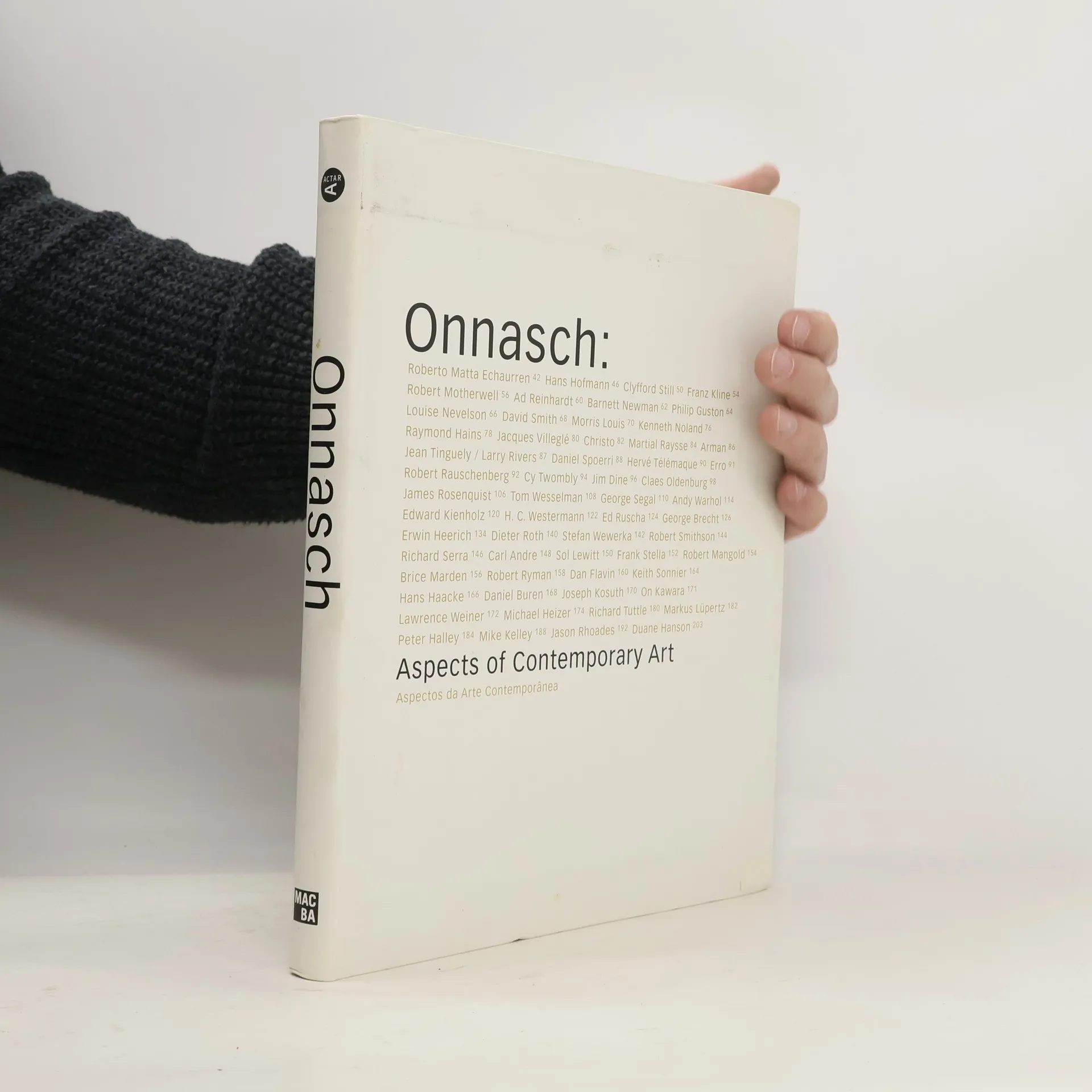
Onnasch Collection
- 208 stránek
- 8 hodin čtení
Some of the most representative tendencies of the second half of the 20th century are represented in the private collection of German Reinhard Onnasch, which features work by Hans Hofmann, Robert Motherwell, Morris Louis, Barnett Newman, Cy Twombly, Robert Rauschenberg, Claes Oldenburg, Andy Warhol, Edward Kienholz, Dan Flavin, Hans Haacke, Robert Smithson, Mike Kelley, Dan Graham, Lawrence Weiner, Jason Rhoades, and others.Essays by Boris Groys, Petra Kipphoff. Artworks by Dan Flavin, Dan Graham, Hans Haacke, Hans Hofmann, Mike Kelley, Edward Kienholz, Morris Louis, Robert Motherwell, Barnett Newman, Claes Oldenburg, Robert Rauschenberg, Robert Smithson, Cy Twombly, Andy Warhol, Lawrence Weiner. 8.75 x 10.5 in.110 color illustrationsEnglish/Portuguese